
About Arthur Leonard Schawlow
Lived 1921 – 1999 (aged 77). Arthur Leonard Schawlow was an American physicist, university teacher and inventor, known for Laser cooling, Laser spectroscopy and Schawlow–Townes approximation.
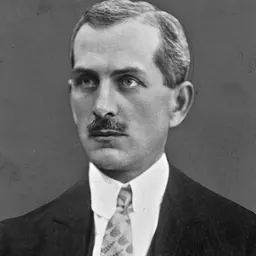
Arthur Leonard Schawlow (May 5, 1921 – April 28, 1999) was an American physicist who, along with Charles Townes, developed the theoretical basis for laser science. His central insight was the use of two mirrors as the resonant cavity to take maser action from microwaves to visible wavelengths. He shared the 1981 Nobel Prize in Physics with Nicolaas Bloembergen and Kai Siegbahn for his work using lasers to determine atomic energy levels with great precision.
Biography Arthur Leonard Schawlow was born on May 5, 1921, in Mount Vernon, New York, to a Jewish father from Riga and a Canadian mother. Schawlow was raised in his mother's Protestant faith. When Arthur was three years old, they moved to Toronto, Ontario, Canada.
At the age of 16, Schawlow completed high school at Vaughan Road Collegiate Institute, and received a scholarship in science at the University of Toronto (Victoria College). He obtained his B.A. in 1941 and his M.A. the following year. He received his Ph.D. in 1949 under Professor Malcolm F. Crawford. Schawlow then took a postdoctoral position with Charles Townes in the Physics Department of Columbia University in the fall of 1949.
Schawlow went on to accept a position at Bell Telephone Laboratories in late 1951. He left in 1961 to become Professor of Physics at Stanford University, where he remained until his retirement in 1991.
Although his research focused on optics, in particular lasers and their use in spectroscopy, Schawlow also pursued investigations in the areas of superconductivity and nuclear resonance. Schawlow shared the 1981 Nobel Prize in Physics with Nicolaas Bloembergen and Kai Siegbahn for their contributions to the development of laser spectroscopy.
Schawlow co-authored the widely used text Microwave Spectroscopy (1955) with Charles Townes. Schawlow and Townes were the first to publish the theory of laser design and operation in their seminal 1958 paper on "optical masers", although Gordon Gould is often credited with the "invention" of the laser, due to his unpublished work that predated Schawlow and Townes by a few months. The first working laser was made in 1960 by Theodore Maiman.
Science and religion Schawlow participated in science and religion discussions. Regarding God, he stated, "I find a need for God in the universe and in my own life."
Personal life In 1951, Schawlow married Aurelia Townes, the younger sister of Charles Townes. They had three children: Arthur Jr., Helen, and Edith. Arthur Jr. is autistic, with very little speech ability. Aurelia died in 1991 following a vehicle accident.
Schawlow and Professor Robert Hofstadter at Stanford, who also had an autistic child, teamed up to help each other find solutions to the condition. Arthur Jr. was put in a special center for autistic individuals, and later, Schawlow put together an institution to care for people with autism in Paradise, California. It was later named the Arthur Schawlow Center in 1999, shortly before his death. Schawlow was a promoter of the controversial method of facilitated communication with patients of autism.
Schawlow considered himself to be an orthodox Protestant Christian, and attended a Methodist church. 1963 Institute of Physics Thomas Young Medal and Prize
1964 IEEE IEEE Morris N. Liebmann Memorial Award "For his pioneering and continuing contributions in the field of optical masers." 1970 AAPT Richtmyer Memorial Award
1976 Optical Society of America Frederic Ives Medal "In recognition of his pioneering role in the invention of the laser, his continuing originality in the refinement of coherent optical sources, his productive vision in the application of optics to science and technology, his distinguished service to optics education and to the optics community, and his innovative contributions to the public understanding of optical science." 1977 Marconi Society Marconi Prize "For his research in the fields of optical and microwave spectroscopy, nuclear quadruple resonance superconductivity and lasers." 1981 Royal Swedish Academy of Sciences Nobel Prize in Physics "For their contribution to the development of laser spectroscopy." 1970 University of Toronto Doctor of Laws 1986 Trinity College Dublin Doctor of Science Memberships Year Organization Type 1970 American Academy of Arts and Sciences Member 1970 National Academy of Sciences Member 1983 Optical Society of America Honorary Member 1984 American Philosophical Society Member
National awards Year Head of state Award Citation 1991 George H. W. Bush National Medal of Science "For his role in the conception of the laser and in advancing its applications, especially in laser spectroscopy."
Commemoration In 1991, the American Physical Society established the Arthur L. Schawlow Prize in Laser Science. The Prize is awarded annually to "candidates who have made outstanding contributions to basic research using lasers."
Don’t just read it —
keep it.
Full-length biographies made to live with: read them, listen on the way to work, watch them tonight.
- E-book
- Audio
- Video
Instant download · yours to keep · every purchase keeps this site free
Important facts
People in Arthur Leonard Schawlow's life
Named in this biography and alive at the same time







Related people
Same field, nearest in time


Contemporaries
People whose lives overlapped Arthur Leonard Schawlow's


Frequently asked questions
Who was Arthur Leonard Schawlow?
American physicist
When was Arthur Leonard Schawlow born?
Arthur Leonard Schawlow was born on 5 May 1921 in Mount Vernon.
When did Arthur Leonard Schawlow die?
Arthur Leonard Schawlow died on 28 April 1999 in Palo Alto.
What was Arthur Leonard Schawlow's occupation?
Arthur Leonard Schawlow was a physicist, university teacher and inventor.
What was Arthur Leonard Schawlow known for?
Arthur Leonard Schawlow was known for Laser cooling, Laser spectroscopy and Schawlow–Townes approximation.
What nationality was Arthur Leonard Schawlow?
Arthur Leonard Schawlow was American.
Sources & further reading
· Wikipedia: Arthur Leonard Schawlow
· DBpedia: Arthur Leonard Schawlow
Cite this page
APA: Biography.guide. (2026). Arthur Leonard Schawlow. https://biography.guide/arthur-leonard-schawlow/
MLA: "Arthur Leonard Schawlow." Biography.guide, https://biography.guide/arthur-leonard-schawlow/.
Chicago: "Arthur Leonard Schawlow." Biography.guide. https://biography.guide/arthur-leonard-schawlow/.
Data last updated: 2026-09-20 · Spot an error? Report a correction.
Page generated 2026-09-27 05:30 UTC