
About Arthur L. Conger
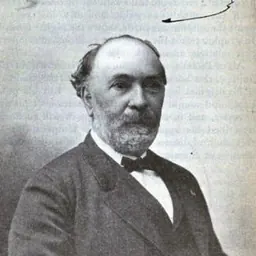
Lived 1872 – 1951 (aged 79). Arthur L. Conger was an American military personnel and theosophical Society Pasadena.
Arthur Latham Conger Jr. (January 30, 1872 – February 22, 1951) was an officer in the United States Army, a writer and editor. A veteran of the Spanish–American War, Philippine–American War, Boxer Rebellion, Pancho Villa Expedition, and World War I, he attained the rank of colonel and devised the World War I deception known as the Belfort Ruse. A noted theosophist, he served as president of Theosophical Society Pasadena.
A native of Akron, Ohio, Conger attended Harvard College and the Episcopal Theological Seminary, then worked at the Theosophy Society's main office in New York City. He joined the Army during the Spanish–American War, and served in the Philippines. He continued to serve in the Philippines during the Philippine–American War, and was part of the American contingent that took part in responding to China's Boxer Rebellion. He served on the U.S.-Mexico border during the Pancho Villa Expedition.
During World War I, Conger served as assistant chief of staff for Intelligence (G-2) on the staff of the 2nd Division, and then as a member of the Intelligence directorate (G-2) on the staff of the American Expeditionary Forces headquarters. While on the AEF staff, Conger was the lead planner for a summer 1918 deception, which became known as the Belfort Ruse. This effort to deceive German commanders into allocating forces away from Saint-Mihiel was intended to produce an Allied advantage during an upcoming offensive. At the ensuing Battle of Saint-Mihiel, the Allied numerical superiority produced by Conger's deception surprised the Germans and caused a rapid Allied victory. After this success, Conger was assigned to command the 56th Infantry Brigade, which he led until the end of the war.
After World War I, Conger commanded the 20th Infantry Regiment and served as U.S. military attaché in Berlin, Germany and Bern, Switzerland. He retired in 1928. After leaving the military, Conger renewed his interest in theosophy. In 1945 he was elected president of Theosophical Society Pasadena, and he served until his death. He died in Pasadena, California on February 22, 1951.
Early life Arthur L. Conger Jr., was born in Akron, Ohio, on January 30, 1872. He was the second of four children born to Arthur L. Conger Sr. and Emily (Bronson) Conger. He became an accomplished piano and organ player, and frequently gave concerts, played at church services, and participated in entertainment programs. He continued to study music and music composition throughout his life, and maintained a lifelong interest in the piano and organ.
In 1890, Conger began attendance at Harvard College, where he was a member of the fencing team, chess club, whist club, Hasty Pudding Institute of 1770, and Delta Kappa Epsilon fraternity. While at Harvard, Conger was introduced to theosophy, and he became a member of the Theosophical Society on June 16, 1892. Later that year, Conger's application for a regular army commission was approved and he was appointed a second lieutenant in the 18th Infantry Regiment. His superior officer, Edwin Forbes Glenn was convicted at court-martial, but Glenn's subordinates, including Conger, were not charged.
Military historian From 1901 to 1903, Conger served in the Philippines as aide-de-camp to Major General Robert Patterson Hughes. In addition, he was part of the U.S. contingent that served in China during the American response to the Boxer Rebellion. In 1905, he was promoted to captain in the 29th Infantry and graduated from the Army's Infantry and Cavalry School. In the interregnum, Conger studied German military history at Berlin University and Heidelberg University, where Hans Delbrück taught Conger his critical examination method. He then served with the 29th Infantry at Fort Niagara, New York.
As an instructor, Conger required students to conduct independent research on military events including the American Civil War's 1862 Peninsular campaign. This deception, which attempted to convince German commander Erich Ludendorff that the American First Army would go on the offensive at Belfort rather than at Saint-Mihiel in the fall of 1918, was intended to cause Ludendorff to allocate forces away from First Army's attack. He retired from the military on October 31, 1928.
Published works As author The Function of Military History Mississippi Valley Historical Review, 1916. President Lincoln As War Statesman. State Historical Society of Wisconsin, 1916. The Military Education of Grant As General. Menasha, 1921. The Rise of U.S. Grant. The Century Co., 1931. "The Military Education of Grant as General." Wisconsin Magazine of History (1921): 239–262. online
As editor Judge, William Quan: Practical Occultism: From the Private Letters of William Q. Judge. Theosophical University Press, Pasadena 1951 Purucker, Gottfried de: The Dialogues of G. de Purucker: Report of Sessions. Theosophical University Press, Covina 1948
Don’t just read it —
keep it.
Full-length biographies made to live with: read them, listen on the way to work, watch them tonight.
- E-book
- Audio
- Video
Instant download · yours to keep · every purchase keeps this site free
Important facts
People in Arthur L. Conger's life
Named in this biography and alive at the same time



Related people
Same field, nearest in time





Contemporaries
People whose lives overlapped Arthur L. Conger's


Frequently asked questions
Who was Arthur L. Conger?
American Theosophist (1872–1951)
When was Arthur L. Conger born?
Arthur L. Conger was born on 30 January 1872 in Akron.
When did Arthur L. Conger die?
Arthur L. Conger died on 22 February 1951 in Pasadena.
What was Arthur L. Conger's occupation?
Arthur L. Conger was a military personnel and theosophical Society Pasadena.
What nationality was Arthur L. Conger?
Arthur L. Conger was American.
Sources & further reading
Cite this page
APA: Biography.guide. (2026). Arthur L. Conger. https://biography.guide/arthur-l-conger/
MLA: "Arthur L. Conger." Biography.guide, https://biography.guide/arthur-l-conger/.
Chicago: "Arthur L. Conger." Biography.guide. https://biography.guide/arthur-l-conger/.
Data last updated: 2026-09-20 · Spot an error? Report a correction.
Page generated 2026-09-27 05:28 UTC