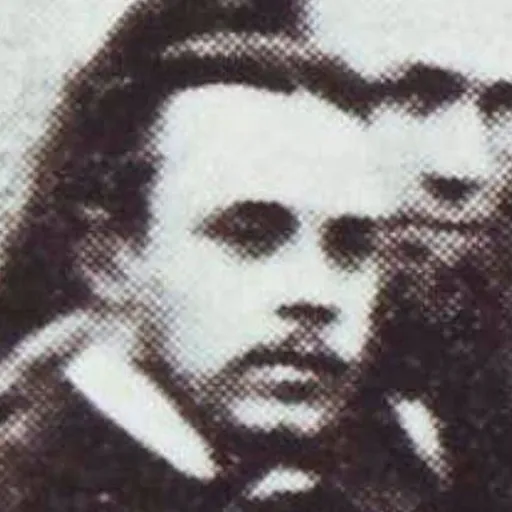
Arthur Hiscoe
19th-century British architect and photographer
About Arthur Hiscoe
Lived 1848 – 1912 (aged 64). Arthur Hiscoe was an architect, photographer and surveyor.
Arthur Hiscoe or Hiscox (Wortley, Leeds 17 June 1848 – Holbeck 22 November 1912).was an English architect based in Leeds, who created his most noted works in Harrogate, West Riding of Yorkshire. He was described by historian Malcolm Neesam as one of the "most eminent local architects" of Harrogate, where he created some major buildings. Most of his public buildings have been destroyed or suffered change of use, although his villas survive in the suburbs of the town. He remodelled the Promenade Room, which later became the Mercer Art Gallery in Harrogate. It is now a grade II listed building.
The height of Hiscoe's career was in the 1870s and 1880s when he produced religious and civic buildings in Harrogate, including the former Primitive Methodist Chapel (now Cardamom Black restaurant) in Mount Parade, the former Wesleyan Day and Sunday Schools (now Jinnah restaurant), the Station Hotel in Station Parade (now Zizzi restaurant), and the former St James' Hall building (since demolished) in Station Parade, where the Victoria Shopping Centre now stands. His greatest public moment was 28 February 1874 when the foundation stone of Harrogate's former Public Market, or Old Market Buildings, was laid by the chairman of the Harrogate Improvement Commissioners (HIC). On that day, as the celebrated architect of the building, he took part in the civic procession which marched from Harrogate Town Hall to the market site, was photographed alongside Harrogate's great men of the day, presented the chairman with the traditional silver trowel for the laying of the foundation stone, and was invited to the HIC celebration dinner afterwards.
In the 1890s, after experiencing a shortage of commissions, Hiscoe suffered two bankruptcies, and moved house many times, mostly in Leeds. He was imprisoned for seven days at HM Prison Wakefield for drunkenness in 1906. He continued to work until 1912 when he died of alcohol poisoning at home in the presence of his family, after being carried home by friends.
Background
Hiscoe's father and siblings used the surname "Hiscox", and Hiscoe himself used the name, "Hiscox", at least until his marriage. Most of his children were registered with the name, "Hiscox". However he used the name, "Hiscoe", professionally and he and his wife were using that name in later life. He also erected and ran the former Station Hotel, Harrogate in 1873, and owned other plots of land.
Hiscoe was born on 17 June 1848 at Low Barr, Whitehall Road, Wortley, Leeds. His mother, as the informant on his birth certificate, signed with an "X", revealing her illiteracy at that time. Hiscoe was baptised on 16 July 1848 at St John the Evangelist Church in Wortley. The 1851 Census finds him living with his parents and five of his siblings. His elder brother, then aged 15, was working, like their father, as a cloth dresser. Hiscoe achieved standard 4 at school, so his schooling probably ended when he was around 11 years old. Hiscoe's address at the time of his marriage was his parents' residence: Holyrood House, Harrogate. They had fourteen children surnamed Hiscox, of whom four had died by 1911. The couple moved house at least nine times during their married life. By 1871 the couple were living at Beech Grove Terrace, Starbeck, with their one-year-old son, Ernest Coulman Hiscox, and a servant. By 1885 Hiscoe had a drawing office at 4, Albert Avenue, Starbeck. From at least 1881 he lived at Grosvenor Chambers, or Grosvenor House, East Parade, Harrogate, with his wife, six of his children, and a servant, and he had an office at 11 Albert Street, Starbeck. The 1901 census finds Hiscoe, his wife, and seven of his children, living at 57 Holdforth Street, Wortley. From at least 1911 until his death, his home address in was 1 West View, Beeston Hill, Leeds, where the 1911 census finds him with his wife, two of his daughters, and a grandchild.
The New Victoria Baths building was first discussed as a project in 1870 by Harrogate Borough Council, following the expansion of the town. In due course designs by Hiscoe, H. E. and A. Bown with Messrs Nelson of Leeds, and the brothers R. and H. Dyson were received and awarded premiums. However the council chose to appoint its surveyor James Richardson as architect. According to Malcolm Neesam, "an odour of shabby behaviour clings to the whole affair, as it was rumoured that Richardson had copied the best ideas from each design". The baths were opened on 26 August 1871, and Richardson was credited for the work.
In March 1871, still under the name Hiscox, he was calling for tenders for a new school at Doghouse, Heckmondwike, in association with the Upper Chapel Schools in the same area. In April of that year he was celebrating at the Royal Hotel, Harrogate, with his contractors and workmen, the erection of "four handsome villas" in Station Parade, Harrogate, which he had designed for Mrs Pearson.
Hiscoe designed the South Park Hydro in South Park Road in 1872, although that venture did not survive for long as a business. In 1875 he designed a large riding school on East Park Road, Harrogate, for Charles Burgess, and two semi-datached villas for James Lomas in Victoria Park. By 1874 he was also using a second office at 6 Station Crescent, Harrogate. He became bankrupt in 1885. He moved from Harrogate to Leeds around 1888, and according to the Harrogate Advertiser he "had plenty of work until the beginning of 1891". Thereafter, less work was available to him, and in 1893 he was bankrupted again – due, he said, to "inability to obtain work and to sickness in his family". By that time he had no assets, and his liabilities were £107 5s 2d . but he continued to work afterwards. This "substantial" school building at 1 St Wilfrid's Road, was erected opposite The Old Chapel, Ripon on Coltsgate Hill. The school was opened on 2 June 1871. The occasion was celebrated with a sermon by Rev. Peter McKenzie of Sunderland, a public tea in the schoolroom, and an evening lecture on David to raise funds for the building. The school was closed in 1934 by West Riding Education Committee, and in due course was converted into flats. Of Hiscoe's design, only the façade and part of one side wall were retained.
Former Primitive Methodist Chapel, Mount Parade, Harrogate, 1872
The Primitive Methodist Chapel on the corner of Cheltenham Parade and Mount Street in Harrogate was designed by Hiscoe. John Spoor of Bebside laid the foundation stone on 28 September 1871. The chapel was opened on 1 October 1872, on land which then belonged to the Victoria Park Company. Malcolm Neesam describes it as a "strong, box-shaped structure with overtones of the Italian Renaissance beloved of the architect". The chapel was built for a congregation of 450. Besides the main hall, it included a chapel-keeper's house, a minister's vestry and a schoolroom. It was a cinema in the 1930s. In the 1950s it was a pram shop, run by Fridel Dalling-Hay née Meyer. From the 1970s it has been a restaurant, converted again in 1986-1987 for Pinocchio's. It was fire-damaged in 1994, but re-opened the same year. It was occupied by the restaurant Cardamom Black until 2026, when it closed. Of the front and side elevations, only the façades of the top storeys remain.
Former Wesleyan Day and Sunday Schools, Harrogate, 1873
The foundation stone of the Wesleyan Day and Sunday Schools (also known as the Wesley Chapel School Room) on the corner of Cheltenham Parade and Cheltenham Mount, Harrogate, was laid by William Farrar Smith of Leeds on 25 June 1873. A commemorative bottle containing a document relating the proceedings was laid under the stone. It named the trustees, including the merchant Samuel Sugden, George Dawson, and Hiscoe (spelled as "Hiscox") the architect of the schools. Farrar Smith described the building as "a protest against cry that was being made to exclude the Bible from the [secular] day schools". This Gothic Revival building was designed for 300 children, and to include a large, main school room with a gable wing at each end. One wing was to accommodate the teacher, and the other contained a kitchen, classroom and basement for the boiler. Also included were two more ground-floor classrooms, with an infants' classroom above. The exterior was built of pitch-faced Birk Crag wall-stone, and the windows had gothic arches of red and white stone. Outside was an iron-fenced playground. The total cost of the school was about £6,233 . The building was opened on 1 May 1874. As of 2026, the building was inhabited by the Jinnah restaurant.
Former Station Hotel, Harrogate, 1873
The former Station Hotel was originally a commercial hotel, designed for commercial travellers who required short stays. It is situated at 1 Station Square, on the corner of James Street and Station Parade, Harrogate, and was designed by Hiscoe for his father John Hiscoe, the proprietor, at a cost of £9,000 . The building was described in the Pateley Bridge and Nidderdale Herald as follows: In August 1874, Hiscoe applied for a premises licence for alcohol on behalf of his father John Hiscoe, who owned the Station Hotel. The application was opposed at Knaresborough Court House by representatives of the Licensed Victuallers' Association, which feared competition. After much interrogation of Hiscoe, the licence was permitted. The building was later reopened as the Harlow Gate pub, and as of 2026 the premises was occupied by the restaurant Zizzi.
Former Public Market, Harrogate (Old Market Building), 1874
A need for a dedicated Harrogate market was first mooted in 1840, but the expanding town had to wait. The Harrogate Improvement Commissioners (HIC) discussed the issue between 1863 and 1873, "when for that purpose [they] purchased a plot of land at the top of Cambridge Street from Messrs R. and N. Carter, a plot which had been specially set apart for the purpose by those gentlemen so long ago as when they were laying out the Victoria Park Estate". On 22 December 1873 Hiscoe won a competition for the design of the market. In January 1874 he was calling for contractors to build a new public market and weigh house on that site, for the HIC and the Local Board of Health.
The foundation stone was laid on 28 February 1874 by John Barber, chairman of the HIC, and founder of Harrogate Markets. The commissioners, headed by the Rifle Band and followed by the architect and contractors, processed to the site from the board room at the New Baths. Flags were raised, crowds lined the streets, and the bells of Old St Mary's Church rang. The ceremonial mallet and trowel for the laying of the stone was presented to Barber by Hiscoe and the contractors. The trowel was of silver with an ivory handle, and the mallet was of polished walnut. The inscription on the trowel blade said: "This trowel was presented to John Barber, Esq., Chairman of the Harrogate Improvement Commissioners and Local Board of Health by the contractors, on the occasion of his laying the chief corner stone of the New Public Market, February 28th, 1874. Arthur Hiscoe, architect. Ed Winterburn, R.A. Rayworth, William Leek, John Exelby, Waldby & Shepherd, Geo[rge] Dent, contractors". To commemorate the occasion, Hiscoe, the HIC and other great men of Harrogate including George Dawson, Richard Ellis and Isaac Thomas Shutt were photographed together (pictured, right). Of this group portrait, historian Malcolm Neesam commented: "Harrogate's debt to these men is too great to be calculated".
The build cost around £3,600,. A woman died when exiting the covered market into its yard in October 1874, after walking through a sliding door which fell on her head. At the inquest, Hiscoe presented his plans for the market doors and said that the cause of the accident was a missing pin, and Raworth the contractor said he had forgotten or misunderstood the plans. The jury said that the doors should be repaired with the missing pins, and Hiscoe confirmed that he would attend to it at once.
A clock tower was added as a gift from Angela Burdett-Coutts following discussions in 1875, The clock was designed by Sir Edmund Beckett, completed in 1877, and contained a clock with four faces by William Potts. The market caught fire in 1914 but was saved. It finally burned down on 31 January 1937, leaving only its clock tower standing. The clock tower was demolished in the 1980s. The building was succeeded by a 1939 build by Leonard Clarke, then by the Victoria Shopping Centre of 1992.
36–37 York Place, Harrogate, 1870s Hiscoe designed two large, stone, semi-detached houses, one of which is named Princes Villa, at 36–37 York Place, Harrogate. The building included a cocoa house with billiard room and hotel facilities in the centre, St James' Hall on the left, and Harrogate Gentleman's Club on the right. It faced the tower of the Old Market Building. St James' Hall functioned as a galleried theatre seating a total of 650, with windows and lighting for day and night use. The stage could be removed to convert the hall to a ballroom or large dining room. The gentleman's club (which as of 2026 occupies The Harrogate Club) had a grand, porticoed entrance facing the railway station. In 1873 Hiscoe enlarged and altered the building. In the 1920s the institution moved to West Mount, Kirkby Road, Ripon, and was renamed, "West Mount". It became a Barnardo's home in 1935, and both buildings were later demolished. It was founded in 1805 and was remodelled by Hiscoe at a cost of £3,500 between 1874 and 1876. The commission was awarded by competition, and Hiscoe was chosen by the Harrogate Improvement Commissioners (HIC) from among four entrants on 30 October 1874. In November 1874 he was calling for builders' tenders for "the erection of a covered promenade, pump room, storage reservoirs, &c., additional baths and sanitary accommodation" on behalf of the HIC. Hiscoe added the western façade on Swan Road, along with a general rebuild. The entrance is "flanked by attached columns and a handsome entablature enriched with symbols of the locality". Hiscoe's interior refurbishment included an internal hall with coffered ceiling, and two new rooms either side of the front door. they were dismantled and the material used to build a new pump room according to Hiscoe's plans. The pump room was later dismantled.
Former Spa Rooms Skating Rink extension, Harrogate, 1876 This was an outdoor asphalt skating rink for roller skating. The extended rink was used by newspaper proprietor William Hammond Breare for the organisation of masquerades and ice carnivals. After Prince Arthur (later Duke of Connaught) visited the rink, it became Prince Arthur's Skating Rink. He continued to work until at least August 1912, when he designed alterations to one house and conversions of a second building into a house for Norman Elliott at Flanshaw Lane, Leeds. He died at his home at 1 West View, Beeston Hill, Leeds, on 22 November 1912. The inquest into his death was held on 25 November 1912.
According to the evidence, Hiscoe was brought home on Friday [22 November] by two unknown men, who left him lying on the garden path, where he was found by members of his family, and taken inside the house. Medical assistance was immediately summoned, but death took place before the arrival of the doctor. Hiscoe had an abrasion on his face ... Dr Rock ... said that when he was called in, the deceased smelled strongly of spirits. Death was due to suffocation and to alcoholic poisoning ... The Coroner pointed out that [Hiscoe] had evidently [been] laid down on the hearthrug in such a way as to induce suffocation, which showed that the family had not known what to do in the circumstances. Leeds Mercury, 26 November 1912.
Don’t just read it —
keep it.
Full-length biographies made to live with: read them, listen on the way to work, watch them tonight.
- E-book
- Audio
- Video
Instant download · yours to keep · every purchase keeps this site free
Important facts
People in Arthur Hiscoe's life
Named in this biography and alive at the same time




Related people
Same field, nearest in time

Contemporaries
People whose lives overlapped Arthur Hiscoe's




Frequently asked questions
Who was Arthur Hiscoe?
19th-century British architect and photographer
When was Arthur Hiscoe born?
Arthur Hiscoe was born on 17 June 1848 in Wortley.
When did Arthur Hiscoe die?
Arthur Hiscoe died on 22 November 1912 in Holbeck.
What was Arthur Hiscoe's occupation?
Arthur Hiscoe was an architect, photographer and surveyor.
Sources & further reading
Cite this page
APA: Biography.guide. (2026). Arthur Hiscoe. https://biography.guide/arthur-hiscoe/
MLA: "Arthur Hiscoe." Biography.guide, https://biography.guide/arthur-hiscoe/.
Chicago: "Arthur Hiscoe." Biography.guide. https://biography.guide/arthur-hiscoe/.
Data last updated: 2026-09-21 · Spot an error? Report a correction.
Portrait: Wikimedia Commons · author & licence
Page generated 2026-09-27 04:58 UTC