
About Arthur Hezlet
Lived 1914 – 2007 (aged 93). Arthur Hezlet was a South African submariner, author, general synod, northern Ireland, RNLI and university of Ulster.
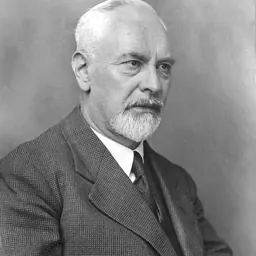
Vice-Admiral Sir Arthur Richard Hezlet (7 April 1914 – 7 November 2007), nicknamed Baldy Hezlet, was a decorated Royal Navy submariner. He became the Royal Navy's youngest captain at the time – aged 36 – and its youngest admiral, aged 45. In retirement he became a military historian.
He was a recipient of the Order of the British Empire, the Most Honourable Order of the Bath, the Distinguished Service Order and Bar, the Distinguished Service Cross, and the Legion of Merit.
Early life Hezlet was born in Pretoria, South Africa, to Major-General Robert Knox Hezlet, CB, CBE, DSO and Josepha Dorothy Hezlet (née Arter). His father had a distinguished career in the British Army including appointments as director of artillery at the War Office (1930 to 1934) and in India (1934 to 1938).
Hezlet joined the Royal Navy in January 1928, aged 13. He attended the Royal Naval College, Dartmouth and the Royal Naval College, Greenwich, and went to sea in 1932, serving as a midshipman on the battleships HMS Royal Oak (September 1931 – January 1934) and HMS Resolution (March – July 1934). Hezlet was promoted to Lieutenant on 1 April 1936, achieving the highest mark in his Lieutenant's examinations, winning the Ronald Megaw Memorial Prize. In December 1935 he began the submarine course at HMS Dolphin, something for which he had "not applied or volunteered". On his return home, he was appointed First Lieutenant of HMS H43 in which he served from January 1938 to April 1939. By early 1940, he was engaged in operations in the Norwegian Sea, as the Germans launched their occupation of Norway. His last patrols in Trident in 1940 were in the Bay of Biscay, off Lorient.
In autumn 1940, Hezlet left the Trident to attend the submarine Commanding Officers Qualifying Course ("the Perisher"). During that period he managed to increase the number of simulated attacks under his belt. The second began on 16 August 1941, when he took out HMS Unique in order to give its commander, Lt. Collett, a rest. That patrol would prove more testing. Unique and and were tasked with attacking a convoy off Tripoli. P33, unbeknownst to Hezlet at the time, had already hit a mine and had been lost with all hands.
HMS Ursula (N 59) In September 1941 Hezlet was given his first permanent command – HMS Ursula The second patrol saw Ursula head for the Strait of Messina, where she fired four torpedoes at two merchant vessels, damaging the Italian merchantman Beppe. This eventful patrol saw Trident pick up nine survivors from the American merchantman Alamar which had been abandoned due to air attack (and carry out orders to torpedo its remains) as well as try to fend off other air attacks using her anti-aircraft guns. After a short anti-U-boat patrol from Polyarnoe, in June 1942 Trident was tasked with providing cover to convoys QP 13 and PQ 17 in the Barents Sea and Norwegian Sea, before returning to the UK.
X-craft crew instructor Hezlet became a special training officer on the banks of the River Clyde in September 1942, at the informally named "HMS Varbel", training the crews of midget submarines to attack the German battleship Tirpitz.
HMS Thrasher (N 37) In May 1943, Hezlet was appointed as the Lieutenant in Command of HMS Thrasher (N 37). From May to August 1943 she took part in exercises in Scottish waters with one-man Welman submarines and X-class "midget" submarines, undergoing alterations to her casing to allow her to operate with those craft. Finally, on 11 September 1943 Thrasher departed "Port HHZ" (Loch Cairnbawn) towing submarine X5 as part of Operation Source, the attempt to destroy Tirpitz, then lying at anchor in Kåfjord. Thrasher succeeded in towing X5 to her point of departure, though it is unclear how close X5 made it to her target: she was lost with all hands in the fjord during the attack. Thrasher returned to Holy Loch on 5 October 1943. Hezlet was mentioned in dispatches for his role in the operation (gazetted 11 January 1944).
In October 1943, before leaving Thrasher at Holy Loch, Hezlet was promoted to Lieutenant Commander six months early (at that time promotion to Lieutenant Commander was automatic after eight years as a Lieutenant ) with eighteen months' seniority, as from 1 October 1942 (gazetted on 8 November 1943).
Operations in the Pacific
HMS Trenchant (P 331) On 15 October 1943 Hezlet took over as Lieutenant Commander in Command of the submarine HMS Trenchant at Chatham. thumb Lieut Cdr A R Hezlet, DSC, RN (right), Commanding Officer of HMS Trenchant, with his First Lieutenant, Lieut J L Watkinson, DSC, RN. 9 March 1944, Holy Loch. © IWM (A 22325) After trials in the Clyde and nearby lochs, on 14 May 1944 Trenchant departed Holy Loch for Trincomalee, Ceylon (now Sri Lanka). In the event, no aircraft called for her assistance, though she was ordered to search for a downed aircraft but this proved fruitless.
Family & death Hezlet died at Bovagh, at the age of 93, in 2007. He was survived by his wife, Annie Joan Patricia Clark, and their two daughters.
Writings
In retirement, Hezlet wrote many books on naval matters. His first book, The Submarine and Sea Power (1967), foresaw the continuing invulnerability of the seaborne nuclear deterrent. In Aircraft and Sea Power (1970), he took the view that the Atlantic could be defended by land-based aircraft and submarines, with no surface vessels.
Hezlet also wrote a history of the Ulster Special Constabulary, the "B Specials", in 1972. He reviewed the use of electricity and electronics in naval warfare in The Electron and Sea Power (1976). He published a memoir, HMS Trenchant at War: from Chatham to the Banka Strait, in 2001, and his last book, the authoritative History of British and Allied Submarine Operations (2002), listed every patrol taken by an Allied submarine in the Second World War.
Don’t just read it —
keep it.
Full-length biographies made to live with: read them, listen on the way to work, watch them tonight.
- E-book
- Audio
- Video
Instant download · yours to keep · every purchase keeps this site free
Important facts
People in Arthur Hezlet's life
Named in this biography and alive at the same time


Related people
Same field, nearest in time



Contemporaries
People whose lives overlapped Arthur Hezlet's


Frequently asked questions
Who was Arthur Hezlet?
Royal Navy admiral and submarine commander (1914-2007)
When was Arthur Hezlet born?
Arthur Hezlet was born on 7 April 1914 in Pretoria.
When did Arthur Hezlet die?
Arthur Hezlet died on 7 November 2007 in County Londonderry.
What was Arthur Hezlet's occupation?
Arthur Hezlet was a submariner, author, general synod, northern Ireland, RNLI and university of Ulster.
What nationality was Arthur Hezlet?
Arthur Hezlet was South African.
Sources & further reading
Cite this page
APA: Biography.guide. (2026). Arthur Hezlet. https://biography.guide/arthur-hezlet/
MLA: "Arthur Hezlet." Biography.guide, https://biography.guide/arthur-hezlet/.
Chicago: "Arthur Hezlet." Biography.guide. https://biography.guide/arthur-hezlet/.
Data last updated: 2026-09-27 · Spot an error? Report a correction.
Page generated 2026-09-27 05:17 UTC