
About Arthur H. Robinson
Lived 1915 – 2004 (aged 89). Arthur H. Robinson was an American geographer, cartographer and university teacher.
Arthur H. Robinson (January 5, 1915 – October 10, 2004) was an American geographer and cartographer, who was a professor in the Geography Department at the University of Wisconsin–Madison from 1947 until he retired in 1980. He was a prolific writer and influential philosopher on cartography; one of his most notable accomplishments is the Robinson projection of 1961.
Biography Arthur H. Robinson was born in Montreal, Quebec, Canada, to American parents, James Howard Robinson and Elizabeth (Peavey) Robinson. He lived in Great Britain while he was young, and received his post-secondary education in the United States. His undergraduate work was done at Miami University in Oxford, Ohio, obtaining a B.A. degree in 1936. During his undergraduate work he became especially interested in cartography, and received some practice drawing maps for faculty textbooks while earning a master's degree in geography from the University of Wisconsin–Madison, which was awarded in 1938. He earned his Ph.D. from Ohio State University in 1947. While at Ohio State, Robinson worked to solve problems in the Map communication model.
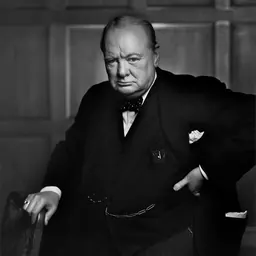
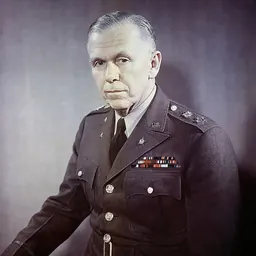
During World War II, Robinson served as director of the map division of the Office of Strategic Services (OSS). In 1941, when Robinson joined OSS, there were no cartographers as we know them today. Robinson engaged geographers with some interest in mapping and the group developed their techniques on the job. Led by Robinson, the OSS cartographers designed a massive 50-inch globe for President Franklin Roosevelt, which became known as "The President's Globe." A copy of the globe was given to Winston Churchill as a gift and a third globe was provided for the use of George Marshall and Henry Stimson. While serving with the OSS, Robinson oversaw the creation of 5,000 hand-drawn maps and attended the Allied conferences at Quebec and Cairo in 1943 and in 1944, he served as chief U.S. map officer. For his efforts Robinson received the Legion of Merit from the United States Army in 1946.
In 1947 Robinson subsequently joined the geography department at the University of Wisconsin–Madison, where he spent his career in academia and research. Robinson sought to establish cartography as a recognized discipline and ultimately the university granted both undergraduate and master's degrees in cartography. Today the map library at the University of Wisconsin–Madison is named in his honor.
Robinson served as president of the International Cartographic Association (1972–76), and as vice president and president of the Association of American Geographers. He was awarded the Carl Mannerfelt Gold Medal by the International Cartographic Association in 1980.
Personal life
Robinson married Mary Elizabeth Coffin (1910–1992), daughter of John R. Coffin and Bessie Morris Coffin, on December 23, 1938, in Franklin County, Ohio. They had two children, a son and a daughter. After the death of his first wife, Robinson remarried in 1993. His second wife was Martha Elizabeth Rodabaugh Phillips (1914–2010), a widow, with whom he had attended school in Oxford, Ohio.
Work Robinson was a prolific writer and influential philosopher on cartography: Like Richard Edes Harrison, another successful wartime cartographer, Robinson warned against the dangers of blindly accepting conventions in map design, such as always putting north at the top of the map. Robinson wrote that neither logic nor educational value required placing north at the top of the map. In The Look of Maps (1952) which was based on his doctoral research, Robinson urged cartographers to consider the function of a map as an integral part of the design process. In the text In The Nature of Maps (1976), Robinson and co-author Barbara Bartz Petchenik created the term map percipient, a map user who interacts with a map in a discerning way and not merely as a casual observer. The authors stressed that ... the nature of the map as an image and the manner in which it functions as a communication device between the cartographer and percipient need much deeper consideration and analysis than they have yet received. Robinson also co-authored a widely used textbook, Elements of Cartography, the sixth and last edition of which was published in 1995.
Robinson projection The Robinson projection is an example of a pseudocylindrical projection. One of Robinson's most notable accomplishments is the Robinson projection. In 1961, Rand McNally asked Robinson to choose a projection for use as a world map that, among other criteria, was uninterrupted, had limited distortion, and was pleasing to the eye of general viewers. Robinson could not find a projection that satisfied the criteria, so Rand McNally commissioned him to design one.
Robinson proceeded through an iterative process to create a pseudo-cylindrical projection that intends to strike a compromise between distortions in areas and in distances, in order to attain a more natural visualization. The projection has been widely used since its introduction. In 1988, National Geographic adopted it for their world maps but replaced it in 1998 with the Winkel tripel projection.
Don’t just read it —
keep it.
Full-length biographies made to live with: read them, listen on the way to work, watch them tonight.
- E-book
- Audio
- Video
Instant download · yours to keep · every purchase keeps this site free
Important facts
People in Arthur H. Robinson's life
Named in this biography and alive at the same time



Related people
Same field, nearest in time


Contemporaries
People whose lives overlapped Arthur H. Robinson's



Frequently asked questions
Who was Arthur H. Robinson?
American geographer (1915-2004)
When was Arthur H. Robinson born?
Arthur H. Robinson was born on 5 January 1915 in Montreal.
When did Arthur H. Robinson die?
Arthur H. Robinson died on 10 October 2004 in Madison.
What was Arthur H. Robinson's occupation?
Arthur H. Robinson was a geographer, cartographer and university teacher.
What nationality was Arthur H. Robinson?
Arthur H. Robinson was American.
Sources & further reading
· Wikipedia: Arthur H. Robinson
Cite this page
APA: Biography.guide. (2026). Arthur H. Robinson. https://biography.guide/arthur-h-robinson/
MLA: "Arthur H. Robinson." Biography.guide, https://biography.guide/arthur-h-robinson/.
Chicago: "Arthur H. Robinson." Biography.guide. https://biography.guide/arthur-h-robinson/.
Data last updated: 2026-09-20 · Spot an error? Report a correction.
Page generated 2026-09-27 05:29 UTC