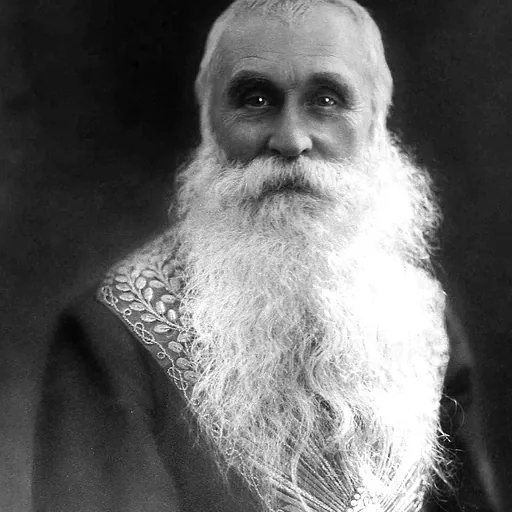
About Arthur Groussier
Lived 1863 – 1957 (aged 93). Arthur Groussier was a French politician, engineer and trade unionist.
Arthur Jules Hippolyte Groussier (16 August 1863 – 6 February 1957) was a French mechanical engineer, trade unionist, socialist politician and Free-Mason. He represented the Seine in the Chamber of Deputies between 1893 and 1924, with an interruption between 1902 and 1906, and became an important parliamentary advocate for the codification of French labour legislation.
On 14 March 1896, Groussier proposed that the Chamber's Labour Commission collect and revise existing legislation concerning workers and relations between employees and employers in order to form a unified Code du travail. He continued to support the project through later parliamentary proposals and participated in the legislative process that eventually produced the first codified French labour legislation in 1910.
Groussier was also one of the major figures of the Grand Orient de France during the first half of the twentieth century. Initiated in 1885, he entered the Grand Orient's Council of the Order in 1907 and was repeatedly elected president of that body from 1925 onward.
His principal Masonic legacy was his role in the reform of the French Rite. During the interwar period, Groussier supported the restoration of symbolic and initiatory elements which had been reduced during successive ritual revisions of the late nineteenth and early twentieth centuries. Revised symbolic rituals were adopted by the Council of the Order on 3 April 1938, and the process continued after the Second World War, eventually producing the form commonly known as the French Rite, Groussier version (Rite Français dit Groussier).
Early life and engineering career
Arthur Groussier was born in Orléans on 16 August 1863. His father was employed by the railway system.
In 1878, at the age of fifteen, Groussier entered the École des Arts et Métiers at Angers. He completed his studies in 1881 as a mechanical engineer and subsequently moved to Paris, where he began his professional career.
His technical education and experience of industrial employment contributed to his interest in the social and legal conditions of workers during the rapid industrialisation of late nineteenth-century France.
Trade unionism
Groussier joined the Union des mécaniciens de la Seine, which represented mechanics and metalworkers in the Paris region. He later participated in the organisation of the Fédération nationale des métallurgistes and became its first secretary in 1891, remaining in the position until his election to parliament in 1893.
His trade-union activity developed during a period in which the organised labour movement and socialist political organisations were closely connected. Groussier became associated with the revolutionary socialist current represented by Jean Allemane.
Free-Masonry
Initiation and lodges
Groussier was initiated into Free-Masonry on 29 May 1885, at the age of twenty-one, in the Parisian lodge L'Émancipation, belonging to the Grand Orient de France.
He was passed to Fellow Craft in February 1886 and raised to Master Mason in November 1886. In November 1892, he affiliated with the lodge Bienfaisance et Progrès, with which he remained closely associated and in which he later served as Venerable Master.
His Masonic activity therefore extended over more than seventy years.
Grand Orient de France
In 1907, Groussier was elected to the Council of the Order of the Grand Orient de France, the executive body responsible for administering the obedience between its annual convents.
After his withdrawal from active parliamentary politics, Groussier devoted increasing attention to Masonic administration. In 1925, he was elected president of the Council of the Order. He subsequently returned to the presidency on numerous occasions during the interwar period. His leadership coincided with a period marked by the rise of authoritarian regimes in Europe, the suppression of Free-Masonry in several countries and continuing disagreements between different Masonic obediences concerning international recognition and religious requirements. Groussier also encouraged the preservation and organisation of the Grand Orient's archives, library and museum collections.
International Masonic relations
Groussier supported efforts to establish greater cooperation between Masonic organisations internationally. He participated in the Association Maçonnique Internationale (International Masonic Association), established at Geneva in 1921 to facilitate relations among participating Masonic obediences. Groussier served as president of the association from 1927 to 1930 and continued to participate in its activities afterward. His writings on international Free-Masonry addressed Masonic unity, peace and the possibility of establishing closer relationships between obediences separated by institutional or doctrinal differences.
Reform of the French Rite
Background
Groussier's principal Masonic legacy is associated with the twentieth-century reform of the French Rite. When Groussier entered Free-Masonry in 1885, the Grand Orient practised a form of the French Rite derived from nineteenth-century revisions of the traditional ritual. The revision adopted in 1858 under Grand Master Lucien Murat and later reforms progressively simplified or replaced portions of older symbolic ritual.
Late nineteenth-century revisions, particularly thos associated with Louis Amiable, reflected the rationalist and positivist intellectual environment of the period. Further ritual revisions took place during the early twentieth century. By the years following the First World War, Groussier supported a restoration of a more explicitly symbolic and initiatory character to the Rite. His objective was not to restore a religious requirement but to recover traditional Masonic symbolism while retaining the liberty of conscience characteristic of the Grand Orient.
Historian Ludovic Marcos describes Groussier as the principale driving force or maître d'œuvre behind this change of direction while emphasising that Groussier intended the reform to be a collective undertaking.
Reform process
In 1925, the Council of the Order began a new review of the rituals. The work involved the Council, the Grand Collège des Rites, ritual commissions, lodges and individual Masonic scholars. During the 1930s, reports prepared within these bodies criticised the existing rituals as insufficiently initiatory and recommended the restoration of traditional symbolic practices. Groussier closely followed the discussions and encouraged the adoption of many of the resulting proposals.
The reform should therefore not be understood as a ritual personally written by Groussier. It was a collective project developed over several decades under his institutional leadership and encouragement.
Ritual of 1938
On 3 April 1938, while Groussier was president of the Council of the Order, revised rituals for the three symbolic degrees were formally adoppted. The revised ritual was printed at the end of 1938.
Among the changes described by Marcos were the restoration or strengthening of traditional procedures for opening and closing the lodge, verification of the lodge's security, questions concerning Masonic time and age, exchanges between officers and a more structured use of traditional symbolic formulae.
Some explanatory and didactic passages introduced during earlier rationalist revisions were removed or reduced. The reform was neither a simple reproduction of the eighteenth-century Régulateur du Maçon nor the creation of an entirely new Rite. It represented an attempt to restore older French Masonic symbolism within the contemporary institutional and philosophical framework of the Grand Orient.
Post-war revision and the Groussier version
The Second World War interrupted the implementation of the 1938 ritual.
After the Liberation, the ritual was reprinted in 1946 and the work of revision continued. Groussier, despite his advanced age and declining eyesight, remained involved alongside members of the Grand Orient and the Grand Collège des Rites. The process reached its mature form in 1955, in the version subsequently known as the Rite Français dit Groussier or Groussier version of the French Rite.
Although the ritual bears his name, Marcos emphasises that it was the product of collective work. Groussier's importance lay in encouraging and sustaining the return to a more symbolic and initiatory conception of the French Rite over several decades. The name “Groussier” therefore commemorates his leadership of the reform rather than individual authorship of every element of the ritual.
Don’t just read it —
keep it.
Full-length biographies made to live with: read them, listen on the way to work, watch them tonight.
- E-book
- Audio
- Video
Instant download · yours to keep · every purchase keeps this site free
Important facts
People in Arthur Groussier's life
Named in this biography and alive at the same time

Related people
Same field, nearest in time




Contemporaries
People whose lives overlapped Arthur Groussier's



Frequently asked questions
Who was Arthur Groussier?
French politician and engineer (1863–1957)
When was Arthur Groussier born?
Arthur Groussier was born on 30 August 1863 in Orléans.
When did Arthur Groussier die?
Arthur Groussier died on 6 February 1957 in Enghien-les-Bains.
What was Arthur Groussier's occupation?
Arthur Groussier was a politician, engineer and trade unionist.
What nationality was Arthur Groussier?
Arthur Groussier was French.
Sources & further reading
Cite this page
APA: Biography.guide. (2026). Arthur Groussier. https://biography.guide/arthur-groussier/
MLA: "Arthur Groussier." Biography.guide, https://biography.guide/arthur-groussier/.
Chicago: "Arthur Groussier." Biography.guide. https://biography.guide/arthur-groussier/.
Data last updated: 2026-09-23 · Spot an error? Report a correction.
Portrait: Wikimedia Commons · author & licence
Page generated 2026-09-27 05:07 UTC