
About Louis Amiable
Lived 1837 – 1897 (aged 59). Louis Amiable was a French lawyer and politician.
Louis Amiable (16 February 1837 – 23 January 1897) was a French lawyer, magistrate, writer, municipal official and Free-Mason. After practising law in Constantinople during the 1860s and 1870s, he returned to France, served on the governing bodies of the Grand Orient de France, and became mayor of the 5th arrondissement of Paris.
Within French Free-Masonry, Amiable is principally associated with the revision of the French Rite undertaken by a twelve-member commission of the Grand Orient de France. The commission, which he chaired, completed its work in 1886; the resulting texts were issued in 1887 and became conventionally known as the Amiable rituals. The revision consolidated the secular and non-dogmatic direction adopted by the Grand Orient after 1877 and expressed it through a ritual vocabulary influenced by nineteenth-century rationalism and positivism. Amiable was also a historian of Free-Masonry. His 1897 study of the lodge Les Neuf Sœurs remained an important, though subsequently criticised and re-evaluated, documentary work on eighteenth-century French Free-Masonry.
Early life and legal career
Amiable was born at Montbrison in the Loire department on 16 February 1837. He studied law in Paris, received a faculty prize in 1859 and obtained his doctorate in law in 1861. The lodge was founded in 1862 and belonged to a group of lodges through which French, Italian, British and other European Free-Masonic systems operated in the Ottoman capital.
Under Amiable's leadership, Union d'Orient sought to recruit beyond the Christian and Jewish communities that had initially provided much of the membership of European-chartered lodges in the empire. The lodge admitted Muslim civil servants, military officers and intellectuals, and its ritual and constitutional material was translated into Turkish so that Ottoman members could participate more fully.
The policy produced a socially prominent and religiously diverse membership. Historian Paul Dumont records that Union d'Orient had 143 members in 1869, including 53 high-ranking Muslims. The lodge's openness should not, however, be interpreted solely as religious universalism. Scholarship on Ottoman Free-Masonry also places Union d'Orient within the cultural and political competition among European powers, whose lodges promoted their languages, diplomatic interests and models of reform.
Return to France and public career
After returning permanently to France, Amiable combined legal, political, journalistic and Free-Masonic activity. He contributed to periodicals including the Journal des économistes, the Progrès de Lyon, Léon Gambetta's La République française and Georges Clemenceau's La Justice. He served on the Council of the Order, the executive governing body of the Grand Orient, from 1884, and also belonged to the Grand Collège des Rites, which administered the higher grades practised under its authority.
His activity took place during a major transformation of the Grand Orient. In 1877 its convent removed from its constitution the requirement that Free-Masonry affirm the existence of God and the immortality of the soul. The decision established liberty of conscience as the governing principle and did not formally require individual lodges or members to adopt atheism. In 1879, the Grand Collège des Rites began removing explicitly religious formulas from the Grand Orient's ritual texts.
The edition was not a wholly new rite. It was a revision of the French Rite already practised by the Grand Orient and codified in the late eighteenth and early nineteenth centuries. The texts continued to use the three symbolic grades of Apprentice, Fellow Craft and Master, but altered their explanatory language, moral lessons and treatment of symbols.
Although the resulting corpus became known as the “Ritual Amiable” or “Amiable rituals”, the name is conventional rather than evidence of sole authorship. Modern histories identify Amiable as the commission's president, principal writer, promoter and public interpreter.
Amiable's lasting influence is therefore not that all present-day French Rite workings reproduce his text. Rather, his commission gave a coherent ritual expression to the Grand Orient's post-1877 non-dogmatic identity and established an important stage in the documented evolution from the nineteenth-century French Rite to its twentieth-century forms.
Free-Masonic historical writing
Amiable treated Free-Masonry as a subject of historical and institutional study as well as personal commitment. In 1889 he and Jean-Claude Colfavru delivered an account of French Free-Masonry to an international Free-Masonic congress; it was published as La Franc-Maçonnerie en France depuis 1725: exposé historique et doctrinal. The work combined historical narrative with an official presentation of the principles then defended by the Grand Orient.
His best-known historical work was Une loge maçonnique d'avant 1789: la R. L. Les Neuf Sœurs, published in 1897. The book reconstructed the history and membership of Les Neuf Sœurs, the Paris lodge associated with Jérôme Lalande, Benjamin Franklin, Voltaire and several writers and intellectuals of the late Enlightenment.
The study became a standard source because Amiable had access to records that were subsequently dispersed or lost. Later historians nevertheless criticised some of his conclusions, his tendency to idealise the lodge's Enlightenment role and his insufficient distinction between documented membership and later tradition. Charles Porset produced a critically annotated edition in 1989, preserving the documentary value of Amiable's work while correcting or qualifying a number of claims.
Amiable also wrote biographical and historical studies of Free-Masonic figures, including the astronomer Jérôme Lalande, and examined the relationship between Free-Masonry and the French magistracy before the Revolution.
Selected works
Death
Amiable died at Aix-en-Provence on 23 January 1897, aged 59. He was buried in the Cimetière du Château at Nice.
Assessment
Amiable's importance to the French Rite rests on three distinct contributions. As a lodge leader in Constantinople, he promoted a multilingual and religiously mixed form of lodge membership. As an administrator of the Grand Orient de France, he helped give ritual form to its principle of liberty of conscience. As a historian, he preserved information about eighteenth-century French lodges and Free-Masons, although later scholarship has revised some of his interpretations.
It is therefore imprecise to describe Amiable either as the creator of the French Rite or merely as the person who removed religious references from it. The rite predated him by more than a century, and its secular revision had begun before his commission. His documented role was to chair and guide the commission that systematised those changes in the 1886–1887 edition that bears his name.
Don’t just read it —
keep it.
Full-length biographies made to live with: read them, listen on the way to work, watch them tonight.
- E-book
- Audio
- Video
Instant download · yours to keep · every purchase keeps this site free
Important facts
People in Louis Amiable's life
Named in this biography and alive at the same time

Related people
Same field, nearest in time


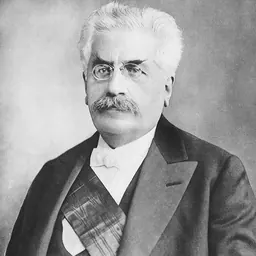

Contemporaries
People whose lives overlapped Louis Amiable's



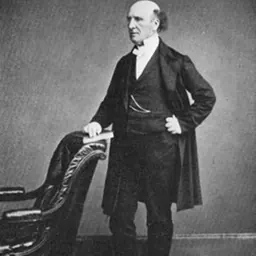
Frequently asked questions
Who was Louis Amiable?
French lawyer
When was Louis Amiable born?
Louis Amiable was born on 16 February 1837 in Montbrison.
When did Louis Amiable die?
Louis Amiable died on 23 January 1897 in Aix-en-Provence.
What was Louis Amiable's occupation?
Louis Amiable was a lawyer and politician.
What nationality was Louis Amiable?
Louis Amiable was French.
Sources & further reading
Cite this page
APA: Biography.guide. (2026). Louis Amiable. https://biography.guide/louis-amiable/
MLA: "Louis Amiable." Biography.guide, https://biography.guide/louis-amiable/.
Chicago: "Louis Amiable." Biography.guide. https://biography.guide/louis-amiable/.
Data last updated: 2026-09-20 · Spot an error? Report a correction.
Page generated 2026-09-27 05:25 UTC