
About Arthur Forrest
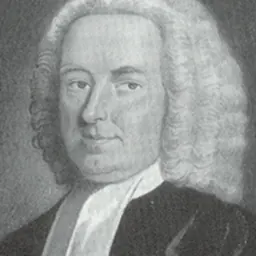
Lived 1716 – 1770 (aged 53–54). Arthur Forrest was a British naval officer, sea captain, military officer and commodore.
Captain Arthur Forrest ( - 26 May 1770) was a Royal Navy officer and planter who saw service during the War of the Austrian Succession and the Seven Years' War, rising to the rank of post-captain. He also owned 3,000 acres of sugar plantations, and a considerable number of slaves, in the Colony of Jamaica.
Early life Details of Forrest's parents and upbringing are unknown, but he had served in the merchant navy as mate or master, trading with Cartagena. He volunteered to serve as a pilot, passed his lieutenant's examination by December 1740, and was given command of the sloop Pilot. During this time he was under orders to train officers in the pilotage of Port Royal. His skills led him to take a distinguished part in the Battle of Cartagena de Indias in March 1741. He came to the attention of Edward Boscawen after serving under him in an attack on the Baradera battery on shore on 17 and 18 March 1741, and on 25 May he was promoted by the expedition's commander, Admiral Edward Vernon, to command the bomb vessel . Further appointments followed, to the sloop in November 1742, and then to . During this time he served on the home station and in convoy service to America.
In 1745 he was promoted to post captain and given command of , in which he took out a large convoy to Newfoundland. In November he was at Boston, where, by pressing some seamen contrary to colonial custom, he got into a troublesome dispute, ending in a serious fray, in which two men were killed. The boatswain of the Wager was arrested on a charge of murder, was convicted, and sentenced to death; the sentence, however, does not appear to have been carried out. Forrest afterwards went to the West Indies, where, in the following year, he captured a Spanish privateer of much superior force. where, by the death of Rear-Admiral Charles Holmes in November 1761, he was left senior officer. On this he moved into , hoisted a broad pennant, and took on himself both the duties and privileges of commander-in-chief, until Sir James Douglas, coming from the Leeward Islands in April 1762, summarily dispossessed him. Forrest returned to England, passenger in a merchant ship, when, on reporting himself to the admiralty, he was told that his conduct in constituting himself commodore was 'most irregular and unjustifiable;’ and that the officers whom he had promoted would not be confirmed. This led to a long correspondence, in which the admiralty so far yielded as to order him to be reimbursed for the expenses he had incurred, though without sanctioning the higher rate of pay.
Forrest purchased property in Jamaica following his appointment as Commander-in-Chief. He also probably inherited land in Jamaica and wealth from his father who died sometime before 1750. In Jamaica, Forrest owned at the time of his death six sugar estates: Masemure, Robins River, Ragged Castle, Vineyard and Pontrepant, Vineyard and Breadnut.
Later life and death In 1769, however, he was sent out to the same station as commander-in-chief, with his broad pennant in . His time in the appointment was short-lived, he died at Jamaica on 26 May 1770. At the time of his death, he never knew that advice of his appointment to the rank of admiral and reputedly, elevation to the peerage as the Viscount Forrest, were on a ship from London to Jamaica.
Forrest owned 422 slaves at the time of probate, of whom 219 were listed as male and 203 as female. 117 were listed as boys, girls or children.
He had married Frederica Marina Cecilia, probably a daughter of Colonel Lynch of Jamaica, by whom he had two sons and five daughters. Mrs. Forrest survived her husband many years and died in 1802. His eldest daughter, Bridget, married the diarist John Byng, 5th Viscount Torrington. His third daughter, Cecilia, married William Windham.
Don’t just read it —
keep it.
Full-length biographies made to live with: read them, listen on the way to work, watch them tonight.
- E-book
- Audio
- Video
Instant download · yours to keep · every purchase keeps this site free
Important facts
People in Arthur Forrest's life
Named in this biography and alive at the same time

Related people
Same field, nearest in time



Contemporaries
People whose lives overlapped Arthur Forrest's



Frequently asked questions
Who was Arthur Forrest?
Royal Navy officer (1716–1770)
When was Arthur Forrest born?
Arthur Forrest was born in 1716.
When did Arthur Forrest die?
Arthur Forrest died on 26 May 1770 in Jamaica.
What was Arthur Forrest's occupation?
Arthur Forrest was a naval officer, sea captain, military officer and commodore.
What nationality was Arthur Forrest?
Arthur Forrest was British.
Sources & further reading
· DBpedia: Arthur Forrest (Royal Navy officer)
Cite this page
APA: Biography.guide. (2026). Arthur Forrest. https://biography.guide/arthur-forrest-naval-officer/
MLA: "Arthur Forrest." Biography.guide, https://biography.guide/arthur-forrest-naval-officer/.
Chicago: "Arthur Forrest." Biography.guide. https://biography.guide/arthur-forrest-naval-officer/.
Data last updated: 2026-09-20 · Spot an error? Report a correction.
Page generated 2026-09-27 05:31 UTC