
About Arthur Cruttenden Mace
Lived 1874 – 1928 (aged 53). Arthur Cruttenden Mace was a British anthropologist, archaeologist, egyptologist and archaeology, known for KV62 and Metropolitan Museum of Art.
Arthur Cruttenden Mace (17 July 1874 – 6 April 1928) was a Tasmanian-born English archaeologist and Egyptologist. He is best known for his work for the New York Metropolitan Museum, and as a part of Howard Carter's team during the excavation of Tutankhamun's tomb.
Biography Early life Mace was born on 17 July 1874 in Glenorchy, near Hobart in Tasmania, to Reverend John Cruttenden Mace and Mary Ellen . With his father abroad, much of youth was spent with clergy relatives in East London. He attended St Edward's School, Oxford, and Keble College, Oxford, taking his degree in 1895. His family had close ties with the high church Oxford Movement, and the Church was seen as his likely career. He decided instead to work for his cousin Flinders Petrie, a prominent Egyptologist and pioneer of systematic excavations.
Egypt After leaving Oxford, Mace joined Flinders Petrie in Egypt, beginning his archaeological career with the Egypt Exploration Fund, serving in the UK and in Genoa, Italy.
After leaving the Army in 1919, Mace went to New York to work on the restoration of Ancient Egyptian artifacts for the Metropolitan Museum, before returning to lead the excavations at Lisht in 1920. He was still working there when, in December 1922, the Metropolitan Museum agreed to loan him to the archaeologist Howard Carter to support the clearance of Tutankhamun's tomb.
Tomb of Tutankhamun In November 1922 Howard Carter discovered the tomb of Tutankhamun in the Valley of the Kings near Luxor, its contents largely intact. Given the size and scope of the task in cataloguing and clearing the tomb, Carter sought help from Albert Lythgoe of the Metropolitan Museum's Egyptian excavation team, who readily agreed to the loan of a number of his staff, including Mace.
Arriving on 25 December 1922, Mace was a part of a small team of experienced archaeologists and experts, led by Carter and including Alfred Lucas, Arthur Callender and photographer Harry Burton.
Mace had become an expert in the preservation of fragile materials, and his principal role, together with Alfred Lucas, was to treat each of the objects found, some of them quite fragile, including cleaning and preliminary repairs before shipment to the Cairo Museum. To undertake this work, they established a makeshift laboratory in the empty tomb of Seti II located close to Tutankhamen's tomb. Conditions in the tomb were cramped and extremely hot, with Mace and Lucas working long hours to keep pace with the items removed from Tutankhamun's tomb.
In addition to his conservation work, Mace gave the excavation broader support. He was one of Carter's closer companions and confidants, co-writing with Carter the first volume of the popular account of the excavation, The tomb of Tut Ankh Amen. When required he assisted in the work within Tutankhamun's tomb, including helping Carter remove the shroud from Tutankhamen's body. He also played an important role in reporting and advising during Carter's legal dispute with the Egyptian authorities, that led to the temporary closure of the tomb in 1924.
Due to the heat, work was undertaken each winter. Mace worked on the clearance for two winter seasons, before leaving both Carter's team, and Egypt, for health reasons in the spring of 1924.
Personal life In 1907 Mace married Winifred Blyth, they had two daughters, Margaret and Anne. During the Tutankhamun excavation they lived with Mace near the site, Winifred arriving with her grand piano strapped on the back of a camel.
During his final years in Egypt, Mace had suffered from pleurisy, which led to pneumonia. He was unable to continue his Egyptological work, and left the excavation team in 1924. Spending the next four winters in England and the French Riviera, Mace died on 6 April 1928 at a nursing home in Haywards Heath, Sussex. Winifred and her daughter Margaret kept in touch with Howard Carter, visiting him in his Kensington flat during the 1930s. In 1937 Margaret married organist and composer Robin Orr.
Don’t just read it —
keep it.
Full-length biographies made to live with: read them, listen on the way to work, watch them tonight.
- E-book
- Audio
- Video
Instant download · yours to keep · every purchase keeps this site free
Important facts
People in Arthur Cruttenden Mace's life
Named in this biography and alive at the same time
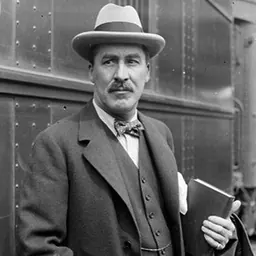
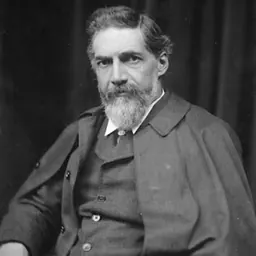
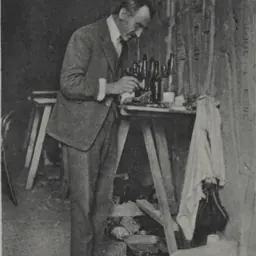




Related people
Same field, nearest in time


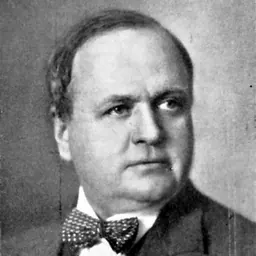

Contemporaries
People whose lives overlapped Arthur Cruttenden Mace's
Frequently asked questions
Who was Arthur Cruttenden Mace?
British Egyptologist (1874-1928)
When was Arthur Cruttenden Mace born?
Arthur Cruttenden Mace was born on 17 July 1874 in Hobart.
When did Arthur Cruttenden Mace die?
Arthur Cruttenden Mace died on 6 April 1928 in Haywards Heath.
What was Arthur Cruttenden Mace's occupation?
Arthur Cruttenden Mace was an anthropologist, archaeologist, egyptologist and archaeology.
What was Arthur Cruttenden Mace known for?
Arthur Cruttenden Mace was known for KV62 and Metropolitan Museum of Art.
What nationality was Arthur Cruttenden Mace?
Arthur Cruttenden Mace was British.
Sources & further reading
· Wikipedia: Arthur Cruttenden Mace
· DBpedia: Arthur Cruttenden Mace
Cite this page
APA: Biography.guide. (2026). Arthur Cruttenden Mace. https://biography.guide/arthur-cruttenden-mace/
MLA: "Arthur Cruttenden Mace." Biography.guide, https://biography.guide/arthur-cruttenden-mace/.
Chicago: "Arthur Cruttenden Mace." Biography.guide. https://biography.guide/arthur-cruttenden-mace/.
Data last updated: 2026-09-22 · Spot an error? Report a correction.
Page generated 2026-09-27 05:24 UTC