
About Arthur Brennan
Lived 1881 – 1931 (aged 50). Arthur Brennan was an Australian australian rules football player.
Arthur Brennan (2 March 1881 – 12 September 1931) was an Australian rules footballer who played with St Kilda in the Victorian Football League (VFL). He also played for Richmond, Port Melbourne, and Footscray in the Victorian Football Association (VFA).
Personal life The son of William Brennan, and Mary Brennan, née O'Farrell, Arthur Brennan was born in Abbotsford, Victoria on 2 March 1881.
He came from a large family; William and Mary had eight daughters and three sons. Both of his brothers played football, most notably Owen Brennan, who was the first member of the family to play in the VFL, with 11 appearances for Collingwood in 1900. In round 15, Brennan was a member of the St Kilda team which lost to Fitzroy at Junction Oval by 72 points.
Although his VFL career was brief, Brennan played for a number of years in the VFA. In 1906 and 1907, Brennan played with his brother William at Port Melbourne, then midway through the 1908 VFA season, he crossed to Footscray.
Bigamy trial Arrested on 29 September 1914, Brennan was committed for trial on 7 October 1914,
At his trial, evidence was given that the Rev. Henry Heathershaw had married Arthur Brennan to his first wife, Catherine Prout, on 7 May 1902, and that Brennan had left her after two years.
Further evidence was given by Alice Mary Patton, who appeared in court having been brought from Pentridge Women's Prison Gaol in order to do so, that, while Brennan was still married to Catherine (and while Catherine was still alive), the Rev. Albert James Abbott married her to Brennan on 23 January 1910, and that they had had a child together, which died in its infancy.
Having initially pleaded "not guilty" to the charge, he later changed his plea to guilty, on the advice of his solicitor, Napthali Henry "Sonny" Sonenberg, and was consequently sentenced to 12 months imprisonment.
Military service 1915 Brennan enlisted in the First AIF on 3 September 1915. He entered camp at Royal Park, Melbourne on 13 September 1915.
Brennan was discovered to be absent without leave on 24 November 1915, and was "struck off strength of [the] Royal Park Camp as a deserter on 30/11/15 — a decision later confirmed by a Court of Inquiry — and a warrant was issued for his arrest." aboard the HMAT Euripides A14, to serve in Europe.
In August 1918, whilst still in England, he was charged with being absent without leave and was imprisoned without pay for 28 days.
In September 1918, soon after arriving in France, he was imprisoned for three days without pay for "conduct to the prejudice of good order and military discipline in that he discharged firearms in his hut on 23.9.18"; and in October 1918, he was imprisoned, again, for being absent without leave. He was absent without leave, once more, from 26 October 1918 until he was arrested on 18 November 1918. were arrested in November 1918, and put on trial, in France, after they had forcibly entered an estaminet in Saint-Vaast, on the night of 29 October 1918.
Both were found guilty of "committing an offence against the property of an inhabitant of the country in which he was serving", and was returned to his regiment and then repatriated (with his regiment) to Australia in the HMAT Port Melbourne, leaving England on 5 July 1919, and landing in Melbourne on 20 August.
Murder The Brennan household, which consisted of Arthur and five of his sisters, had an arrangement with their immediate neighbour, Norah Power, that, if she was alone and in need of assistance, she would knock on the wall which divided their homes.
12 September 1931 On 12 September 1931, Brennan was shot dead outside his home, at 26 Rowe Street, North Fitzroy, by a burglar who was trying to get into Power's residence. That night, Power had been alarmed by the sound of someone trying to get through her window. Brennan was in his kitchen and, once he heard Power's signal, walked across his garden to her home. He confronted a man he saw standing on Power's verandah who attempted unsuccessfully to defuse the situation by claiming he was at the home to visit a friend. When he tried to make his escape, Brennan blocked his path at the garden gate and the pair then grappled. The gunman was chased by two other bystanders but was able to get away.
Search for suspect An investigation revealed that the gunman, likely aged 25 to 30, had earlier been seen scoping the area and was, therefore, able to get a good description of his appearance. The police were unable to locate the suspect; and, after three months had elapsed, the City Coroner gave a finding that Brennan had been murdered by a "person unknown".
Alleged perpetrators Although the case remains unsolved today, the Victorian police sequentially identified (albeit posthumously) two known criminals as Brennan's murderer, first, at the time of his death, John Gepp, then, later, when that allegation had been retracted, Reginald James Barker, although no evidence supporting either of these official allegations was ever presented in court.
John Gepp, alias John Vernon Pinkus, alias Raymond Brennan, alias John D'Arcy
John Gepp (1898–1932), alias John Vernon Pinkus, alias Raymond Brennan, alias John D'Arcy, was shot dead on 18 January while escaping from the police who had attempted to apprehend him outside his Clifton Hill residence (apparently in order to arrest him for Brennan's murder). In his attempt to evade arrest, he fled the scene, and was badly injured when attempting to clear an iron spiked fence at the Jolimont railway station; and, bleeding profusely, he then ran into an adjacent park, "turned in his tracks and fired a shot at his pursuers". The police returned fire ("The staff at the Jolimont station heard the report of a shot and then a fusillade") killing Gepp.
At the time of his death, police stated that "[they were] now certain from information which has come to hand that [Gepp] was the prowler who on September 12 last murdered Arthur Brennan in front of his home in Howe Street, North Fitzroy". However, in April 1932, once forensic evidence had revealed that Gepp's gun had not fired the bullet that killed Brennan, the police had become convinced "beyond all reasonable doubt that [Gepp] was not the murderer of Arthur Brennan". On 15 April 1932, Thomas Blamey, the Chief Commissioner of the Victorian Police Force, formally announced that Gepp was no longer considered to be Brennan's murderer.
Although just 17½, he was more than 6 feet tall and was strongly built; and "despite his youth, [he] was described by police [at the time of his death] as being one of the most desperate young criminals who had passed through their hands in recent years" Having previously been convicted of a number of crimes (including firearms offences, and breaking and entering), for which he had (already) served several long terms in detention centres, he was in prison awaiting sentencing, having been found guilty of (a) shooting at a police constable with the intent to murder him, and (b) stealing a motorcycle and sidecar.
On Friday 15 April 1932, in the process of declaring that Gepp was no longer considered to be Brennan's murderer, Police Commissioner Blamey also announced that, "as a result of investigations by detectives it had been clearly established that the murderer of Arthur Brennan in Fitzroy on September 12, 1931, was Reginald James Barker". was fired from a .25 automatic Colt pistol, which was found in Barker's possession and which was identified as having been stolen from Donald Mackintosh's gun shop in Bourke Street. While inquiring into Barker's death. detectives were told by other prisoners serving sentences at [Pentridge] gaol that Barker was the man who had shot Brennan.["It was while the police were making inquiries into [Barker's] death that they were given information which led to their report implicating Barker. The police report was based on the statements of several of Barker's fellow prisoners, who allegedly told the detectives that Barker had admitted the murder, and was worried because he thought the police would have a revolver, which had been found in his possession earlier, examined, and, by comparison with the bullet taken from Brennan's head, learn that he was the murderer. He also feared, the prisoners are alleged to have said, that the police would find his overcoat at home, and have it identified by Miss Power." ][The prisoners] said that they thought that Barker was under the impression that a large sum of money was kept in the house occupied by Miss Power, in Rowe Street, North Fitzroy, next door to Mr. Brennan's house, and that he thought that Mr Brennan was a policeman.When Miss Power was shown Barker's photograph recently it is said that she exclaimed "That is the man who shot Mr. Brennan. I knew that the man the police shot at Jolimont was not the murderer of Mr. Brennan."At the conclusion of a report made by members of the criminal investigation branch it is stated:- "After making inquiries into this matter we have no hesitation in stating that Barker was the man who shot Arthur Brennan."The Argus, 16 April 1932. the Medical Superintendent of St Vincent's Hospital, Melbourne — the veracity of the report's contents were (subsequently) confirmed directly with Dr. Grieve by The Herald. — to the effect that, on his first of seven visits to the hospital (10 September 1931), Barker was extremely lame and was given crutches (Grieve told the reporter that the injury was so severe that "he was surprised that Barker had been able to reach the hospital unassisted. 'It was a wonder that he could walk at all', said Dr. Grieve.") An X-ray taken on 11 September 1931 showed a fracture, that was some weeks old, of both bones of his right ankle; and on 14 September his leg was put in plaster of Paris. Mrs Barker told The Herald that she had specifically told the detectives, at the time of the coroner's inquest, of her son's injured foot, and that, following that, they could have checked her story with the doctor before coming to their final conclusion.
His mother declared that, at 17 years of age, 6 feet tall, and well-built, her son was significantly different from the "official description of Brennan's murderer [that witnesses had] given police ... between 25 and 30 years old, 5 feet 9 inches in height, and of thin to medium build"; and, moreover, that, "apart from the difference in description... her son, from the hospital report, obviously could not have been the prowler who frightened Miss Norah Power, who lived next door to Brennan, on September 12; and he could not possibly have run away after having shot Brennan, as witnesses said Brennan's murderer had done".
Mrs. Barker further declared that the police claim that they had traced Brennan's murder weapon to Barker's home was false: "She said that the detectives who visited her home after her son's death had taken only a grey overcoat — the overcoat which, according to the police, Miss Power later identified. She [viz., Mrs. Barker] had never seen a revolver in the house".
In explaining why she had come to The Herald, "with a medical report which, she claimed, showed that her son could not have been guilty of the murder of Arthur Brennan, 48, as alleged by the police" — "'In their endeavor to clear Pinkus', said Mrs Barker, 'the police have put the blame for n terrible crime on my boy, who, whatever else he might have done, was not a murderer. The detectives were told, outside the Morgue at the inquest, about my son's foot injury, and they could have seen the doctors before having made [the report that they submitted to the Police Commissioner]' — "Mrs. Barker said that she had sought [earlier] today to place [Grieve's] report before the Police Commissioner (General Blamey) but that he had refused an interview".
Don’t just read it —
keep it.
Full-length biographies made to live with: read them, listen on the way to work, watch them tonight.
- E-book
- Audio
- Video
Instant download · yours to keep · every purchase keeps this site free
Important facts
People in Arthur Brennan's life
Named in this biography and alive at the same time



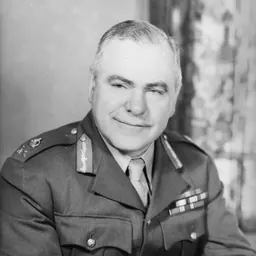

Related people
Same field, nearest in time



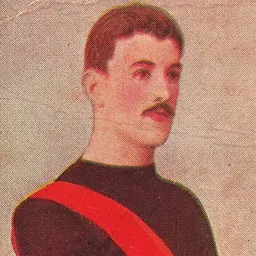
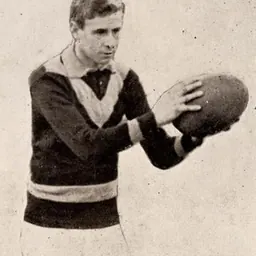
Contemporaries
People whose lives overlapped Arthur Brennan's


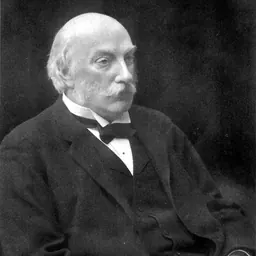



Frequently asked questions
Who was Arthur Brennan?
Australian rules footballer (1881-1931)
When was Arthur Brennan born?
Arthur Brennan was born on 2 March 1881 in Abbotsford.
When did Arthur Brennan die?
Arthur Brennan died on 12 September 1931 in Fitzroy North.
What was Arthur Brennan's occupation?
Arthur Brennan was an australian rules football player.
What nationality was Arthur Brennan?
Arthur Brennan was Australian.
Sources & further reading
Cite this page
APA: Biography.guide. (2026). Arthur Brennan. https://biography.guide/arthur-brennan/
MLA: "Arthur Brennan." Biography.guide, https://biography.guide/arthur-brennan/.
Chicago: "Arthur Brennan." Biography.guide. https://biography.guide/arthur-brennan/.
Data last updated: 2026-09-20 · Spot an error? Report a correction.
Page generated 2026-09-27 05:20 UTC