
About Arthur Bispo do Rosário
Lived 1911 – 1989 (aged 77–78). Arthur Bispo do Rosário was a Brazilian painter, visual artist, tapestry weaver, embroiderer, textile artist and object artist.
Statue of Arthur Bispo do Rosário, in Japaratuba, Sergipe, Brazil. Arthur Bispo do Rosário (May 14, 1909 or March 16, 1911 – July 5, 1989) was a Brazilian outsider artist. Diagnosed with schizophrenia, he lived in a psychiatric institution in Rio de Janeiro for 50 years, where he created works of art with found objects, as part of a "divine mission". His works gained recognition among art critics when they were first displayed at the Venice Biennale in 1995.
Biography Born in Japaratuba, in the state of Sergipe, Bispo do Rosário joined the Navy in 1925 and later worked as a boxer and handyman. Between 1933 and 1937, he worked at the Light Department of Trams in the city of Rio de Janeiro and as a domestic worker for the Leoni family in the neighborhood of Botafogo.
On the night of December 22, 1938, Bispo do Rosário experienced hallucinations that led him to visit his employer, the lawyer Humberto Magalhães Leoni, to whom he said that he would present himself to the Candelária Church. After wandering the streets of Rio, he eventually headed to the Mosteiro de São Bento, where he announced to a group of monks that he was Jesus Christ, sent by God to be in charge of judging the living and the dead. Two days later he was arrested by police, recorded as an indigent and committed to the Hospício Pedro II, the first official mental institution in Brazil.
A month after his hospitalization, he was transferred to another mental institution, Colônia Juliano Moreira, located in the suburb of Jacarepaguá, under the diagnosis of "schizophrenic-paranoid." Here he received the patient number 01662, and was to remain for over 50 years.
During his stay at Colônia Juliano Moreira, Bispo do Rosário began to fashion works of art from different types of materials found around the institution. These works were intended to mark the passing of God on Earth and to represent the world, rather than as art for its own sake: his best known work is the Manto da Presentação (Presentation Cloak), which he intended to wear on the Day of Judgement. Bispo do Rosário said of his art "The voices tell me to do this way". Common themes in his work included ships (a recurring theme due to his relationship with the Navy in his youth), banners, and household objects.
His life inspired a short story by psychiatrist and author Daniel Mason entitled ″A Registry of My Passage Upon the Earth″ published by Little, Brown and Company in 2020.
Don’t just read it —
keep it.
Full-length biographies made to live with: read them, listen on the way to work, watch them tonight.
- E-book
- Audio
- Video
Instant download · yours to keep · every purchase keeps this site free
Important facts
People in Arthur Bispo do Rosário's life
Named in this biography and alive at the same time
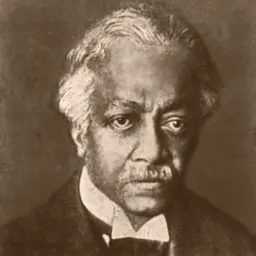



Related people
Same field, nearest in time

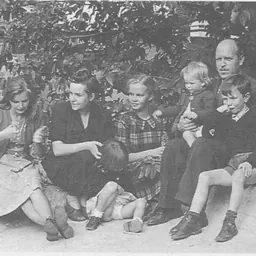



Contemporaries
People whose lives overlapped Arthur Bispo do Rosário's






Frequently asked questions
Who was Arthur Bispo do Rosário?
Brazilian artist (1911–1989)
When was Arthur Bispo do Rosário born?
Arthur Bispo do Rosário was born on 10 May 1911 in Japaratuba.
When did Arthur Bispo do Rosário die?
Arthur Bispo do Rosário died in 1989 in Rio de Janeiro.
What was Arthur Bispo do Rosário's occupation?
Arthur Bispo do Rosário was a painter, visual artist, tapestry weaver, embroiderer, textile artist and object artist.
What nationality was Arthur Bispo do Rosário?
Arthur Bispo do Rosário was Brazilian.
Sources & further reading
· Wikipedia: Arthur Bispo do Rosário
· DBpedia: Arthur Bispo do Rosário
Cite this page
APA: Biography.guide. (2026). Arthur Bispo do Rosário. https://biography.guide/arthur-bispo-do-rosario/
MLA: "Arthur Bispo do Rosário." Biography.guide, https://biography.guide/arthur-bispo-do-rosario/.
Chicago: "Arthur Bispo do Rosário." Biography.guide. https://biography.guide/arthur-bispo-do-rosario/.
Data last updated: 2026-09-20 · Spot an error? Report a correction.
Page generated 2026-09-27 05:31 UTC