
About Arthur Alfred Lynch
Lived 1861 – 1934 (aged 72). Arthur Alfred Lynch was a South African civil engineer, engineer, politician, poet and physicist.
Arthur Alfred Lynch (16 October 1861 – 25 March 1934) was an Irish Australian civil engineer, physician, journalist, author, soldier, anti-imperialist and polymath. He served as MP in the UK House of Commons as member of the Irish Parliamentary Party, representing Galway Borough from 1901 to 1902, and later West Clare from 1909 to 1918. Lynch fought on the Boer side during the Boer War in South Africa, for which he was sentenced to death but later pardoned. He supported the British war effort in the First World War, raising his own Irish battalion in Munster towards the end of the war.
Australian years Lynch was born at Smythesdale near Ballarat, Victoria, the fourth of 14 children. His father, John Lynch, was an Irish Catholic surveyor and civil engineer and his mother Isabella (née MacGregor) was Scottish. John Lynch was a founder and first president of the Ballarat School of Mines, and a captain of Peter Lalor at the Eureka Stockade rebellion (1854) and John Lynch wrote a book, Austral Light (1893–94), about it – later republished as The Story of the Eureka Stockade. it was misleading to call the 70 or so men in the Irish unit raised by Lynch "a brigade", rather he suggested that "the publicity that comes from spectacular gestures..." made Lynch appear "a romantic warrior" and that his actions "flattered many Irishmen and women...". In contrast, Antony O'Brien's fictional Bye-Bye Dolly Gray, is kinder to Lynch's showy South African exploits and his uitlanders. Michael Davitt who travelled to South Africa has photos of Lynch with his brigade on the veldt in The Boer Fight for Freedom.
Conviction and pardon
After South Africa, Lynch travelled to the United States, and then returned to Paris, from where he again stood for Galway Borough in November 1901 and was elected in his absence as MP. On going to London, Lynch was arrested for his pro-Boer activities and on remand for eight months.
In July 1907, Lynch was pardoned, and in 1909 he was again elected Member of Parliament, this time for West Clare, in Ireland.
Munster battalion During World War I, Lynch volunteered for the New British Army. He raised a private 10th Battalion, Royal Munster Fusiliers and was given the rank of colonel, although he and his unit never saw active front service. At the end of the war, Lynch chose to stand as a Labour candidate in newly created Battersea South for the 1918 General election. He finished second to the Conservative candidate.
Publications Lynch wrote many publications including:
Modern Authors (1891) Approaches the Poor Scholar's Quest of a Mecca (1892) A Koran of Love (1894) Our Poets (1894) Religio Athletae (1895) Human Documents (1896) Prince Azreel (1911) Psychology; A New System (two vol.; 1912) Purpose and Evolution (1913) Sonnets of the Banner and the Star (1914) Ireland: Vital Hour (1915) Poppy Meadows, Roman Philosophique (1915) La Nouvelle Ethique (1917) L'Evolution dons ses Rapports avec l'ethique (1917) Moments of Genius (1919) The Immortal Caravel (1920) Moods of Life (1921) O'Rourke the Great (1921) Ethics, an Exposition of Principles (1922) Principles of Psychology (1923) Seraph Wings (1923) My Life Story (1924) Science, Leading and Misleading (1927) The Rosy Fingers (1929) The Case Against Einstein (1932)
Don’t just read it —
keep it.
Full-length biographies made to live with: read them, listen on the way to work, watch them tonight.
- E-book
- Audio
- Video
Instant download · yours to keep · every purchase keeps this site free
Important facts
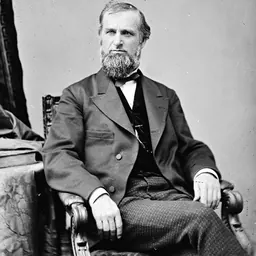
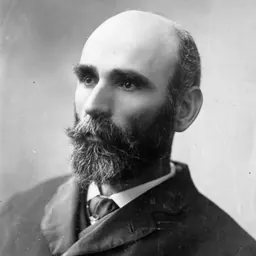
People in Arthur Alfred Lynch's life
Named in this biography and alive at the same time





Related people
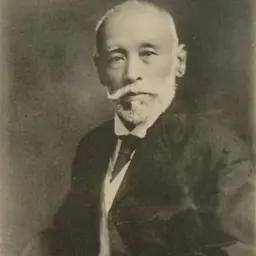
Same field, nearest in time



Contemporaries
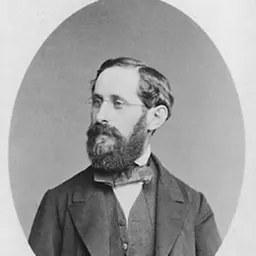
People whose lives overlapped Arthur Alfred Lynch's



Frequently asked questions
Who was Arthur Alfred Lynch?
British politician
When was Arthur Alfred Lynch born?
Arthur Alfred Lynch was born on 16 October 1861 in Australia, Ballarat, Victoria, Victoria, Australia.
When did Arthur Alfred Lynch die?
Arthur Alfred Lynch died on 25 March 1934 in Haverstock Hill, London, United Kingdom.
What was Arthur Alfred Lynch's occupation?
Arthur Alfred Lynch was a civil engineer, engineer, politician, poet and physicist.
What nationality was Arthur Alfred Lynch?
Arthur Alfred Lynch was South African.
Sources & further reading
· Wikipedia: Arthur Alfred Lynch
· DBpedia: Arthur Lynch (politician)
Cite this page
APA: Biography.guide. (2026). Arthur Alfred Lynch. https://biography.guide/arthur-alfred-lynch/
MLA: "Arthur Alfred Lynch." Biography.guide, https://biography.guide/arthur-alfred-lynch/.
Chicago: "Arthur Alfred Lynch." Biography.guide. https://biography.guide/arthur-alfred-lynch/.
Data last updated: 2026-09-20 · Spot an error? Report a correction.
Page generated 2026-09-27 05:28 UTC