
Arsenio Erico
Paraguayan football striker
About Arsenio Erico
Lived 1915 – 1977 (aged 62). Arsenio Erico was a Paraguayan association football player and association football coach.
Arsenio Pastor Erico Martínez (30 March 1915 – 23 July 1977) was a Paraguayan football striker. According to some researchers, Erico is ranked first among the all-time highest goalscorers in the Argentine Primera División with 293 goals. Nevertheless, in 2025 some historians rectified that statistic, placing Ángel Labruna first with 295 goals.
All the goals in Erico's career in Primera División were scored playing for Independiente. Erico is also considered the best Paraguayan footballer of all time and for some, including Alfredo Di Stéfano, is the best player in history. A striker noted for his technique, finishing and aerial ability, Erico was regarded one of the finest players of the 1930s and one of greatest players to have played in the Argentinean league.
Based on that work, published in 114 parts over more than two years, the statistics showed that Erico had 293 goals and Labruna 290. But as the research pointed out: "The 3-goal difference in Erico's favor was reduced to a minimum when some historians discovered that Labruna had scored 2 goals in the 1949 playoff matches for second place against Platense, which had been ignored by Ramírez". Therefore, the numbers became 293–292.
Career
As a player Erico heading the ball in a match against River Plate, c. 1939 Erico, born in Asunción, Paraguay, began his career with Club Nacional of Paraguay and made his debut in the club's first-team squad at the age of 15. During the early 1930s, Erico was part of the Paraguayan Red Cross football team that was on tour in Argentina in order to gather funds for the Chaco War. Because of his good performances during the friendly matches on the tour, Club Atlético Independiente of Argentina signed him. He made his debut for Independiente on 5 May 1936 and began to demonstrate why he had acquired the nickname 'red jumper'. Before the 1938 FIFA World Cup, Erico was offered an extravagant amount of money to play for the Argentina national football team but he rejected it, gaining the praise of the general Argentine public for remaining loyal to his country of origin. Soon after this, however, Erico caught an infection which led to a long period out on the sidelines. Then, in 1937, he broke his leg. After he recovered, however, he reminded everyone of his talent by taking Independiente to the league title in 1938 and 1939. Later, he joined Huracán where he only played 7 games in 1947 before retiring.
After retirement
After retiring from football, Erico decided to live in Argentina, although he often visited his country of origin. He had a brief career as a coach, managing the club where he started his career as a footballer, Nacional and also had a brief stint in Club Sol de América where he led the team to a second-place finish in the 1957 Paraguayan Primera División. In 1960, he got married with Aurelia Blanco. They had no children.
In 1970 Erico was honored in Asunción, Paraguay during a friendly match between Argentina and Paraguay national sides in the Estadio Defensores del Chaco that was at its full capacity.
In 1977 his left leg had to be cut off, and he finally died of a heart attack on 23 July 1977. While the match between River and Independiente (played the day following his death at Tomas Adolfo Duco Palace) was being played, the crowd acclaimed Erico singing "Se siente, se siente, Erico está presente (We feel it, we feel it, Erico is with us)".
Erico was buried in the Cemetery of Morón in Greater Buenos Aires. Independiente paid the costs of burial expenses and funeral.
Legacy Erico was an inspiration to Argentine player Alfredo Di Stéfano, who considered him one of the greatest player ever. Other figures like Brazilian striker Leônidas da Silva and Paraguayan Delfín Benítez Cáceres also consider Erico as one of the best players in history. Argentine striker Francisco Varallo remembers Erico as a "phenomenon" that would excel in scoring headers due to his high jumps.
Club Nacional Stadium is named after him, and sections of the Defensores del Chaco stadium in Paraguay and the Libertadores de América stadium in Avellaneda also carry Arsenio Erico's name. He died on 23 July 1977.
Career statistics
Source:
Titles
Club Independiente Primera División (2): 1938, 1939 Copa Dr. Ibarguren (2): 1938, 1939 Copa Adrián Escobar (1): 1939 Copa Aldao (2): 1938, 1939
Nacional (Paraguay) Primera División (1): 1942
All-time topscorer controversy Until October 2025, there was a broad consensus that Erico was the all-time top scorer in the Primera División.
In October 2025, however, following a thorough investigation, historians from Center for the Research of Football History (CIHF) concluded that Ángel Labruna was the all-time top scorer, moving Erico to second place.
They supported their conclusion by explaining that previous statistics had been based on Pablo Ramírez's book, The History of Professionalism in Argentine football, published in 1977. According to the CIHF historians, Ramírez's work contained errors and omissions because he deliberately excluded tiebreaker matches and tournaments that he considered irrelevant, such as the Reclassification and Promotional tournaments. In addition, he did not cover the first 40 years of Argentine football (1891–1930) so the book covered only the professional era beginning in 1931.
In his book, Ramírez stated that Erico had scored 295 goals and Labruna 293. However, later research showed that Erico's two-goal advantage had narrowed when historians discovered that Labruna had scored two goals in the 1949 second-place playoff matches against Platense, matches that Ramírez had omitted. As a result, the 295–293 tally in Erico's favor was accepted for many years.
More recent research also found that a goal attributed by Ramírez to José Manuel Moreno had in fact been scored by Labruna. Most contemporary media reports available at the time credited Labruna, while Ramírez attributed it to Moreno, as had the newspaper La Nación. A photograph showing Labruna heading the ball into the net dispelled any remaining doubt, bringing both players level on 293 goals.
The latest CIHF review, which lasted more than six weeks and was published in October 2025, concluded that Labruna had scored 295 goals and Erico 293, making Labruna the all-time leading scorer in the Argentine Primera División.
Don’t just read it —
keep it.
Full-length biographies made to live with: read them, listen on the way to work, watch them tonight.
- E-book
- Audio
- Video
Instant download · yours to keep · every purchase keeps this site free
Important facts
People in Arsenio Erico's life
Named in this biography and alive at the same time
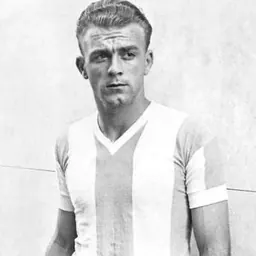

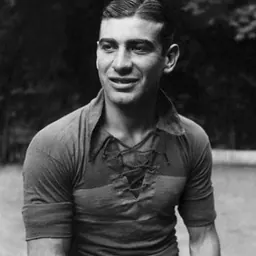
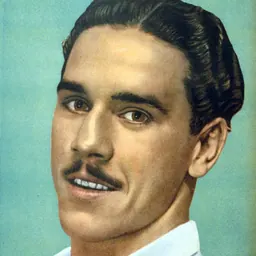

Related people
Same field, nearest in time
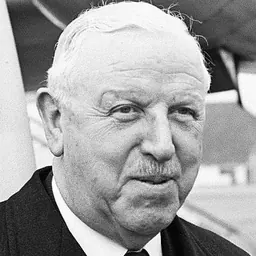



Contemporaries
People whose lives overlapped Arsenio Erico's





Frequently asked questions
Who was Arsenio Erico?
Paraguayan football striker (1915-1977)
When was Arsenio Erico born?
Arsenio Erico was born on 30 March 1915 in Asunción.
When did Arsenio Erico die?
Arsenio Erico died on 23 July 1977 in Buenos Aires.
What was Arsenio Erico's occupation?
Arsenio Erico was an association football player and association football coach.
What nationality was Arsenio Erico?
Arsenio Erico was Paraguayan.
Sources & further reading
Cite this page
APA: Biography.guide. (2026). Arsenio Erico. https://biography.guide/arsenio-erico/
MLA: "Arsenio Erico." Biography.guide, https://biography.guide/arsenio-erico/.
Chicago: "Arsenio Erico." Biography.guide. https://biography.guide/arsenio-erico/.
Data last updated: 2026-09-20 · Spot an error? Report a correction.
Page generated 2026-09-27 05:22 UTC