
Arnold Laven
American film and television director
About Arnold Laven
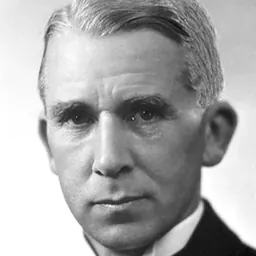
Lived 1922 – 2009 (aged 87). Arnold Laven was an American film director, screenwriter, film producer and television producer.
Arnold Laven (February 3, 1922 – September 13, 2009) was an American film and television director and producer. He was one of the founders and principals of the American film and television production company Levy-Gardner-Laven. Laven was a producer of, among other things, the western television series The Rifleman and The Big Valley. He also directed motion pictures, including Without Warning!, The Rack, The Monster That Challenged the World, Geronimo, Rough Night in Jericho, and Sam Whiskey. In the 1970s and early 1980s, Laven directed dozens of episodes of television series, including episodes of Mannix, The A-Team, Hill Street Blues, The Six Million Dollar Man, Fantasy Island, The Rockford Files and CHiPs.
Early years Laven was born in Chicago, Illinois, and moved to Los Angeles with his family in the late 1930s. He got his start in the entertainment business working as a mail room messenger at Warner Bros. Laven later recalled that the films they made were not "phony" Hollywood war films: "They had to be approved by the higher-ups in the Air Force. They had to be technically accurate in every possible way." The unit included actors George Montgomery, Arthur Kennedy, Alan Ladd, William Holden, and DeForest Kelley. Army Capt. Ronald Reagan was the unit's personnel officer. Laven recalled that the men liked and respected Reagan, noting, "He was always a very warm, cordial, and pleasant man." He worked on such films as William Wyler's The Best Years of Our Lives and Fred Zinnemann's Teresa. The company opened offices at Goldwyn studios and announced plans to begin casting on their first feature, Without Warning!, a thriller about a psychopathic killer on the loose.
In May 1952, Hedda Hopper announced the arrival of the new team as follows:
The trio's second feature was Vice Squad, a 1953 detective drama directed by Laven and starring Edward G. Robinson and Adam Williams.
The third feature, Down Three Dark Streets, was another semidocumentary-style film noir starring Broderick Crawford as an FBI agent. The film's climax took place around the Hollywood Sign. A newspaper review of the 1954 film noted the promise of the three young producers:
In 1956, Laven went out on his own to direct The Rack, a drama starring Paul Newman and Lee Marvin about a soldier who is court-martialed for collaborating with the enemy after spending two years in a North Korean prison camp. The film was based on a United States Steel Hour program written by Rod Serling.
In 1957, Levy-Gardner-Laven team turned their focus to the popular science fiction and monster genres. Laven received directing and producing credits on The Monster That Challenged the World, a feature about an army of giant mollusks that emerge from the Salton Sea in California's Imperial Valley. A review in the Los Angeles Times called the film "distinctly chilling," noted that "Laven never lets the tension slacken," and described the plot as follows:
The trio followed with a pair of vampire movies, The Vampire, a 1957 release about a small-town doctor who mistakenly ingests an experimental drug made from the blood of vampire bats, and The Return of Dracula, a 1958 feature about a vampire who murders a Czech artist, assumes his identity, and moves to the United States.
In the late 1950s, Laven also directed Slaughter on Tenth Avenue (1957), a crime drama set on the docks starring Richard Egan and Walter Matthau, and Anna Lucasta (1958), a feature starring an all-African American cast that included Eartha Kitt and Sammy Davis Jr.
The Rifleman and other westerns In 1957, Laven and his partners were collaborating with young screenwriter, Sam Peckinpah, on an episode of Zane Grey Theater when Laven came up with the concept for The Rifleman. Looking for a hook to separate the idea from other westerns, Laven suggested that they focus on the relationship between the rifle-toting settler and his son. The Rifleman, with former professional baseball and basketball player Chuck Connors in the lead role, proved to be Laven's biggest success. The series ran from 1958 through 1963 and became one of the most successful television series of the 1960s.
After The Rifleman left the air, Laven returned to the western genre as the executive producer of the long-running western television series, The Big Valley. The series starred Barbara Stanwyck and was broadcast by ABC from 1965 to 1969. Laven was responsible for casting Lee Majors as Stanwyck's step-son, predicting big things for the young actor: "It's his first appearance before a camera and I'll go on record as saying he's one of the most attractive male stars to come along in years."
Laven's association with the genre extended into a string of feature films. His directing credits in the western genre included The Glory Guys, a 1965 feature written by Sam Peckinpah about George Armstrong Custer and his 7th Cavalry Regiment, and Rough Night in Jericho, a 1967 western film starring Dean Martin, George Peppard, and Jean Simmons.
In 1968, Laven became one of the first directors to be confronted with cutting a scene under the newly introduced MPAA ratings system. The film was Sam Whiskey, a western directed by Laven and starring Burt Reynolds and Angie Dickinson as characters trying to recover $250,000 in gold bars from a steamboat wreck. The film as submitted by Laven to the MPAA included "a bare-from-the-waist-up shot" of Angie Dickinson.
During the late 1960s and early 1970s, the Levy-Gardner-Laven team also remained active as producers on such films as Clambake, a 1967 Elvis Presley musical co-starring Shelley Fabares, The Scalphunters, a 1968 western directed by Sydney Pollack and starring Burt Lancaster, Ossie Davis and Telly Savalas, and Kansas City Bomber, a 1972 drama starring Raquel Welch as a roller derby athlete. He was survived by his wife, the former Wallace Earl Sparks, a daughter and a son.
Don’t just read it —
keep it.
Full-length biographies made to live with: read them, listen on the way to work, watch them tonight.
- E-book
- Audio
- Video
Instant download · yours to keep · every purchase keeps this site free
Important facts
People in Arnold Laven's life
Named in this biography and alive at the same time


Related people
Same field, nearest in time




Contemporaries
People whose lives overlapped Arnold Laven's


Frequently asked questions
Who was Arnold Laven?
American film and television director (1922–2009)
When was Arnold Laven born?
Arnold Laven was born on 3 February 1922 in Chicago.
When did Arnold Laven die?
Arnold Laven died on 13 September 2009 in Tarzana.
What was Arnold Laven's occupation?
Arnold Laven was a film director, screenwriter, film producer and television producer.
What nationality was Arnold Laven?
Arnold Laven was American.
Sources & further reading
Cite this page
APA: Biography.guide. (2026). Arnold Laven. https://biography.guide/arnold-laven/
MLA: "Arnold Laven." Biography.guide, https://biography.guide/arnold-laven/.
Chicago: "Arnold Laven." Biography.guide. https://biography.guide/arnold-laven/.
Data last updated: 2026-09-22 · Spot an error? Report a correction.
Page generated 2026-09-27 05:08 UTC