
About Arnold Hano
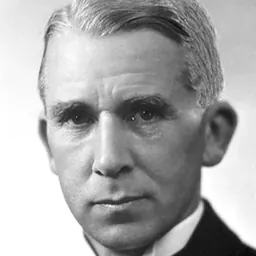
Lived 1922 – 2021 (aged 99). Arnold Hano was an American biographer, journalist, novelist, sports journalist, writer and book editor.
Arnold Philip Hano (March 2, 1922 – October 24, 2021) was an American editor, novelist, biographer and journalist, best known for his non-fiction work A Day in the Bleachers, a critically acclaimed eyewitness account of Game 1 of the 1954 World Series, centered on its pivotal play, Willie Mays' famous catch and throw. The author of several sports biographies, and frequent contributor to such publications as The New York Times, Sport, Sports Illustrated, and TV Guide, Hano was, in 1963, both a Hillman Prize winner and NSSA's Magazine Sportswriter of the Year. He was also Baseball Reliquary's 2012 Hilda Award recipient and a 2016 inductee into its Shrine of the Eternals.
Early life and education Hano was born in Manhattan on March 2, 1922. His father, Alfred Barnard Hano, worked as a lawyer and was employed as a salesman during the Great Depression; his mother, Clara (Millhauser), was a housewife. Hano spent his pre-school years in northern Manhattan's Washington Heights, in close proximity to both the Polo Grounds and Yankee Stadium. A Yankee fan at four, Hano responded to New York's loss in the 1926 World Series by switching his allegiance from the Yankees to the Giants, (This defection did not extend to players: Hano remained an avid fan of Babe Ruth.I shifted in 1926 to the Giants, and 1927 began the Yankee dynasty that may have been one of the greatest teams ever.) But I didn't really care because I still remained a Babe Ruth fan. I loved watching him hit home runs. [...] Ruth was a great all-around ballplayer. [...] People think of him as a fat truck, but he could run. He ran gracefully with short steps, funny for a guy who was 6'3" [] and 210 [] before he starting getting fat. [...] Very graceful. He didn't have a strong arm. Odd thing is, he didn't have a powerful arm, he had a very accurate arm. [...] He would always throw to the right base. We say that about most outfielders. Ruth always threw to the right base. DiMaggio always threw to the right base. The others maybe did, maybe didn't. Mays most of the time threw to the right base, but Ruth always threw to the right base. [...] The two most influential ballplayers that I've ever been involved with, that I've ever seen, are Ruth and Jackie Robinson. They both changed the game dramatically. That same year, his family moved from Manhattan to the Bronx for more than a decade comprising his formative years. By the time he was eight, Hano was writing news stories for his brother's mimeographed weekly, The Montgomery Avenue News, albeit stories paraphrased from published newspaper articles. Before long, he grew tired of recycling other people's ideas; once again, his brother encouraged him:
So I invented a cop who would always fall to his knees when he shot the bad guy and I called it Sitting Bull. It was my first pun. [...] I did about six or seven of these episodic things. I was eight years old, writing the equivalent of a novel for a street newspaper that we sold for a nickel a copy, door-to-door.
One day I wandered into the newspaper office, and they were laughing. I didn't know you were allowed to have fun. They were enjoying themselves, so I changed from a science major to an English journalism major in my sophomore year. I became the sports editor of the college weekly in my junior year, and senior year I was editor-in-chief with another guy. Hano wrote later "I didn't know how or what – would it be a newspaper, or freelance, or a novelist, but I knew I'd write."
Career That summer, Hano was employed as a copy boy by the New York Daily News: Accompanying the News photographer to sporting events, he provided captions for those shots chosen to be published. Hano wrote almost 70 years later:
I'm the luckiest fan in the history of the world. When I was a copy boy at the Daily News, I was sitting in the Ebbetts Field press box when that ball got away from Mickey Owen. and Arnold to the Army. He served in an artillery battalion of the Seventh Infantry Division, participating in the Aleutian Islands Campaign and later landing in the first wave on Kwajalein Atoll. Informed that his brother was missing in action on a mission over Germany, Hano successfully applied to be commissioned as an infantry officer at Fort Benning, allowing him to be deployed to the European Theater where he hoped to find his brother. Before this plan could be realized, the war ended and Alfred's remains were recovered.
After his discharge, Hano returned to New York to a career in book publishing, first as managing editor with Bantam (1947–49), working with novelists C. M. Kornbluth, David Goodis, David Karp and particularly Jim Thompson, whose productivity thrived under Hano's guidance.
In 1951, Hano debuted as an author with the baseball-themed young adult novel, The Big Out, described by The New York Times reviewer Ralph Adams Brown as "one of the most thrilling sports novels this reviewer has ever read."
In 1954, Hano left Lion Books after a company-wide 10% pay cut imposed by Martin Goodman. the book was critically acclaimed. 2004, and 2006. The book's signature passage—its description of Willie Mays' famous catch—is frequently cited, quoted, or reprinted in full.
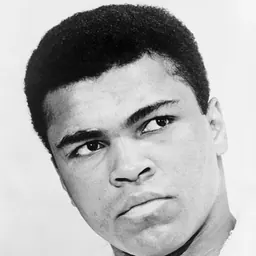
Buoyed by the book's reception, Hano began to establish himself as a freelance writer, his work appearing in publications such as The Saturday Evening Post, Esquire, The New York Times, Boys' Life, Argosy, He also authored several sports biographies in the 1960s and '70s, including those of Mays, Sandy Koufax, Roberto Clemente, Kareem Abdul-Jabbar and Muhammad Ali. some of which were collected in Greatest Giants of Them All in 1967. In addition, he wrote film novelizations of Marriage Italian Style (1966), Bandolero! (1969) and Running Wild (1973), published by Popular Library.
On April 7, 1964, Hano was named 1963's Magazine Sportswriter of the Year by the National Sportscasters and Sportswriters Association. for "Burned Out Americans",
Hano taught writing at the University of Southern California, Pitzer College, and the University of California, Irvine.
In 2012, Hano became the 12th recipient of Baseball Reliquary's annual Hilda Award, Four years later, with his induction into the Shrine of the Eternals, Hano became the first person to be honored twice by the Baseball Reliquary.
Personal life Hano had two children (Stephen A. and Susan C. Hano) by his first marriage, Hano was instrumental in writing and promoting a 1971 voter initiative establishing a 36-foot height limit on new buildings; with close to 62 percent of the city's registered voters participating, the measure was approved by a better than 3-to-1 margin. In 2013, Hano and his wife were honored as Laguna Beach "Citizens of the Year" in the city's annual Patriot's Day Parade.
Don’t just read it —
keep it.
Full-length biographies made to live with: read them, listen on the way to work, watch them tonight.
- E-book
- Audio
- Video
Instant download · yours to keep · every purchase keeps this site free
Important facts
People in Arnold Hano's life
Named in this biography and alive at the same time






Related people
Same field, nearest in time


Contemporaries
People whose lives overlapped Arnold Hano's



Frequently asked questions
Who was Arnold Hano?
American writer
When was Arnold Hano born?
Arnold Hano was born on 2 March 1922 in New York City.
When did Arnold Hano die?
Arnold Hano died on 24 October 2021 in Laguna Beach.
What was Arnold Hano's occupation?
Arnold Hano was a biographer, journalist, novelist, sports journalist, writer and book editor.
What nationality was Arnold Hano?
Arnold Hano was American.
Sources & further reading
Cite this page
APA: Biography.guide. (2026). Arnold Hano. https://biography.guide/arnold-hano/
MLA: "Arnold Hano." Biography.guide, https://biography.guide/arnold-hano/.
Chicago: "Arnold Hano." Biography.guide. https://biography.guide/arnold-hano/.
Data last updated: 2026-09-20 · Spot an error? Report a correction.
Page generated 2026-09-27 05:33 UTC