
About Arno Babajanian
Lived 1921 – 1983 (aged 62). Arno Babajanian was a Russian composer, pianist, film score composer and music educator.
Arno Harutyuni Babajanian (January 22, 1921 – November 11, 1983) was a Soviet and Armenian composer and pianist. He was made a People's Artist of the USSR in 1971.
Biography Babajanian was born in Yerevan on January 22, 1921. By age 5, his musical talent was apparent, and the composer Aram Khachaturian suggested that the boy be given proper music training. Two years later, in 1928, Babajanian entered the Komitas State Conservatory of Yerevan. In 1938, he continued his studies in Moscow with Vissarion Shebalin.
He later returned to Yerevan, where from 1950 to 1956 he taught at the conservatory. In 1952, he wrote the Piano Trio in F-sharp minor. It received immediate acclaim and was regarded as a masterpiece from the time of its premiere. Subsequently, he undertook concert tours throughout the Soviet Union and Europe. In 1971, he was named the People's Artist of the USSR.
Babajanian wrote in various musical genres, including many popular songs in collaboration with leading poets such as Yevgeny Yevtushenko and Robert Rozhdestvensky. Much of his music is rooted in Armenian folk music and folklore, which he generally uses in the virtuosic style of Rachmaninoff and Khachaturian. His later works were influenced by Prokofiev and Bartók. Praised by Dmitri Shostakovich as a "brilliant piano teacher", Babajanian was also a noted pianist and often performed his own works in concerts.
List of principal works
Piano works for piano solo Prelude (1939) Vagharshapat dance (1943) Impromptu (1944) Polyphonic sonata (1946, rev. 1956) Capriccio (1952) Six pictures (1963–64) Poem (1965) Meditation (1969) Melody and Humoresque (1970) Elegy (1978)
for two pianos Dance (1942) Armenian Rhapsody (1950, co-composed by Alexander Arutiunian) Festive (1960, includes percussive instruments. Co-composed by Alexander Arutiunian)
Works for solo instrument and piano Violin sonata (1958) Air and Dance for Cello (1961)
Chamber works String quartet No. 1 (1938-43) String quartet No. 2 (1947-48, incomplete) Piano Trio in F sharp minor (1952) String quartet No. 3 (1975-76)
Orchestral works Poem-rhapsody (1954, rev. 1960 and 1980) March of the Soviet Police (1977)
Concerto Piano concerto (1944) Violin concerto (1948-49) "Heroic ballade" for piano and orchestra (1950) Cello concerto (1959-62)
Ballet pieces "Parvana" (Парвана) (1954–56; incomplete, probably lost) "Stellar symphony" (Звездная симфония) (1960) "Umbrellas" (Зонтики) "Sensation" (Сенсация) "Dance Suite" (Танцевальная сюита) (1971)
Pieces for stage orchestra In Karlovy Vary (1959) Armenian Lipsi (1960) Rhythmic dance (1961) Come to Yerevan (1961) Festive Yerevan (1977) Dvin (1979) Nocturne (Concert piece for piano and orchestra) (1980) Dreams (Concert piece for piano and orchestra) (1982)
Film scores Looking for the addressee (В поисках адресата) (1955) Path of thunder (Тропою грома) (1956) Personally known (Лично известен) (1957) The Song of First Love (Песня первой любви) (1958) A Groom from the Other World (Жених с того света) (1958) Bride from the North (Невеста с севера) (1975) My heart is in the Highlands (В горах мое сердце) (1975) Baghdasar's divorce (Багдасар разводится с женой) (1976) Chef contest (Приехали на конкурс повара) (1977) The flight starts from the Earth (Полет начинается с земли) (1980) The mechanics of happiness (Механика счастья) (1982)
Songs (over 200 in total; selection) "Nocturne" ("Ноктюрн", originally for piano and orchestra) "Bring me back the music" (""Верни мне музыку") "Beauty queen" ("Королева красоты") "Wedding" ("Свадьба") "Best city in the world" ("Лучший город Земли"), originally performed by Jean Tatlian and made a classic by Muslim Magomayev "Grateful to you" ("Благодарю тебя") "Ferris wheel" ("Чертово колесо") "Heart on snow" ("Сердце на снегу") "The blue taiga" ("Голубая тайга") "Dum spiro, spero" (Пока я помню, я живу) "Aria-vocalise" (Ария-вокализ)
Honors, prizes and medals
1935 - First two prizes for two songs dedicated to the 15th anniversary of Soviet Armenia 1937 - First prize for the best performance of Alexander Glazunov's Piano Variations at Yerevan Conservatoire 1939 - First prize for the best performance of works by Soviet composers 1945 - Medal "for defence of the Caucasus" 1945 - Medal "for valiant labour" 1947 - Second prize for three piano pieces (or the Piano Concerto) at the 1st World Festival of Youth and Students in Prague 1951 - Stalin Prize, third degree, for the "Heroic Ballade" for piano and orchestra 1953 - Second prize for the song "Fly Aloft the Friendship Banner" at the 2nd World Festival of Youth and Students in Bucharest 1956 - Order of the Red Banner of Labour 1956 - Meritorious Artist of the Armenian SSR 1962 - People's Artist of the Armenian SSR 1967 - Armenian SSR State prize for "6 pictures" for piano solo 1971 - People's Artist of the USSR 1973 - Best composer's award at the 2nd Tokyo Music Festival for the song "Ferris wheel" 1973 - Honorable citizen of two cities in Texas 1981 - Order of Lenin 1983 (posthumously) - Armenian SSR State prize for the OST for the film "Mechanics of happiness"
A minor planet, 9017 Babadzhanyan, was named after him.
A Boeing 777-300ER of the Russian airline Aeroflot, was named after him.
Legacy Babajanian is widely regarded as one of the greatest composers of the Soviet era.
Don’t just read it —
keep it.
Full-length biographies made to live with: read them, listen on the way to work, watch them tonight.
- E-book
- Audio
- Video
Instant download · yours to keep · every purchase keeps this site free
Important facts
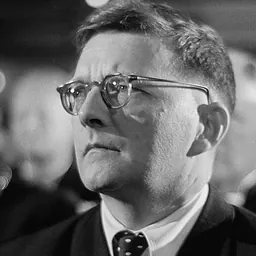
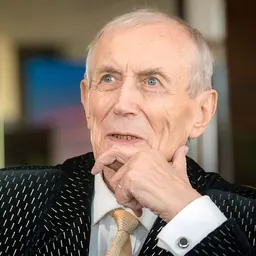
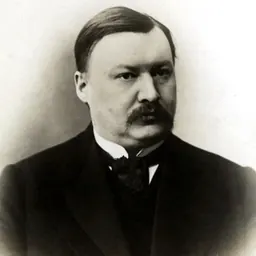
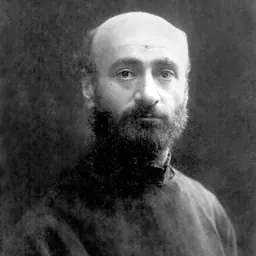
People in Arno Babajanian's life
Named in this biography and alive at the same time



Related people
Same field, nearest in time



Contemporaries
People whose lives overlapped Arno Babajanian's




Frequently asked questions
Who was Arno Babajanian?
Armenian composer and pianist (1921-1983)
When was Arno Babajanian born?
Arno Babajanian was born on 22 January 1921 in Yerevan.
When did Arno Babajanian die?
Arno Babajanian died on 11 November 1983 in Yerevan, Moscow.
What was Arno Babajanian's occupation?
Arno Babajanian was a composer, pianist, film score composer and music educator.
What nationality was Arno Babajanian?
Arno Babajanian was Russian.
Sources & further reading
Cite this page
APA: Biography.guide. (2026). Arno Babajanian. https://biography.guide/arno-babajanian/
MLA: "Arno Babajanian." Biography.guide, https://biography.guide/arno-babajanian/.
Chicago: "Arno Babajanian." Biography.guide. https://biography.guide/arno-babajanian/.
Data last updated: 2026-09-20 · Spot an error? Report a correction.
Page generated 2026-09-27 05:34 UTC