
Armistead Abraham Lilly
Attorney general of West Virginia from 1913 to 1917
About Armistead Abraham Lilly
Lived 1878 – 1956 (aged 78). Armistead Abraham Lilly was an American politician, lawyer and businessperson.
Armistead Abraham "Cousin Abe" Lilly (March 25, 1878 – June 21, 1956) was an American lawyer, politician, and businessperson in the U.S. state of West Virginia. A Republican, Lilly served as the 16th Attorney General of West Virginia from March 4, 1913, until March 3, 1917.
Lilly was born in Jumping Branch, West Virginia, in 1878, and was raised in nearby Raleigh County. He attended the county's public schools and completed high school in Bluefield, then graduated from Concord State Normal School in 1891 and earned his Bachelor of Laws from the Law Department of Southern Normal University in 1900. That same year, Lilly was admitted to the Raleigh County bar and elected to the West Virginia House of Delegates. In 1904, he was elected prosecuting attorney for Raleigh County, a position he held until 1908. Following the 1908 United States presidential election, Lilly was a presidential elector for William Howard Taft.
Lilly unsuccessfully ran for West Virginia's 5th congressional district seat in 1910, losing against James A. Hughes, and was later elected state attorney general in 1912. During his tenure as attorney general, Lilly was involved with the Virginia debt case, railroad rate cases, and cases related to charges of bribery against members of the state legislature. In 1916, Lilly was defeated by 134 votes by Ira E. Robinson in the Republican primary for West Virginia governor. In 1922, he unsuccessfully sought the Republican nomination for a U.S. Senate seat. Afterward, he served as a delegate at several Republican National Conventions, serving as the state chairperson at the 1936 convention. Lilly relocated to Charleston, where he served as president of the Virginian Rubber and Williamson Paint Manufacturing companies, and was primary owner of the Ruffner Hotel, where he resided in the penthouse until his death in 1956.
Early life and education Armistead Abraham Lilly was born on March 25, 1878, in Jumping Branch in Summers County, West Virginia. He was one of 11 children and six sons of Robert C. Lilly, known as "Miller Bob", and his wife, Virginia Gore Lilly. In 1881, Lilly and his family relocated to nearby Raleigh County, an area which Lilly later referred to as the "lizard glades". Lilly attended the county's public schools, In 1899, he began his studies at the Law Department of Southern Normal University in Huntingdon, Tennessee, where he graduated with a Bachelor of Laws in 1900. That same year, Lilly was elected to the West Virginia House of Delegates, representing Raleigh County, In 1903, Lilly served as an assistant clerk of the West Virginia Senate. Lilly served in this position for a four-year-term until 1908. Lilly was a presidential elector for West Virginia's 5th congressional district and cast a vote for William Howard Taft following the 1908 United States presidential election. Lilly received 25 declared delegates following a convention of Raleigh County's Republicans in May 1910, and in June 1910, Lincoln County Republicans held their convention, in which the county's 22 delegates were instructed to support Lilly at the congressional district convention. By June 15, Hughes had earned the support of 172 declared delegates, compared to Lilly's 56. At the Republican's 5th congressional district convention in Welch on June 24, Hughes was nominated as the Republican nominee with 216 votes compared to Lilly's 101, and Hughes went on to win reelection to a sixth term in Congress.
Attorney general In 1912, Lilly was nominated without opposition as the Republican candidate for Attorney General of West Virginia. the highest number of votes of any Republican state candidate. By April 1915, Lilly rendered an opinion that Hatfield could legally borrow money to pay the state's expenses, noting that Hatfield had borrowed money before. However, Hatfield subsequently released a statement in which he denied ever borrowing money to pay the state's expenses and explained that the state did not need to borrow money, as there was no deficit. Lilly's tenure as attorney general ended on March 3, 1917. However, in 1914, West Virginia's debt commission discovered a series of credits and assets that the state believed reduced its share of Virginia's outstanding debt. West Virginia offered to pay Virginia the reduced 1861 balance of around $2.3 million ($ million); however, Virginia rejected West Virginia's offer. Lilly led West Virginia's motion to reopen the case before the Supreme Court, and arguments commenced in April 1914 in Commonwealth of Virginia v. State of West Virginia, 234 U.S. 117 (1914). In June 1914, the Supreme Court ruled in West Virginia's favor and granted the state's supplemental answer with the discovered assets, which was submitted to a special master appointed by the court. West Virginia's counsel, including Lilly, presented additional testimony in Richmond in November 1914 which was submitted to the special master. In June 1915, the Supreme Court announced its final decree, in which West Virginia's discovered assets were applied to its share of Virginia's debt; When adjusted for principal, interest, and the additional amount owed, West Virginia was obligated to pay Virginia a total of $12.4 million in 1915 ($ million).
Later political career In December 1915, Lilly formally announced his candidacy for the Republican nomination for West Virginia governor.
Following his term as attorney general, Lilly remained in Charleston, where he continued practicing law. In 1922, Lilly unsuccessfully sought the Republican nomination for a U.S. Senate seat.
Lilly and former governor Hatfield continued to engage in a political feud from 1915, each with factions of supporters in Southern West Virginia; however, Lilly ended the feud in 1928 when he came out in support of Hatfield as the Republican candidate for U.S. senator. State senator T. H. Lilly, Lilly's second cousin, subsequently came out against his support of Hatfield's candidacy and in favor of Governor Howard Mason Gore.
Business affairs
In 1918, Lilly was also an incorporator of the Clay County Fuel Company, which undertook the development of coal lands near Hartland in Clay County. The company was sold in 1919. In addition, Lilly was a member of the board of directors of the Virginian Rubber Company in Charleston, and in July 1921, the board elected him president of the company. By 1923, he was the president of the Williamson Paint Manufacturing Company, which manufactured the asbestos roof paint, "Leak Not", and the black metal paint, "Rust Not". The company's plant was located in Charleston at the corner of Watts Street and the Kanawha and Michigan Railway, and it had the capacity to produce of paint per day. He organized the Lilly Reunion Association in 1929, and served as the association's first and only president during his lifetime. Notable attendees included U.S. senator Hatfield and Congressmen Thomas Jefferson Lilly, Hugh Ike Shott, and Joe L. Smith. The Hinton Daily News reported that some reunions drew up to 35,000 attendees, and that U.S. senator Robert A. Taft spoke at one of the final reunion events. Lilly held this reunion annually until 1949, with a five-year break during World War II; however, the reunions ceased afterward on account of his ill health. According to the Beckley Post-Herald, Lilly's annual reunion was called one of the largest family reunions in the world.
Lilly suffered illness in the final decade of his life, and he spent most of his time in his penthouse apartment at Charleston's Ruffner Hotel. He died as a result of bronchopneumonia on June 21, 1956, at his Ruffner Hotel penthouse. Lilly's funeral service was held at the Charleston Baptist Temple on June 23, 1956, and he was interred at Sunset Memorial Park in South Charleston.
Personal life On June 16, 1900, Lilly married Mary Elizabeth Glenn of Arlington, Kentucky. Together they had a daughter and two sons: Kanawha County Coroner Goff P. Lilly, lawyer Robert Glenn Lilly, and Thelma Lilly Wade. While in Charleston, Lilly and his wife built a large residence there, and later resided in the penthouse at the Ruffer Hotel, where Lilly was the principal owner. While in Charleston, Lilly was a member of the Baptist Church and of various civic and fraternal organizations.
In his Bench and Bar of West Virginia (1919), former Governor George W. Atkinson described Lilly as "a man of large physique, and presents a commanding appearance." He further stated, "[Lilly] is a natural orator and never fails to command the attention of an audience."
Don’t just read it —
keep it.
Full-length biographies made to live with: read them, listen on the way to work, watch them tonight.
- E-book
- Audio
- Video
Instant download · yours to keep · every purchase keeps this site free
Important facts
People in Armistead Abraham Lilly's life
Named in this biography and alive at the same time


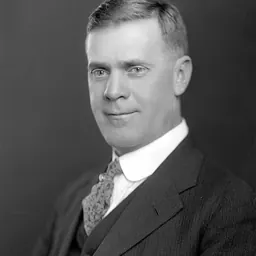
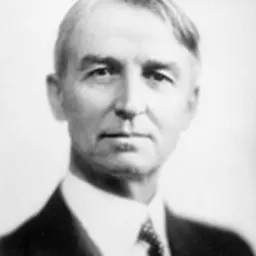
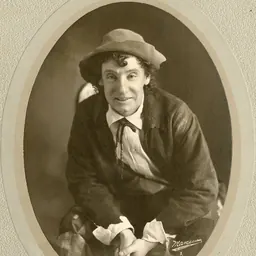

Related people
Same field, nearest in time





Contemporaries
People whose lives overlapped Armistead Abraham Lilly's





Frequently asked questions
Who was Armistead Abraham Lilly?
attorney general of West Virginia from 1913 to 1917
When was Armistead Abraham Lilly born?
Armistead Abraham Lilly was born on 25 March 1878 in Jumping Branch.
When did Armistead Abraham Lilly die?
Armistead Abraham Lilly died on 21 June 1956 in Charleston, West Virginia.
What was Armistead Abraham Lilly's occupation?
Armistead Abraham Lilly was a politician, lawyer and businessperson.
What nationality was Armistead Abraham Lilly?
Armistead Abraham Lilly was American.
Sources & further reading
· Wikipedia: Armistead Abraham Lilly
· DBpedia: Armistead Abraham Lilly
Cite this page
APA: Biography.guide. (2026). Armistead Abraham Lilly. https://biography.guide/armistead-abraham-lilly/
MLA: "Armistead Abraham Lilly." Biography.guide, https://biography.guide/armistead-abraham-lilly/.
Chicago: "Armistead Abraham Lilly." Biography.guide. https://biography.guide/armistead-abraham-lilly/.
Data last updated: 2026-09-20 · Spot an error? Report a correction.
Page generated 2026-09-27 05:18 UTC