
About Armas Launis
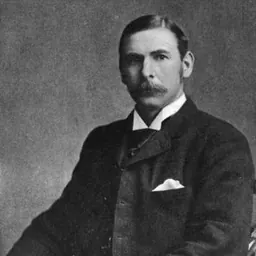
Lived 1884 – 1959 (aged 75). Armas Launis was a Finnish and Russian composer, journalist, musicologist, ethnomusicologist, writer and university teacher.
Armas Launis (April 22, 1884 – August 7, 1959), was a Finnish composer as well as an ethnomusicologist, a professor, a writer and a journalist. He was born in Hämeenlinna.
Composer Armas Launis was mainly an opera composer. He wrote ten operas (both libretto and music). Several were performed: In Finland: "The Seven Brothers" (1913), the first Finnish opera comique, and "Kullervo" (1917), both in full stage performance, and a concert performance of "Aslak Hetta" in 2004 at Finlandia Hall, Helsinki, directed by Sakari Oramo. In France: stage performance of Kullervo (1940, Nice, Palais de la Méditerranée) with radio broadcasts on Paris-Inter and Radio Monte-Carlo (1938–1940). A short version of "Jehudith" was also broadcast in 1954 (Paris-Inter)
Armas Launis also wrote chamber music pieces, cantatas, choruses, suites for orchestra, and the music of the first Finnish ethnographic film "A Wedding in Karelia, the Land of Poetry" (1921).
Ethnomusicologist Launis was one of the first scholars to research and collect folk music. He was very open-minded; passionately fond of travels, which he undertook alone; and eager to meet other people. He travelled to Lapland (1904, 1905, 1922), Kainuu (1902), Ingria (1903, 1906), Karelia (1902, 1905), and Estonia (1930). Everywhere, he was happy to meet local people and had long conversations with them, jotting down popular melodies. Launis also recorded famous singers, hired mourners, and kantele players. He understood the richness and vitality of sung poetry together with the importance of folklore. His numerous publications and the corpus he collected are still recognized and used; they are valuable additions to the common inheritance of the Finnish nation.
Later, Launis travelled in North Africa and became interested in Arabic, Berber, and Bedouin music. This influence can be felt in later works, especially the operas Théodora and Jéhudith.
Professor Launis earned a Ph.D. (1911) and was full professor at the University of Helsinki where he taught musical analysis and composition. He completed his studies in Berlin with Wilhelm Klatte and in Weimar with Waldemar von Baußnern. Deeply concerned with the availability of musical education for everyone, Launis founded and until 1930 directed the first popular conservatories in Finland, which still exist.
As early as 1920, Launis received a life pension from the Finnish State, with the permission to live abroad.
Journalist Anxious to maintain contact with his homeland, Launis regularly contributed to various Finnish newspapers including Helsingin Sanomat, Uusi Suomi, and Suomen Kuvalehti. He co-founded and was an active member of the Sociéte de la presse étrangère de la Côte d'Azur (Association of Foreign Press of the French Riviera), and he was a journalist for the Association française d'expansion et d'échanges artistiques (French Association for the Development of Artistic Exchanges).
In 1930 Launis settled permanently in Nice, France, and lived there the remainder of his life. He took an active part in musical and cultural exchanges between France and Finland.
Works
Operas The Seven Brothers (1913) Kullervo (1917) Aslak Hetta (1922) The Witch's Song (1934) The Karelian Magic Scarf (1937) The summer that never came (unfinished) (1936) Jehudith (1937–1940) Once upon a time... (unfinished) (1939) Theodora (unfinished) (1939) The Frozen Flames (1957)
Books Über Art, Entstehung und Verbreitung des estnisch – finnischen Runenmelodien (1910) Ooppera ja puhenäytelmä:muutamia vertailevia piirteitä (1915) Esivanhempieni muisto 1500–1900 (1921) Aslak Hetta: 3-näytöksinen ooppera (libretto 1921) Kaipaukseni maa. Lapinkävijän muistoja (1922) Murjaanien maassa (1927) Suomen maaseutukaupunkien kansankonservatoriot (1927) Erään turunmaalaisen saaristolaisuvun vaiheita (1929) Tunturisävelmia etsimässä. Lapissa 1904 ja 1905. (Minna-Riikka Järvinen 2004)
Corpus of melodies Lappische Juoigos-Melodien (1908) (Lappish melodies) Suomen Kansan sävelmiä IV: Inkerin runosävelmät (1910) Suomen partioväen laulukirja (1917) Suomen Kansan sävelmiä IV: II Karjalan runosävelmät 1930 Eesti runoviisid (Tartto 1930)
Articles Runosävelmistä (Kalevalanseuran vuosikirja I, 1921) Kullervo-oopperan esihistoriaa (Kalevalaseuran vuosikirja 1, 1921) Saamein säveleitä etsimässä (Kalevalaseuran vuosikirja 2, 1922) Muuan karjalainen kanteleensoittaja (Kalevalaseuran vuosikirja 1923)
Don’t just read it —
keep it.
Full-length biographies made to live with: read them, listen on the way to work, watch them tonight.
- E-book
- Audio
- Video
Instant download · yours to keep · every purchase keeps this site free
Important facts
People in Armas Launis's life
Named in this biography and alive at the same time

Related people
Same field, nearest in time



Contemporaries
People whose lives overlapped Armas Launis's
Frequently asked questions
Who was Armas Launis?
Finnish composer (1884–1959)
When was Armas Launis born?
Armas Launis was born on 22 April 1884 in Hämeenlinna.
When did Armas Launis die?
Armas Launis died on 7 August 1959 in Nice.
What was Armas Launis's occupation?
Armas Launis was a composer, journalist, musicologist, ethnomusicologist, writer and university teacher.
What nationality was Armas Launis?
Armas Launis was Finnish and Russian.
Sources & further reading
Cite this page
APA: Biography.guide. (2026). Armas Launis. https://biography.guide/armas-launis/
MLA: "Armas Launis." Biography.guide, https://biography.guide/armas-launis/.
Chicago: "Armas Launis." Biography.guide. https://biography.guide/armas-launis/.
Data last updated: 2026-09-20 · Spot an error? Report a correction.
Page generated 2026-09-27 05:21 UTC