
About Armand-Gaston Camus
Lived 1740 – 1804 (aged 64). Armand-Gaston Camus was a French politician, archivist, lawyer and jurist.
Armand-Gaston Camus (2 April 17402 November 1804), French revolutionist, was a successful lawyer and advocate before the French Revolution. He was the son of Pierre Camus, a lawyer in the Parlement of Paris.
Camus is considered the founder of the Archives Nationales, as in 1789 he was appointed as archivist of its predecessor, the Commission des archives of the Assembly (Estates-General). He served in this role until his death.
French Revolution In 1789 Camus was elected by the Third Estate of Paris to the Estates-General; he attracted attention by his speeches against social inequalities. He was one of the National Assembly's earliest presidents (28 October11 November 1789), and he was the most frequent speaker: no one addressed the Assembly more times than he did (more than 600 times); d'André is second at 497, and le Chapelier third at 447. Camus was so frequently called upon to speak mostly because of his expertise in canon law.
Camus was appointed on 14 August 1789 as archivist to the Commission des archives of the Assembly; the commission was the immediate precursor to the Archives Nationales. He would retain these functions until his death.
He helped to write and voted for the Civil Constitution of the Clergy, worked to end the practice of paying annates to the papacy, and promoted the annexation of the Vaucluse by France. On 30 July 1791, he obtained the abolition of titles of nobility.
Elected to the National Convention by the département of Haute-Loire, he was on a mission outside Paris during the judgment of Louis XVI. But, he wrote on 13 January 1793 that he voted for "death without appeal and without reprieve".
On his return, Camus was sent to Belgium as one of five commissioners of the convention, to the Armée du Nord commanded by General C. F. Dumouriez. The general was in an extremely precarious position, and was suspected of plotting to betray the Revolution. The suspicions were confirmed when Dumouriez delivered Camus with his colleagues to the Austrians (3 April 1793).
After thirty-three months of captivity, Camus was exchanged for Marie Thérèse of France in November 1795. He played an inconspicuous role in the Council of Five Hundred, refusing positions in the Ministry of Finance or of Police. He was restored to the office of archivist in 1796 and became absorbed in literary work. He remained an austere republican, refusing to take part in the Napoleonic régime.
Don’t just read it —
keep it.
Full-length biographies made to live with: read them, listen on the way to work, watch them tonight.
- E-book
- Audio
- Video
Instant download · yours to keep · every purchase keeps this site free
Important facts
People in Armand-Gaston Camus's life
Named in this biography and alive at the same time

Related people
Same field, nearest in time


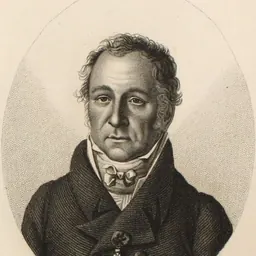

Contemporaries
People whose lives overlapped Armand-Gaston Camus's

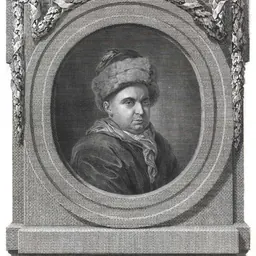




Frequently asked questions
Who was Armand-Gaston Camus?
French archivist and revolutionary (1740–1804)
When was Armand-Gaston Camus born?
Armand-Gaston Camus was born on 2 April 1740 in Paris.
When did Armand-Gaston Camus die?
Armand-Gaston Camus died on 2 November 1804 in Paris.
What was Armand-Gaston Camus's occupation?
Armand-Gaston Camus was a politician, archivist, lawyer and jurist.
What nationality was Armand-Gaston Camus?
Armand-Gaston Camus was French.
Sources & further reading
· Wikipedia: Armand-Gaston Camus
· DBpedia: Armand-Gaston Camus
Cite this page
APA: Biography.guide. (2026). Armand-Gaston Camus. https://biography.guide/armand-gaston-camus/
MLA: "Armand-Gaston Camus." Biography.guide, https://biography.guide/armand-gaston-camus/.
Chicago: "Armand-Gaston Camus." Biography.guide. https://biography.guide/armand-gaston-camus/.
Data last updated: 2026-09-20 · Spot an error? Report a correction.
Page generated 2026-09-27 05:26 UTC