
About Archibald E. Stevenson
Lived 1884 – 1961 (aged 76). Archibald E. Stevenson was an American lawyer.
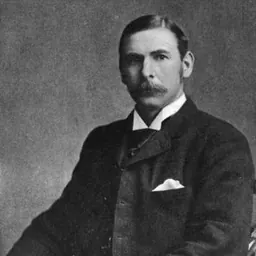
Archibald Ewing Stevenson (September 23, 1884 – February 10, 1961) was an American attorney and legislative researcher. Stevenson is best remembered for his work as Assistant Counsel of the Lusk Committee of the New York State Senate from 1919 to 1920, the activities of which led to a series of sensational raids and trials of self-professed revolutionary socialists. Stevenson was also the de facto author and editor of the committee's four-volume report, which anticipated congressional investigations of communism conducted in subsequent years.
Biography
Early years Archibald Ewing Stevenson was born September 23, 1884, in Uniontown, Pennsylvania, located in the rural western part of the state. Stevenson's father was a noted geologist and a professor at New York University. He was raised as a Presbyterian and later in life was a member of Fifth Avenue Presbyterian Church of New York City.
The precocious Stevenson was a published author at the age of nine, composing a travel memoir called From New York to Alaska and Back Again.
Stevenson graduated from New York University with a Bachelor of Science degree in 1904, graduating first in his class. Following graduation Stevenson began to follow in his father's footsteps, teaching at NYU as an instructor of mineralogy following graduation.
In this interval Stevenson was a member of a number of prominent legal and scientific societies, including the New York Academy of Science, the Seismological Society of America, the New York County Lawyers Association, the Sons of the Revolution, and Delta Phi fraternity. On August 31, 1918, Stevenson learned the efficacy of the tactic of raiding one's political opponents when he and the American Protective League helped federal agents armed with a search warrant storm the New York headquarters of the National Civil Liberties Bureau, forerunner of the American Civil Liberties Union. Secretary of War Newton D. Baker quickly entered the debate, declaring:
Mr. Stevenson has never been an officer or an employee of the Military Intelligence Division of the War Department.... I personally have no sympathy with the publication of lists of persons classified with reference to their supposed opinions, and grouped under general designations, such as "pacifists," which may mean any one of a dozen things, some of them quite consistent with the finest loyalty to the country and some of them inconsistent with such loyalty.
The attack on Stevenson by liberal critics drew conservative supporters to his defense, including U.S. Senator Lee Slater Overman, who proclaimed in committee that Stevenson had studied "German propaganda" in America for over a year and was thus "probably more familiar with the various groups of German and radical propaganda in the United States than anyone else in this country."
Though his influence at the War Department had attenuated, Stevenson still exerted considerable influence as a member of the powerful conservative Union League Club, a patriotic organization organized at the time of the American Civil War. On January 9, 1919, a meeting of that influential social organization of New York City's political elite determined to establish a committee of five members given the task of studying radicalism in the city. Archibald Stevenson was named by the organization to head this new committee. Upon hearing the report, the membership of the group voted unanimously to petition the New York state legislature to appoint a special committee dedicated to the radicalism question. This proposal quickly passed the Senate and was sent to the New York State Assembly, which approved the measure on March 26 by a vote of 110 to 10. Rather, the committee was designed to be merely administrative in nature. The committee exercised search warrants against many of the organizations which it deemed to be centers of revolutionary propaganda, confiscating documents for further use.
The Lusk Committee met for the first time on June 12, 1919. That same day the office of the Russian Soviet Government Bureau, the unrecognized diplomatic office of Soviet Russia, located at 110 West 40th Street in New York City, was raided by police authorities working in conjunction with the Lusk Committee. A mass of books, letters, and papers were seized in accordance with the search warrant, providing the Lusk Committee with fodder for further investigation.
A second sensational raid directed by the Lusk Committee followed on June 21, 1919, when officers of the state constabulary and members of the American Protective League entered the premises of "The People's House," headquarters of the Rand School of Social Science on East 15th Street. Fifty raiders led by Deputy Attorney General Samuel A. Berger and Stevenson seized correspondence and other documents belonging to the Socialist Party-related school.
Mr. Stevenson is conventional and sincere. Anyone who talks with him for five minutes will appreciate his sincerity. He sees himself as one of the saviors of American institutions, now threatened by the menace of a foreign philosophy. He believes with all his heart and soul that there is a widespread plot in this country to overthrow the Republic by violent means.... He is convinced that the Socialist Party of America is dominated by the "foreign element" and that its teachings are consequently "un-American." "Americanism" in Mr. Stevenson's mind, is largely determined by an individual's uncritical acceptance of the late war and war spirit. With such a background, Mr. Stevenson spent three years studying and exposing the extremes of radicalism, and he has succeeded in persuading a large part of the public that the dream-world of plots and counterplots, revolutions, and assassinations through which he moves, actually exists.
Stevenson was the principal author of the committee's final report, Revolutionary Radicalism: Its History, Purpose and Tactics with an Exposition and Discussion of the Steps being Taken and Required to Curb It. Of its 4,000 pages, ten percent represented the committee's findings, the rest reprinted documents gathered during the committee's investigations that detailed revolutionary propaganda and patriotism education. Critics viewed Stevenson as the driving force behind the committee and the report.
Later years In 1920 Stevenson served as counsel to the committee of the State Assembly that recommended the expulsion of its five Socialist members.
The danger does not come from small groups which seek to use the torch and bomb, but rather from those quasi-political and economic organizations which teach that the workers should organize into revolutionary industrial unions for the purpose of using the coercive power of the general strike as a means to enable an organized minority to veto the decisions of the ballot box and to impose its will upon the American people. If to prevent the teaching of such a doctrine be an infringement of constitutional rights, it would also be an infringement of such rights to prevent the establishment of schools for the training of pickpockets, safebreakers and other criminals. The first duty of any Government is to protect itself. The sedition statutes...are destined for that purpose and do not abridge the civil liberties of the people.
In April 1921 Stevenson protested New York City's organized "Town Hall Forum" of public lectures as "spineless" and "indeterminate" for failing to oppose revolutionary propaganda. Stevenson also publicly opined that American colleges, universities, and seminaries were showing signs of increasing hospitality to radical ideas.
Following the enactment of a law regulating educational institutions and teachers, as recommended by the Lusk Report, in 1921-22 Stevenson served on the State Advisory Council on the Qualification of Teachers. Reviews in some legal journals were brief and respectful, but Harvard Law Review published a review by Harvard Law Professor Thomas Reed Powell that said: "For unsupported assertions, for self-contradictions, for loose terminology, for non-sequiturs, for political foolishness, this book has few peers."
In the 1920s and 1930s, Stevenson was associated with the National Civic Federation,
I refer to those cases...in which a teacher, professor or clergyman is called in question by his employer for his conduct in office. His personal liberty is usually not at stake. It is his salary that is threatened.... Apparently, whoever pays the individual's salary has no freedom whatever. The pay check must be drawn once a month even though the teacher, professor or clergyman refuses to teach or preach what he is paid to do. The employer has an unquestionable right to demand that he be given what he pays for. If the employee feels that this demand limits his academic freedom, he is free to resign and go elsewhere to express himself as he pleases.
Stevenson served as the National Civil Federation's general counsel from 1934 to 1936. In the latter year he decried Communist influence in American unions, designed "to encourage industrial unrest and thus bring about a change in the social order by violent means." In 1937 he joined a committee to lobby for the outlawing of sit-down strikes, tracing the tactic to Northern Italy in 1919 and 1920, where it led opponents of union radicals, in his view, to turn to Mussolini and fascism. He protested to Secretary of State Hull against a U.S.-Russian trade agreement and called on the FCC to ban broadcasts by the Communist candidates for president and vice-president during the 1936 presidential campaign.
During the early 1930s, Stevenson headed a small organization called the International Committee to Combat the World Menace of Communism. Later in the decade he worked as public relations counsel for the New York State Economic Council, a pro-business and anti-trade union organization.
Stevenson moved to New Canaan, Connecticut, in the 1930s and was active in local politics. He headed the town's Board of Finance from 1935 to 1940 and was first selectman in 1940.
From 1942, Stevenson served as general counsel of the National Economic Council, another conservative economic organization dedicated to carrying on campaigns against communism and socialism.
Death
Archibald Stevenson died at his home in New Canaan, Connecticut, on February 10, 1961. He was 77 years old at the time of his death.
Don’t just read it —
keep it.
Full-length biographies made to live with: read them, listen on the way to work, watch them tonight.
- E-book
- Audio
- Video
Instant download · yours to keep · every purchase keeps this site free
Important facts
People in Archibald E. Stevenson's life
Named in this biography and alive at the same time



Related people
Same field, nearest in time
Contemporaries
People whose lives overlapped Archibald E. Stevenson's

Frequently asked questions
Who was Archibald E. Stevenson?
American lawyer (1884–1961)
When was Archibald E. Stevenson born?
Archibald E. Stevenson was born on 23 September 1884 in New York City.
When did Archibald E. Stevenson die?
Archibald E. Stevenson died on 10 February 1961.
What was Archibald E. Stevenson's occupation?
Archibald E. Stevenson was a lawyer.
What nationality was Archibald E. Stevenson?
Archibald E. Stevenson was American.
Sources & further reading
· Wikipedia: Archibald E. Stevenson
· DBpedia: Archibald E. Stevenson
Cite this page
APA: Biography.guide. (2026). Archibald E. Stevenson. https://biography.guide/archibald-e-stevenson/
MLA: "Archibald E. Stevenson." Biography.guide, https://biography.guide/archibald-e-stevenson/.
Chicago: "Archibald E. Stevenson." Biography.guide. https://biography.guide/archibald-e-stevenson/.
Data last updated: 2026-09-20 · Spot an error? Report a correction.
Page generated 2026-09-27 05:23 UTC