
About Archibald Dixon
Lived 1802 – 1876 (aged 74). Archibald Dixon was an American politician and lawyer.
Archibald Dixon (April 2, 1802 – April 23, 1876) was a U.S. Senator from Kentucky. He represented the Whig Party in both houses of the Kentucky General Assembly, and was elected the 13th lieutenant governor of Kentucky in 1844, serving under Governor William Owsley. In 1851, the Whigs nominated him for governor, but he lost to Lazarus W. Powell, his former law partner.
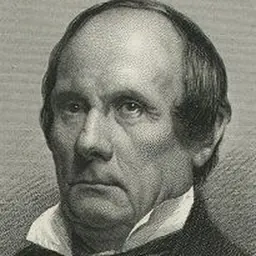
Dixon represented Henderson County at the Kentucky constitutional convention of 1849. In this capacity, he ensured that strong protections of slave property were included in the Kentucky Constitution of 1850. Later, the General Assembly chose Dixon to fill the unexpired Senate term of Henry Clay. He served from September 1, 1852, to March 3, 1855, and did not stand for re-election. During his short tenure, Dixon's major accomplishment was convincing Stephen Douglas to include language in the Kansas–Nebraska Act that explicitly repealed the Missouri Compromise's prohibition on slavery north of latitude 36°30'.
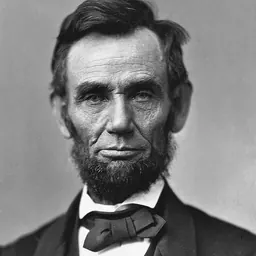
Despite his pro-slavery views, Dixon was loyal to the Union during the Civil War. He represented his county and his state in a number of failed conventions that sought to resolve the upcoming conflict before it began. In 1864, he joined Kentucky governor Thomas E. Bramlette in an audience with President Abraham Lincoln protesting the recruitment of former slaves as Union soldiers in Kentucky. Dixon died on April 23, 1876.
Personal life Archibald Dixon was born near Red House, Caswell County, North Carolina on April 2, 1802. He was the son of Captain Wynn and Rebecca Hart Dixon. Both Dixon's father and grandfather fought in the Revolutionary War, the former enlisting at the age of sixteen. He was admitted to the bar in 1824, and commenced practice in Henderson.
Elizabeth Cabell Dixon died in 1852. Dixon and Bullitt had additional children. He served three consecutive one-year terms, leaving the House in 1833. From 1836 to 1840, he represented Henderson, Daviess, and Hopkins counties in the Kentucky Senate. Among them were assertions that slave property was just as inviolable as any other property, that the rights of property were above constitutional sanction, and that absolute power over property cannot exist in a republic. Clay drew about 6,000 votes, mostly from Whigs, and Powell won the election by a small majority.
The Assembly acted according to Clay's plans. By a vote of 71–58, they chose Dixon over Democrat James Guthrie to assume Clay's seat effective September 1. However, Clay died on June 29, 1852. Because Dixon's commission stipulated an effective date of September 1, Governor Powell proceeded to name Clay's successor for the period until September 1. He chose Democrat David Meriwether, who served those two months, then, with respect to the original commission issued by the legislature (or by simply not returning to the Senate upon the commencement of the next session), effectively relinquished the seat to Dixon. Douglas hoped to placate southerners with this language, which allowed for the possibility of legalized slavery in the potential state without specifically addressing the issue of the Missouri Compromise.
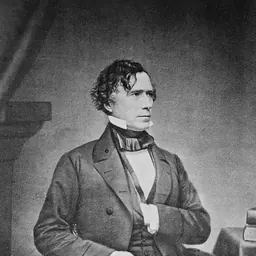
Southerners, however, saw that Douglas' attempt was unlikely to result in legalization of slavery. While it allowed Nebraska to determine whether slavery would be legal there when it became a state, slavery was still forbidden under the Missouri Compromise as long as it remained a territory. If no slaveholders were allowed in the territory, it would be exceedingly unlikely that the state's voters would allow for slavery in their constitution. Following this line of thought, Dixon drafted an amendment to Douglas' bill that would repeal section eight of the Missouri Compromise, the section that prohibited slavery north of latitude 36°30'. After a promise of support from Tennessee senator James C. Jones, Dixon introduced the amendment on January 16, 1854. This forced Douglas to confront the Missouri Compromise issue outright, and two days later, he visited Dixon to discuss his position. Douglas was reluctant to repeal the Compromise, but was ultimately convinced by Dixon's logic. He concluded the interview by exclaiming "By God, Sir, you are right. I will incorporate it in my bill, though I know it will raise a hell of a storm." Over the next several days, Douglas incorporated Dixon's suggestion and other pro-slavery measures into the Kansas-Nebraska Act, which President Franklin Pierce signed into law on May 30, 1854.
Later life On June 1, 1852, the stockholders of the Henderson and Nashville Railroad met at Madisonville, Kentucky and elected Archibald Dixon as president of the company. He served until his resignation in spring 1853.
Despite his pro-slavery views, Dixon loyally supported the Union during the lead-up to the Civil War. His sons, however, had Confederate sympathies. Dixon's home county of Henderson was one of the first counties in Kentucky to express their feelings about the secession crisis. The county called an assembly at the county courthouse on November 10, 1860. Dixon was elected chair of the meeting, and immediately expressed a pro-Union sentiment. A committee of five was appointed to draft resolutions stating Henderson County's position. At a second meeting one week later – which Dixon also chaired – the committee reported their pro-Union resolutions, which were approved.
In an attempt to stave off the Civil War, Dixon participated in a convention of border states and a peace convention in Frankfort, Kentucky, both in 1861. Both conventions were unsuccessful.
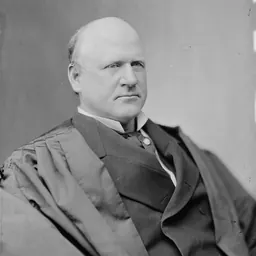
In March 1864, Dixon accompanied Kentucky Governor Thomas E. Bramlette and John Marshall Harlan, the state's attorney general, to an audience with President Lincoln to protest the recruitment of blacks into the ranks of the Union Army. The governor eventually agreed to allow the practice, but only when whites failed to meet their draft quotas. Since recruitment of blacks had been taking place in the Commonwealth for more than two months already, the concession was little more than a face-saving gesture by Bramlette. Following the end of the Civil War, Dixon retired from public life. He died in Henderson on April 23, 1876, and is buried in Fernwood Cemetery in Henderson.
Don’t just read it —
keep it.
Full-length biographies made to live with: read them, listen on the way to work, watch them tonight.
- E-book
- Audio
- Video
Instant download · yours to keep · every purchase keeps this site free
Important facts
People in Archibald Dixon's life
Named in this biography and alive at the same time


Related people
Same field, nearest in time




Contemporaries
People whose lives overlapped Archibald Dixon's






Frequently asked questions
Who was Archibald Dixon?
American politician (1802–1876)
When was Archibald Dixon born?
Archibald Dixon was born on 2 April 1802 in Caswell County.
When did Archibald Dixon die?
Archibald Dixon died on 23 April 1876 in Henderson.
What was Archibald Dixon's occupation?
Archibald Dixon was a politician and lawyer.
What nationality was Archibald Dixon?
Archibald Dixon was American.
Sources & further reading
Cite this page
APA: Biography.guide. (2026). Archibald Dixon. https://biography.guide/archibald-dixon/
MLA: "Archibald Dixon." Biography.guide, https://biography.guide/archibald-dixon/.
Chicago: "Archibald Dixon." Biography.guide. https://biography.guide/archibald-dixon/.
Data last updated: 2026-09-20 · Spot an error? Report a correction.
Page generated 2026-09-27 05:29 UTC