
Archer Alexander
Formerly enslaved person and statue model (~1810-1879)
About Archer Alexander
Lived 1810 – 1879 (aged 68–69). Archer Alexander was an American art model.
Archer Alexander (1816 – December 8, 1879) was a formerly enslaved American man who served as the model for the "emancipated slave" in the Emancipation Memorial 1876 located in Lincoln Park in Washington, D.C. He was the subject of an 1885 biography, The Story of Archer Alexander, from Slavery to Freedom, March 30, 1863 by William Greenleaf Eliot. Eliot's account of Alexander's life is partly historical fiction, as portions of the narrative were altered by his close friend Jesse Benton Fremont at the request of the publishers.
Early years Alexander was born enslaved by the Alexander family near Lexington, Virginia, about 1816. He and his wife Louisa were brought to Dardenne Prairie, Missouri, in St. Charles County by slaver James H. Alexander in 1829. Louisa, was owned by Nancy, wife of James H. Alexander, who inherited Louisa from her father Dr. Robert McCluer. In 1835, following the deaths of James and Nancy Alexander, their property and slaves were managed by their executor, William M. Campbell.
Besides working for Campbell, Archer Alexander was leased out as a carpenter, stonemason, and bricklayer. Campbell later sold off the property and slaves on behalf of the Alexanders' children, splitting up Archer, Louisa, and seven of their children: Eliza (valued at $325), Mary Ann ($300), Archer ($225), James ($200), Alexander ($175), Lucinda ($150), and John ($125). Three of their children, Nellie, William, and Wesley, had already been sold by this time. Louisa became enslaved by James Naylor, a merchant, postmaster, and former Presbyterian elder living in Missouri on the Boone's Lick Road; Archer Alexander became enslaved by Richard H. Pitman, near Cottleville, Missouri.
American Civil War During the American Civil War, Alexander overheard a meeting of local slavers discussing a plot to sabotage a nearby railroad bridge using arms and ammunition stored in Captain James Campbell's icehouse. In February 1863, Alexander covertly notified a group of U.S. Army soldiers under the command of Lt. Col. Arnold Krekel that the Peruque Creek railroad bridge had been sabotaged by Confederate insurgents.
According to DNA research, boxer Muhammad Ali was a great-great-great-grandson of Alexander.
Don’t just read it —
keep it.
Full-length biographies made to live with: read them, listen on the way to work, watch them tonight.
- E-book
- Audio
- Video
Instant download · yours to keep · every purchase keeps this site free
Important facts
People in Archer Alexander's life
Named in this biography and alive at the same time
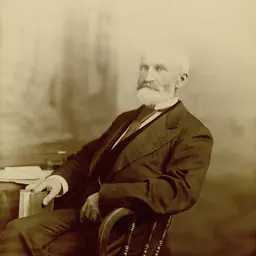

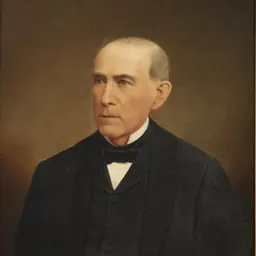
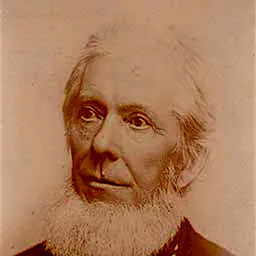
Related people
Same field, nearest in time
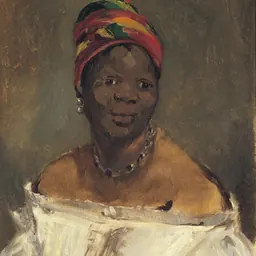



Contemporaries
People whose lives overlapped Archer Alexander's




Frequently asked questions
Who was Archer Alexander?
formerly enslaved person and statue model (~1810-1879)
When was Archer Alexander born?
Archer Alexander was born in 1810 in Richmond.
When did Archer Alexander die?
Archer Alexander died on 8 December 1879 in St. Louis.
What was Archer Alexander's occupation?
Archer Alexander was an art model.
What nationality was Archer Alexander?
Archer Alexander was American.
Sources & further reading
Cite this page
APA: Biography.guide. (2026). Archer Alexander. https://biography.guide/archer-alexander/
MLA: "Archer Alexander." Biography.guide, https://biography.guide/archer-alexander/.
Chicago: "Archer Alexander." Biography.guide. https://biography.guide/archer-alexander/.
Data last updated: 2026-09-20 · Spot an error? Report a correction.
Page generated 2026-09-27 05:25 UTC