
About Antonio Vassilacchi
Lived 1556 – 1629 (aged 72–73). Antonio Vassilacchi was an Italian painter.
Antonio Vassilacchi (; ; 1556–1629), also called L'Aliense, was a Greek painter, who was active mostly in Venice and the Veneto.
Biography Antonio Vassilacchi was born of Greek descent, describes a painting by the artist in which he portrays himself carrying his wife, her nurse, her uncle and her son by her previous marriage, on his back. Vassilacchi used to show this picture to his friends and say "This is the burden I'll bear till I die".
Aliense died on Easter's eve, 1629, in his seventy-third year. He was buried with honours in the church of San Vitale two days later. San Vitale is the church on the same square as Vassilacchi's house and he had painted there, a few years earlier (and both aptly named), a Resurrection and an Ascension.
His entry in the official Venetian register reads: 1629, 15 April. Sire Antonio Aliense, painter, aged about 73 years, sick of fever and catarrh these twelve days past. Among his pupils was Tomasso Dollobella.
Works Flagellation. Vassilacchi's painting is on the wall of the Chapel of Our Lady of Peace. Formerly it was in the Scuola di Santa Croce at Belluno. His works in the Doges' Palace likely outnumber those by any other single artist, since he painted in all the major halls of the Palace, such as the Hall of the Grand Council (Sala del Maggior Consiglio), the Voting Hall (Sala dello Scrutinio), the Hall of the Senate (Sala del Senato), the Hall of the Council of Ten (Sala del Consiglio dei Dieci), the Hall of the Compass (Sala della Bussola).
In 1586, Vassilacchi was asked to paint one of his largest pictures, the 'Resurrection', in the chancel of San Marziale. He gave the preliminary sketch, in chiaroscuro, to Domenico Cresti, the painter of the Crucifixion in the same church. The paintings, restored in 1958, still hang in the same place, across from each other above the marble high altar of the church.
In 1591, Vassilacchi was engaged by the Brotherhood of Merchants (Scuola dei Mercanti), and some time later he was working in the church of San Giovanni Elemosinario, just a few metres from the commercial centre of Venice, the Rialto. He painted the Plague of Serpents (1588) in the Church of the Angelo San Raffaele. Behind the facade of the church of San Zaccaria, at least four large works by Aliense are preserved.
In 1559, the Benedictine monks of San Giorgio Maggiore decided to renovate their church. They commissioned Palladio to execute the work but at the time of his death, twenty one years later, it was still unfinished. The abbot then summoned Vassilacchi to select the best, in his opinion, preliminary design for the central altar of the church. right Naturally modest and polite, Aliense had a good word to say about all the sketches, which complicated rather than simplified matters. In the end, the up to then judge was asked to design something himself. His sketch was immediately accepted and from it was created the large bronze group of the Four Evangelists Supporting the World and God.
In 1594, Aliense, recommended by the Benedictines of San Giorgio Maggiore, undertook to paint the circle of pictures that consist the Life of Christ for the church of San Pietro in Perugia, which belonged to the same Order. The ten paintings still survive in their original setting, together with his monumental "Apotheosis of the Benedictine Order" which, at 88 square metres (947 square feet), is the second biggest painting in Italy.
In 1602, Antonio Vassilacchi began painting in the cathedral church at Salò, while his surviving work—mainly decorative—in the Villa Barbarigo, of the senator Giovanni Barbarigo at Noventa Vicentina, near Montagnana, is impressive.
His last works are those painted in Santa Maria in Vanzo, Padua.
Gallery
Don’t just read it —
keep it.
Full-length biographies made to live with: read them, listen on the way to work, watch them tonight.
- E-book
- Audio
- Video
Instant download · yours to keep · every purchase keeps this site free
Important facts
more
Alliense, Antonio Vasselacchi, Antonio Vassilacchi L'AlienseRelated people
Same field, nearest in time

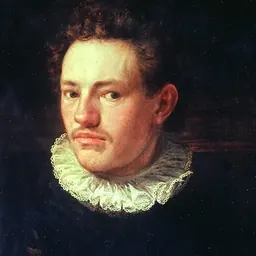


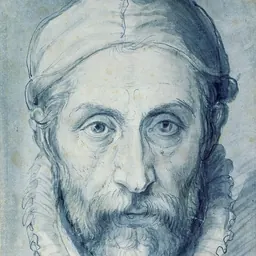

Contemporaries
People whose lives overlapped Antonio Vassilacchi's




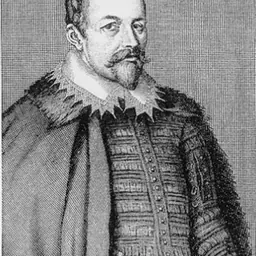
Frequently asked questions
Who was Antonio Vassilacchi?
Greek painter active in Venice and Veneto (1556-1629)
When was Antonio Vassilacchi born?
Antonio Vassilacchi was born in 1556 in Milos.
When did Antonio Vassilacchi die?
Antonio Vassilacchi died on 27 April 1629 in Venice.
What was Antonio Vassilacchi's occupation?
Antonio Vassilacchi was a painter.
What nationality was Antonio Vassilacchi?
Antonio Vassilacchi was Italian.
Sources & further reading
· Wikipedia: Antonio Vassilacchi
· DBpedia: Antonio Vassilacchi
Cite this page
APA: Biography.guide. (2026). Antonio Vassilacchi. https://biography.guide/antonio-vassilacchi/
MLA: "Antonio Vassilacchi." Biography.guide, https://biography.guide/antonio-vassilacchi/.
Chicago: "Antonio Vassilacchi." Biography.guide. https://biography.guide/antonio-vassilacchi/.
Data last updated: 2026-09-20 · Spot an error? Report a correction.
Page generated 2026-09-27 05:18 UTC