
About Antonio Scarpa
Lived 1747 – 1832 (aged 85). Antonio Scarpa was an Austrian surgeon, university teacher, anatomist, art collector and physician.
Antonio Scarpa (9 May 1752 – 31 October 1832) was an Italian anatomist and professor.
Biography Scarpa was born to an impoverished family in the frazione of Lorenzaga, Motta di Livenza, Veneto. An uncle, who was a member of the priesthood, gave him instruction until the age of 15, when he passed the entrance examination for the University of Padua. He was a pupil of Giovanni Battista Morgagni and Leopoldo Marco Antonio Caldani. Under the former, he became doctor of medicine on 19 May 1770; in 1772, he became professor at the University of Modena.
For a time he chose to travel, visiting Holland, France and England. When he returned to Italy, he was made professor of anatomy at the University of Pavia in 1783, on the strong recommendation of Emperor Joseph II. His lectures were so popular with students that Emperor Joseph II commissioned Leopoldo Pollack to build a new anatomic theater, now called Aula Scarpa, inside the Old Campus of the University of Pavia. He remained in that post until 1804, when he stepped down to allow his student Santo Fattori to assume the chair.
In May 1791, he was elected a Fellow of the Royal Society on account of being the "Author of some ingenious observations on the Ganglions of the Nerves, on the structure of the organs of hearing and smell, and other subjects of anatomy and Physiology".
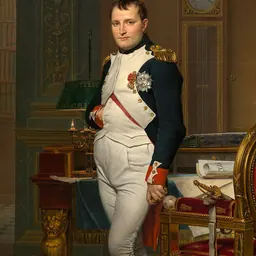
In 1805, Napoleon was made King of Italy. He chose to visit the University of Pavia, upon which he inquired as to the whereabouts of Dr. Scarpa. He was informed that the doctor had been dismissed because of his political opinions and his refusal to take oaths, whereupon Dr. Scarpa was restored to his position as chair. In 1821, he was elected a foreign member of the Royal Swedish Academy of Sciences.
During his lifetime he became a rich man, acquiring a collection of valuable paintings and living a wealthy lifestyle. He was a confirmed bachelor and fathered several sons out of wedlock (whom he favoured through nepotism). In his career, he earned a reputation for ruthlessness, destroying his enemies and taxing his favourites to their limits. After his death, his reputation was bitterly attacked, and even marble stones erected in his memory were defaced.
In 1789 he published Anatomicæ disquisitiones de auditu et olfactu, a study of the hearing and olfactory organs, which was soon considered a classical treatise on the subject. in 1794, which was the first work to give an accurate depiction of the heart's nerves and to show cardiac innervation. It is considered to be his finest work. Apparently, Dr. Scarpa locked the engraver in a room until the illustrations were finished. This work included his discovery that the inner ear was filled with fluid. (This was later named Scarpa's fluid, and subsequently endolymph.)
Riflessioni ed Osservazione anatomico-chirugiche sull'Aneurisma, 1804, is a classical work on Aneurysms. Sull'ernie memorie anatomico-chirurgiche in 1809 was a treatise on the hernia. The supplement work, Sull'ernie del perineo the first ever discussion of the perineal hernia. Traité pratique des hernie, ou, Mémoires anatomiques et chirurgicaux sur ces maladies in 1812, was an authoritative work on hernia. Both Scarpa's fascia and Scarpa's triangle were derived from these works.
Eponyms Scarpa's fascia Scarpa's fluid Scarpa's foramina Scarpa's ganglion Scarpa's hiatus Scarpa's membrane Scarpa's sheath Scarpa's shoe Scarpa's staphyloma Scarpa's triangle
Don’t just read it —
keep it.
Full-length biographies made to live with: read them, listen on the way to work, watch them tonight.
- E-book
- Audio
- Video
Instant download · yours to keep · every purchase keeps this site free
Important facts
People in Antonio Scarpa's life
Named in this biography and alive at the same time

Related people
Same field, nearest in time


Contemporaries
People whose lives overlapped Antonio Scarpa's





Frequently asked questions
Who was Antonio Scarpa?
Italian anatomist (1752-1832)
When was Antonio Scarpa born?
Antonio Scarpa was born on 13 June 1747 in Motta di Livenza, Lorenzaga.
When did Antonio Scarpa die?
Antonio Scarpa died on 31 October 1832 in Bosnasco.
What was Antonio Scarpa's occupation?
Antonio Scarpa was a surgeon, university teacher, anatomist, art collector and physician.
What nationality was Antonio Scarpa?
Antonio Scarpa was Austrian.
Sources & further reading
Cite this page
APA: Biography.guide. (2026). Antonio Scarpa. https://biography.guide/antonio-scarpa/
MLA: "Antonio Scarpa." Biography.guide, https://biography.guide/antonio-scarpa/.
Chicago: "Antonio Scarpa." Biography.guide. https://biography.guide/antonio-scarpa/.
Data last updated: 2026-09-24 · Spot an error? Report a correction.
Page generated 2026-09-27 05:04 UTC