
About Antonio Ranieri
Lived 1806 – 1888 (aged 81). Antonio Ranieri was an Italian writer, politician and lawyer.
Antonio Ranieri (8 September 1806 – 4 January 1888) was an Italian writer, patriot and politician, better known for his juvenile intimate friendship with Giacomo Leopardi (1798 – 1837), the most renowned 19th-century Italian poet.
Biography
First years First-born of Francesco Ranieri, a State official, and of Maria Luisa Conzo, Antonio Ranieri was born in Naples (Kingdom of the Two Sicilies) on 8 September 1806. A liberal since adolescence, and suspected of belonging to the Carbonari, Antonio Ranieri was forced to leave Naples in 1827 and settle in Florence (Grand Duchy of Tuscany), a city open to political refugees, the following year. In Florence he met important intellectuals and writers such as Pietro Giordani, Alessandro Poerio, Giovan Pietro Vieusseux, Pietro Colletta, Giuseppe Ricciardi and, above all, he met Giacomo Leopardi for the first time. was the central moment in Ranieri's life and made him famous as the "guardian" of the last years of the genius of Recanati. Leopardi's deep affection for Ranieri transpires from certain letters he wrote to him during a brief moment of separation (Ranieri being in Naples, Leopardi in Florence), for example:
After staying in Rome and Florence to follow Ranieri's mistress, actress Maddalena Pelzet, he and Leopardi met the noblewoman Fanny Targioni Tozzetti (1801 – 1889), whom both loved: Ranieri with success, Leopardi not. In 1833, Ranieri moved to Naples with Leopardi. Ranieri did not find a good welcome in his hometown, due to the controversial cohabitation with Leopardi and the unconventionality of the latter's thought. Already in their time, the amorous phrases they exchanged with each other Their close sodality lasted 7 years. – even if there is a strong suspicion that the poet died of cholera, and that Ranieri lied in order to hide a less decorous death. Together with his sister Paolina, Ranieri assisted the poet to the end and, as he himself reported in his memoirs and his letters to Monaldo Leopardi, prevented the remains from being thrown into a mass grave (as well as the strict hygiene rules required due to the epidemic), having him buried first, and clandestinely, in the crypt, then in the atrium of the Church of S. Vitale in Fuorigrotta, a quarter of Naples. Nevertheless, Ranieri's story had immediately appeared full of contradictions and many doubts arose about what he had declared, also because his versions were many and different depending on the interlocutor, making one suspect that the poet's body was ended up in the mass graves of the Fontanelle Cemetery, or in the Cemetery of the 366 Fossae in Naples (such was the fate, in those days, of famous people like Niccolò Zingarelli), or even hidden in the Neapolitan house where the death had occurred, and that Ranieri had staged an empty coffin funeral, with the participation of his own brothers and a corrupt priest. Ranieri continued to state that the bones were in the atrium of the Church of S. Vitale and that the burial certificate was a forgery written by the priest in order to circumvent the law on burials in times of epidemic. However, it is proved that Ranieri lied in other cases: for example, he long maintained that he did not know where the 4,000 pages of Leopardi's Zibaldone di pensieri were: they were finally found in his house. However, though inaccurate and inappropriate in some descriptions, he offered a testimony of the biographical events of the two friends.
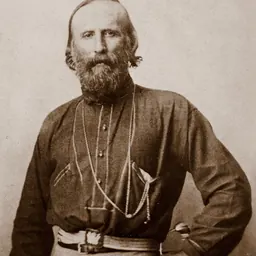
In 1860, he returned to politics, taking an active part among the patriots who went to Salerno to invite the Freemason Giuseppe Garibaldi to enter Naples.
In 1861, Ranieri was elected as a Member of the Parliament of the Kingdom of Italy, being repeatedly confirmed until 1881. On 16 November 1882, he became a Senator of the Kingdom of Italy. He died in Portici (Naples) on 4 January 1888.
Don’t just read it —
keep it.
Full-length biographies made to live with: read them, listen on the way to work, watch them tonight.
- E-book
- Audio
- Video
Instant download · yours to keep · every purchase keeps this site free
Important facts
People in Antonio Ranieri's life
Named in this biography and alive at the same time




Related people
Same field, nearest in time

Contemporaries
People whose lives overlapped Antonio Ranieri's





Frequently asked questions
Who was Antonio Ranieri?
Italian writer (1806-1888)
When was Antonio Ranieri born?
Antonio Ranieri was born on 8 September 1806 in Naples.
When did Antonio Ranieri die?
Antonio Ranieri died on 4 January 1888 in Portici.
What was Antonio Ranieri's occupation?
Antonio Ranieri was a writer, politician and lawyer.
What nationality was Antonio Ranieri?
Antonio Ranieri was Italian.
Sources & further reading
Cite this page
APA: Biography.guide. (2026). Antonio Ranieri. https://biography.guide/antonio-ranieri/
MLA: "Antonio Ranieri." Biography.guide, https://biography.guide/antonio-ranieri/.
Chicago: "Antonio Ranieri." Biography.guide. https://biography.guide/antonio-ranieri/.
Data last updated: 2026-09-20 · Spot an error? Report a correction.
Page generated 2026-09-27 05:25 UTC