
Antonio Pacini
Italian humanist (15th century)
About Antonio Pacini
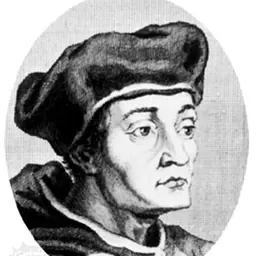
Antonio Pacini was a renaissance humanist, literary scholar and translator.
Antonio Pacini da Todi or Tudertino (died 1489) was an Italian humanist and translator.
Life Pacini was born in in the first two decades of the 15th century. He moved to Florence, where he studied under Francesco Filelfo and tutored Giovanni di Cosimo de' Medici. He lived in the Medici palace between 1438 and 1441, during which time he survived a bout of malaria. He also worked for the Curia Romana. In 1441–1442, he was the secretary of Cardinal Nicola Acciapaccia.
In 1442–1443, Pacini lectured on poetry and rhetoric at the . He continued to be attached to the Studio down to 1450, when he moved to Todi. In Todi, he founded the Accademia dei Convivanti and became a tutor for Bartolomeo d'Alviano. He died in Todi in 1489 and was buried there in the church of Saint Nicholas.
Works Pacini translated six of the biographies in Plutarch's Parallel Lives from Greek into Latin: Marcus Furius Camillus, dedicated to Lorenzo de' Medici (1435) Timoleon, dedicated to Cosimo de' Medici (after 1435) Gaius Marius, dedicated to Ludovico Scarampi Trevisan (1437–1439) Fabius Maximus, dedicated to (1439–1451) Theseus, dedicated to Nicola Acciapaccia (1440–1441) Pelopidas, dedicated to Giuliano Cesarini (1442–1444)
He was introduced to Humphrey, Duke of Gloucester, by and sometime between 1442 and 1447 sent him a copy of his translation of the biography of Marius. In 1470, Ulrich Han published his translations as part of the first printing of Plutarch's Lives. His translations were not always well received. They were criticized by Filelfo, Giacomo Ammannati, Paolo Cortesi, Marcantonio Sabellico and Desiderius Erasmus. His other translations from Greek include poems 1, 2 and 10 of Gregory of Nazianzus, dedicated to Pope Eugene IV in 1439, and two works of Lucian of Samosata: De sacrificiis, dedicated to Ridolfo Lotti, and De laudibus patriae, dedicated to Piero de' Pazzi.
Pacini's other writings include a funeral oration for Lorenzo de' Medici, Oratio in funere Laurentii de Medicis, written on the day of his death (23 September 1440) and sent to Cesarini. He wrote a consolatory letter to Acciapaccia on the death of the latter's brother, Consolatio ad cardinalem Capuanum in obitum fratris sui. During his time in Florence, he wrote an urban encomium, Oratio in laudem Florentiae.
Don’t just read it —
keep it.
Full-length biographies made to live with: read them, listen on the way to work, watch them tonight.
- E-book
- Audio
- Video
Instant download · yours to keep · every purchase keeps this site free
Important facts
Related people
Same field, nearest in time




Frequently asked questions
Who was Antonio Pacini?
Italian humanist (15th century)
When was Antonio Pacini born?
Antonio Pacini was born in Castelvecchio.
When did Antonio Pacini die?
Antonio Pacini died in 1489 in Todi.
What was Antonio Pacini's occupation?
Antonio Pacini was a renaissance humanist, literary scholar and translator.
Sources & further reading
· DBpedia: Antonio Pacini da Todi
Cite this page
APA: Biography.guide. (2026). Antonio Pacini. https://biography.guide/antonio-pacini/
MLA: "Antonio Pacini." Biography.guide, https://biography.guide/antonio-pacini/.
Chicago: "Antonio Pacini." Biography.guide. https://biography.guide/antonio-pacini/.
Data last updated: 2026-09-20 · Spot an error? Report a correction.
Page generated 2026-09-27 05:03 UTC