
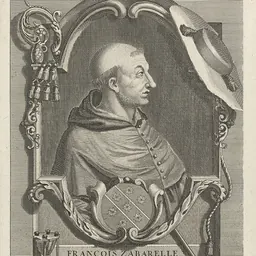
Francesco Barbaro
Italian politician, diplomat, and humanist from Venice
About Francesco Barbaro
Lived 1390 – 1454 (aged 63–64). Francesco Barbaro was an Italian renaissance humanist, diplomat, politician, translator, philosopher and humanist.
Francesco Barbaro (1390–1454) was an Italian politician, diplomat, and humanist from Venice and a member of the patrician Barbaro family. He is interred in the Church of the Frari, Venice.
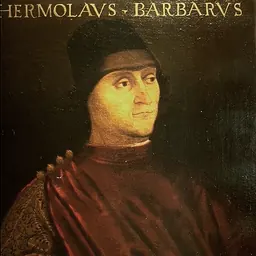
Family and education Francesco Barbaro was the son of Candiano Barbaro, uncle of Ermolao Barbaro, grandfather of the younger Ermolao Barbaro, and great-great grandfather of Marcantonio Barbaro and Daniele Barbaro. Francesco's father died in 1391 and Francesco was raised by his older brother Zaccaria. In 1419, Franceso married Maria Loredan, daughter of Procurator Pietro Loredan. Francesco and Maria had five daughters and one son, Zaccaria Barbaro, who was born in 1422. Barbaro was succeeded as Captain of Brescia by his brother-in-law Giacomo Loredan.
Francesco Barbaro was governor of Verona again in 1441, and later was appointed governor of Padua and Governor General of Friuli in 1445. In 1444 he arbitrated a border dispute between the cities of Verona and Vicenza. He finally returned to Venice as a state councilor and was elected Procurator of St Mark's in 1452. Francesco Barbaro also served as Luogotenente of Friuli from 1448 to 1449. In 1453, Barbaro's friend, Filippo da Rimini, serving as chancellor of Venetian Corfu, sent him an account of the fall of Constantinople. When Barbaro died the following year, da Rimini delivered a funeral oration.
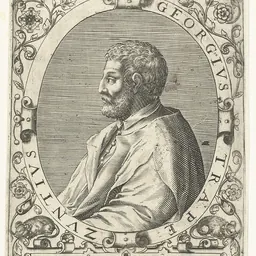
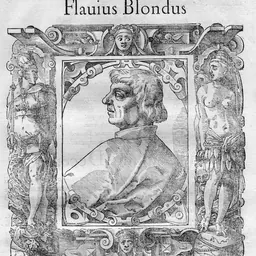
Writings Barbaro engaged in research, collection and translation of ancient manuscripts and served as a patron to George of Trebizond and Flavio Biondo.
Early in his career, he translated two of Plutarch’s Lives, those of Aristides and Cato from Greek texts into Latin and dedicated them to his older brother Zaccaria.
He wrote a treatise on marriage, De re uxoria, in 1415 to celebrate the marriage of Lorenzo de' Medici and Ginevra Cavalcanti. It was inspired by ancient Latin and Greek sources, and he wrote it in just 25 days. In 1513, the treatise was published in Paris by Badius Ascensius, a transcription having been made in Verona by André Tiraqueau at the house of Guarino Veronese. A French translation was made by Martin du Pin in 1537. The work was translated into Italian by Alberto Lollio in 1548. The Latin version was reprinted in Paris in 1560 and again in Amsterdam in 1639. In 1667, another French translation was made by Claude Joly under the title L'Etat du Marriage. Another Italian translation was made in 1785 as A Scelta Della Moglie.
Some of his letters and speeches were published for the first time in Brescia in 1728 under the title of Evangelistae Manelmi Vicentini Commentariorum de Obsidione Brixiae ann. 1438. Among the people he corresponded with were Alberto da Sarteano, Guarino Guarini, and Ludovico Trevisan. Many of his letters were published by Bernard Pez in Brescia in 1753. He may have been the author of a history of the Siege of Brescia.
Don’t just read it —
keep it.
Full-length biographies made to live with: read them, listen on the way to work, watch them tonight.
- E-book
- Audio
- Video
Instant download · yours to keep · every purchase keeps this site free
Important facts
People in Francesco Barbaro's life
Named in this biography and alive at the same time
Related people
Same field, nearest in time






Contemporaries
People whose lives overlapped Francesco Barbaro's



Frequently asked questions
Who was Francesco Barbaro?
Italian politician, diplomat, and humanist from Venice (1390–1454)
When was Francesco Barbaro born?
Francesco Barbaro was born in 1390 in Venice.
When did Francesco Barbaro die?
Francesco Barbaro died in 1454 in Venice.
What was Francesco Barbaro's occupation?
Francesco Barbaro was a renaissance humanist, diplomat, politician, translator, philosopher and humanist.
What nationality was Francesco Barbaro?
Francesco Barbaro was Italian.
Sources & further reading
· Wikipedia: Francesco Barbaro
· DBpedia: Francesco Barbaro (politician)
Cite this page
APA: Biography.guide. (2026). Francesco Barbaro. https://biography.guide/francesco-barbaro-renaissance-humanist/
MLA: "Francesco Barbaro." Biography.guide, https://biography.guide/francesco-barbaro-renaissance-humanist/.
Chicago: "Francesco Barbaro." Biography.guide. https://biography.guide/francesco-barbaro-renaissance-humanist/.
Data last updated: 2026-09-20 · Spot an error? Report a correction.
Page generated 2026-09-27 05:26 UTC