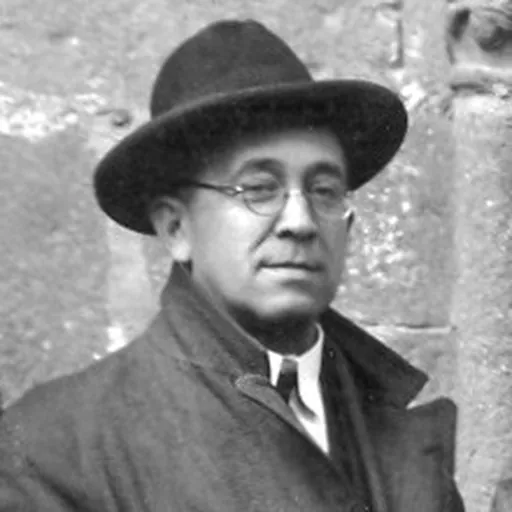
About Antonio Losada Diéguez
Lived 1884 – 1929 (aged 44). Antonio Losada Diéguez was a Spanish writer and author.
Antón Losada Diéguez (b. Moldes, (Boborás), Galicia, 22 December 1884 - d. Pontevedra, Galicia, 15 October 1929) was a writer, Galician politician, member of the Irmandades da Fala of Ourense, promoter of the magazine Nós and correspondent of the Royal Galician Academy. He was author of half a dozen books of poetry, seven books, two political writings, the incomplete work A domeadora and the speech Ouservacións encol da prosa galega. He became a member in the Seminar of Galician Studies. He was honoured on the Day of the Galician Letters of 1985.
Biography The family Losada Diéguez in Ramallosa in 1898, Antón is the second from the right.
Early years Antón Losada belonged to a Hidalgo family of traditional ideology and deeply Catholic. He was the son of Miguel Losada y Losada (1860-1913) and Carmen Diéguez Arias y Belt (1850-1888), who died of tuberculosis. His first writings were never published. In 1904, he went to Madrid where he obtained a doctorate in philosophy and literature. During these years, he wrote four plays in Spanish that were submitted to a number of contests. In 1911, he left Galicia again for Madrid in order to prepare for the civil service examination. In 1913, he won a position as professor of secondary education in the Canary Islands. He completed his degree in law in Santiago, where he met Lois Porteiro. On 25 June 1915, he married Albina Espinosa Cervela, daughter of Laurentino Espinosa Valladares, with whom he had his first son, Antón. She died of typhus on 17 December 1916. From 1916, he supported the jaimismo movement and began to praise Catalan regionalism. On 31 December 1920, Antón married for the second time, this time marrying the sister of his first wife, Mercedes Espinosa Cervela, with whom he had six more children.
Entrance in the Galicianist movement Year 1917 was to be fundamental in the political path of Losada, as he became a member of the Irmandades da Fala and embraced Galicianism. On 17 October, he wrote to Porteiro requesting information and, by 30 October, he had already been integrated into the Irmandades. During that year, he traveled to Barcelona with a delegation of the Irmandades to celebrate a Galician Week and got in contact with the Lliga. When Antón went back to Ourense he was responsible for receiving Francesc Cambó, and was responsible, together with Rodrigo Sanz and Lois Porteiro, for organizing the Galician autonomy candidatures in the province of Ourense before the Spanish general election held in 1918 (in coalition with the mauristas of José Calvo Sotelo). The electoral defeat provoked a general demoralization in the Irmandades and Losada concentrated his efforts in consolidating the group. In order to do so, he wrote many articles in the press, especially in El Emigrado, La Región, O Tío Marcos d'a Portela, A Nosa Terra, El Estradense and Alborada wherein his writings in Galician could be found, and at the same time continuing his work as Catholic propagandist in Pontevedra acting as president of Catholic Action and of the local Circle of Catholic Workers venues. He also tried to promote some of the first shy attempts to have Galician language adopted in the liturgy. He even translated Salve Regina into that language.
In November 1918, he chaired the I Nationalist Assembly of Lugo. Along with Risco and Arturo Noguerol, in 1920, he founded the Nós magazine. He accompanied Risco in the training of the Irmandade Nazonalista Galega during 1922, and was his Propaganda Minister for a year, failing in his attempts to reunify the Galicianist movement. On May 12, 1924, Antón Losada became a member of the Seminar of Galician Studies, giving the speech "Ouservacións encol da prosa galega" (Observations about Galician Prose). In reliance on Calvo Sotelo's promises, Losada collaborated initially with Primo de Rivera's dictatorship as a provincial deputy in Pontevedra. During that period, Antón took part in the failed attempts to establish a Mancomunity of Galicia, leading to his capitulation at the beginning of 1925.
Work From joining the Irmandades until his death, Losada is known to have written a half-dozen poems, seven short stories, an unfinished fragment of a comedy, two articles about art and some other articles. In 1985, his Obra completa (Complete works) were published.
Some titles are: Simbólica e ideas filosóficas contenidas en "La vida es sueño": drama en tres jornadas y en verso de D. Pedro Calderón de la Barca, 1910. "Valentín Lamas Carvajal". Article published in O Tio Marcos d'a Portela nº 32 o 31/5/1918, p. 4. "Os camiños d'o agrarismo galego". Article published in A Nosa Terra nº 96 o 5/8/1919. "Conto" (Dous rapaciños rifaron...), tale published on Nós magazine n.º 5 on 24/6/1921. "Adiante" in A Nosa Terra nº 167, 1922/7/25. "Ouservacións encol da prosa galega", discurso de ingreso no SEG o 12 de maio de 1924. Include: "Lonxe", dous poemas. O primeiro asinado: Pontevedra, Nadal, 1926, p. 191. "Soneto XV da Vita nuova, do Dante". From Italian «Tanto gentile e tanto onesta pare...», p. 192. "Un conto" (Boteime a camiñar pol-o Ceo, brincando...), p. 192. "Outro conto" (Cando me erguín aquela mañán dixéronme...), p. 193 A domeadora, pp. 193–203. Obra teatral incompleta. Reedited in 1985 and 2005. "A significación profunda do galeguismo" in Pensamento galego I, C. Baliñas, 1977. . Antón Losada Diéguez. Escolma edited by Filgueira Valverde. Royal Galician Academy Publications. 1985. Obra completa. Ed. de J. Beramendi. Texts in Galician and Spanish. Xerais, 1985. . Antoloxía de Antonio Losada Diéguez (1985). Limiar de Anxo Tarrío. USC. . Arredor do noso futuro. Campus Universitario Ourense (1997). . Traduccións poéticas de Antón Losada Diéguez. Ed: Marchisio, C. Bibliófilos Gallegos, 1999. Na estrada da vida: ensaio de comedia dramática, en tres actos e un prólogo. Fervenza. 2006. . Os que soñan. Fervenza Edicións. A Estrada. 2006. . Virilidade : ensaio cómico, orixinal e en prosa. Fervenza. 2006. . O mellor de... Antón Losada Diéguez (1884-1929), ed. de Teresa Seara, 2010, La Voz de Galicia. .
Gallery
Don’t just read it —
keep it.
Full-length biographies made to live with: read them, listen on the way to work, watch them tonight.
- E-book
- Audio
- Video
Instant download · yours to keep · every purchase keeps this site free
Important facts
People in Antonio Losada Diéguez's life
Named in this biography and alive at the same time


Related people
Same field, nearest in time

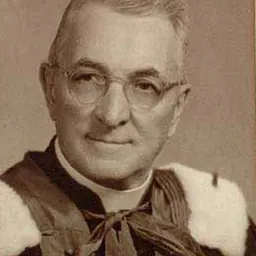
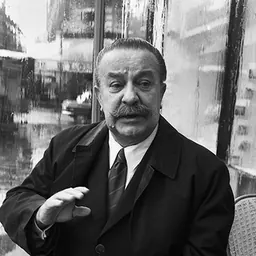

Contemporaries
People whose lives overlapped Antonio Losada Diéguez's
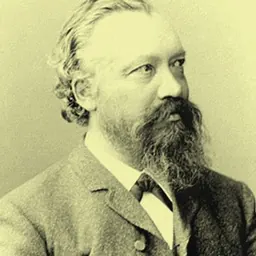
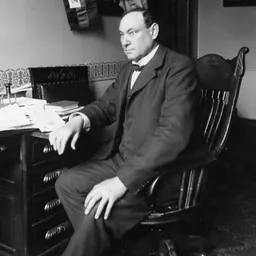

Frequently asked questions
Who was Antonio Losada Diéguez?
Spanish author (1884-1929)
When was Antonio Losada Diéguez born?
Antonio Losada Diéguez was born on 22 December 1884 in Moldes, Boborás.
When did Antonio Losada Diéguez die?
Antonio Losada Diéguez died on 15 October 1929 in Pontevedra.
What was Antonio Losada Diéguez's occupation?
Antonio Losada Diéguez was a writer and author.
What nationality was Antonio Losada Diéguez?
Antonio Losada Diéguez was Spanish.
Sources & further reading
· Wikipedia: Antonio Losada Diéguez
· DBpedia: Antón Losada Diéguez
Cite this page
APA: Biography.guide. (2026). Antonio Losada Diéguez. https://biography.guide/antonio-losada-dieguez/
MLA: "Antonio Losada Diéguez." Biography.guide, https://biography.guide/antonio-losada-dieguez/.
Chicago: "Antonio Losada Diéguez." Biography.guide. https://biography.guide/antonio-losada-dieguez/.
Data last updated: 2026-09-23 · Spot an error? Report a correction.
Portrait: Wikimedia Commons · author & licence
Page generated 2026-09-27 05:07 UTC