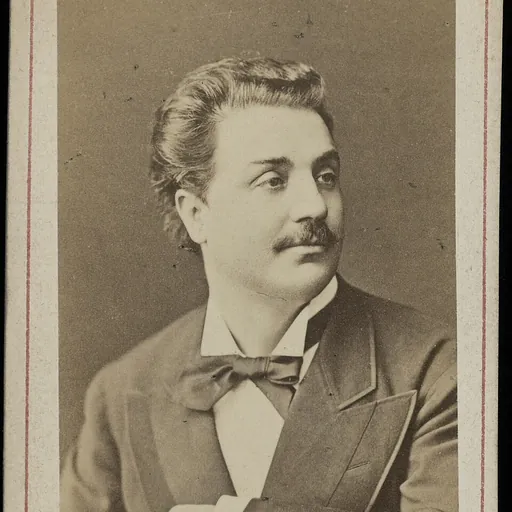
About Antonio Cotogni
Lived 1831 – 1918 (aged 87). Antonio Cotogni was an Italian opera singer, music educator, singer, musician and opera.
Antonio "Toto" Cotogni (; 1 August 1831 – 15 October 1918) was an Italian baritone of the first magnitude. Regarded internationally as being one of the greatest male opera singers of the 19th century, he was particularly admired by the composer Giuseppe Verdi. Cotogni forged an important second career as a singing teacher after his retirement from the stage in 1894.
Early years and education
Antonio Cotogni was born in Rome to Agata Fazzini and Raffaele Cotogni, who managed a small majolica plant. He had four siblings: sister Giuditta (who remained unmarried and lived in the family household); brothers Francesco, Andrea (who owned a meat packing business), and Gaspare (later mayor of Melara).
After some initial studies at the Hospice of San Michele, where he was a student of Angelo Scardovelli, Andrea Salesi, and Ludovico Luccesi. He studied music theory at Santa Maria Maggiore under Fontemaggi. Soon after, he began working with Achille Faldi on the study of singing itself. Under his guidance, Cotogni made his first public ventures into solo singing but only in the principal churches of Rome and in small summer music festivals in the small towns of the province, such as Anagni, Valmontone, Subisco, Velletri, and Viterbo.
Early on, Cotogni worked part-time in a majolica plant and did not care much for theater. He had no pretensions for assuming a career there and was content to remain a church singer. He won his first success in 1851 singing Salvatore Capocci's oratorio Il martirio di Sant'Eustachio at the church of Santa Maria in Vallicella.
About his training prior to his Italian stage debut, Cotogni told a former student:
Operatic career
Debut
In 1852, after much insistence from Faldi and castrato Domenico Mustafà, among others, he agreed to sign a contract for his debut at Rome's Teatro Metastasio, as Belcore in L'elisir d'amore. For the next year, he did not sing in public at all but rather studied assiduously with Faldi to build his repertoire. After an initial contract at Spoleto for Il trovatore and Maria di Rohan, he began to pick up consistent work in the Italian regional operatic circuit: Lanciano for Trovatore, Rigoletto, and Maria di Rohan; Orvieto for I masnadieri; Lucrezia Borgia in several cities; I puritani at Perugia.
In the spring of 1857, he was signed by the impresario Jacovacci for Lucia di Lammermoor and Gemma di Vergy at Rome's Teatro Argentina. In September and October of that year, he performed I due Foscari and Luisa Strozzi at Teatro Rossini in Turin. It was then that he met the soprano Maria Ballerini. They married the next year but never had any children together. where the audience greeted him with noises and whistling before he had even opened his mouth. This same audience fell silent during Antonio's opening aria "Ambo nati in queste valle" and gave him a unanimous, colossal applause after the cadenza, demanding a bis.
It was in 1894 at Saint Petersburg that he gave his last operatic stage performance, in Donizetti's Don Pasquale. While Cotogni had spent his career singing the opera's baritone role of Dr. Malatesta, the younger baritone Mattia Battistini was now taking over many of the Cotogni's old roles. Nevertheless, Battistini requested Cotogni to honor the company by joining them in one final performance, only this time asking that he sing the lead comic bass role of Don Pasquale, which Cotogni obliged. from 1894 to 1898, but he had to abandon this post in consequence of a serious illness, subsequently taking up an appointment in 1899 as a professor at the Accademia di Santa Cecilia in Rome, where his assistant was Enrico Rosati, who was later to become teacher to Beniamino Gigli.
The qualities that made Cotogni beloved in his career on the stage, also made him an effective teacher, one who toiled for his students to provide them what they needed musically, artistically, and often even materially.
During this time, twelve-year-old Luigi Ricci (who would later become a vocal coach) began accompanying voice lessons given by Cotogni, who had performed several of Verdi's operas under the composer's supervision. At this early age, Ricci began taking meticulous notes on traditions that Cotogni passed on to him from his own work with Verdi and other 19th century composers and conductors information about elements that had been changed in rehearsal and practice but had never been notated officially, as well as traditions of variations and cadenza begun by various singers from the past century. Ricci continued his copious note taking throughout his life and eventually compiled these into a four-part collection entitled Variazioni-cadenze tradizioni per canto (two volumes and two appendices published by Casa Ricordi, 1963).
Cotogni died of old age in Rome less than a month prior to the 1918 armistice that ended World War I. A group of his friends, colleagues, and former students raised money for his tomb. His burial chapel is located at plot 98 in the Pincetto Nuovo section of the Campo Verano cemetery in Rome.
Students & Protégés Ricci reports that when in 1912 he attended performances at Moscow's Imperial theater and Zimina Opera, as well as at the Imperial Theater in St. Petersburg, half of the artists on stage had been Cotogni's students. For nearly 20 years, Cotogni dedicated himself to teaching singing. Many artists already in the fullness of their careers also came to study with him at the Liceo and/or learn from him privately.
+ Sortable table First Name Last Name Voice Type Adolfo Pacini Baritone Alfredo Costa Baritone Amleto Pollastri Baritone Augusto Beuf Baritone Benvenuto Franci Baritone Carlo Galeffi Baritone Cesare Alessandroni Baritone Cesare Ferretti Baritone Dante Perrone Baritone Dinh Gilly Baritone Domenico Caporello Baritone Enrico Nani Baritone Ettore Bernabei Baritone Giuseppe Bellantoni Baritone Giuseppe De Luca Baritone Guido Caselotti Tenor Jean De Reszke Baritone Leone Paci Baritone Luigi Pasinati Baritone Luigi Rossi-Morelli Baritone Mariano Stabile Baritone Marino Emiliani Baritone Mario Basiola Baritone Mattia Battistini Baritone Millo Picco Baritone Nazzareno Bertinelli Baritone Nikolai Shevelev Baritone Onofrio Pirrone Baritone Riccardo Stracciari Baritone Salvatore Persichetti Baritone Sergei Diaghilev Baritone Titta Ruffo Baritone Evgeny Dolinin Tenor Ugo Donarelli Baritone Valentino Giorda Baritone Zygmunt (Sigismondo) Zaleski Baritone Aristodemo Giorgini Tenor Armando Gualtieri Tenor Beniamino Gigli Tenor Pasquale Funtò Tenor Edgar Herbert-Caesari Tenor Ellison Van Hoose Tenor Enzo Fusco Tenor Franco Tumminello Tenor Giacomo Eliseo Tenor Giacomo Lauri-Volpi Tenor Giuliano Romagnoli Tenor Giuseppe Antonio Paganelli Tenor Guido Ciccolini Tenor Julian Biel Tenor Luigi Ceccarelli Tenor Luigi Lucenti Tenor Luigi Pasinati Tenor Manfredo Miselli Tenor Nicola Bavaro Tenor Rinaldo Grassi Tenor Vincenzo Tanglongo Tenor Berardo Berardi Bass Alfred Blackman Bass Emilio Casolari Bass Filippo Valentine Bass Gennaro Curci Bass Giuseppe Quinzi Tapergi Bass Irnerio Costantini Bass Paolo Argentini Bass Tadeusz Orda Bass Tito Verger Bass Umberto Di Lelio Bass Virgilio Lazzari Bass Vladimir Kastorsky Bass Carmen Melis Soprano Marta Wittkowska Contralto Cecilia Cao Pinna Mezzo-Soprano
Voice
As a child, Cotogni had merely a weak soprano voice, but it did begin to increase in volume and darken, turning later into a contralto voice. As a teenager, his voice finally began to break into that of a young man, and the head music teacher Scardovelli forbade him to sing; Cotogni grudgingly obeyed and was silent for about six months. After this period of rest, he began to find a few notes, then went on to enrich and strengthen his vocal means continuously until the complete development of a baritone voice. He did, however, chide Titta Ruffo for interpolating an unwritten high B♭ in Hamlet. It is therefore unlikely that Cotogni ever sang a note above the high A♮ in public performance. Of physiological interest is the fact that Cotogni suffered from a lateral lisp that affected his speech but that disappeared when he sang.
The famed Italian conductor Toscanini remarked that Cotogni's voice was totally even and that "one didn't hear the transition between the registers... Hearing it, it seemed that everything was natural, while, instead, the poor Cotogni had practiced for years and years to acquire that perfection."
Critical reception
Journalistic reviews of his performances were often superlative.
Gramophone recording
Cotogni ranks with his contemporaries Francesco Graziani (baritone), Jean-Baptiste Faure and Sir Charles Santley as the foremost baritone of his star-studded generation. He "had a very brief and scarcely revealing relationship with the gramophone; at the age of 77... with the tenor Francesco Marconi, he recorded [the] duet 'I mulattieri'" (by Francesco Masini), writes Michael Scott. "Not surprisingly Marconi gets the better of it. Still, however difficult it is to make out Cotogni's contribution, it is all we have left of a singer who for over 40 years dominated the stages in London, Madrid and Lisbon, St. Petersburg and Moscow and throughout Italy."
Two other recordings, at times believed to be of Cotogni, are in fact the voice of tenore robusto Francesco Tamagno's brother, Giovanni. Comparisons of these two recordings—"O casto fior" and Stanislao Gastaldon's "Ti vorrei rapire" (formerly misidentified as "Perché?") —with the Tamagno brothers' recording of the Otello duet "Si pel ciel" reveals the baritone voice to be identical in timbre and production, with its thin and nasal qualities, especially in the passagio. These stand in contradistinction to the voice confirmed to be Cotogni's (the Mulattieri duet), which is noticeably more even, round, and sonorous throughout—even to the two high G naturals that end the refrain. In the Roman school, and in Cotogni's own teaching, any nasality was seen as a defect to be expressly avoided.
Repertoire
According to his biographer Angelucci, Cotogni sang one hundred fifty-seven works, but the former was only able to cite one hundred and forty-five. Of the other twelve, he could track down neither the title nor the name of the composer. Rome Rubinstein Antonio Rubinstein Nerone Julius Vindex St. Petersburg Sanelli Gualtiero Sanelli Luisa Strozzi Turin Sinico Giuseppe Sinico Aurora di Nevers Filippo Conzaga Milan Thomas Ambroise Thomas Amleto Hamlet London Thomas Ambroise Thomas Mignon Lothario Rome Ventura Lionello Ventura Alda Marino Capece Bologna Vera Edoardo Vera Valeria Claudio Imperatore Bologna Verdi Giuseppe Verdi Aïda Amonasro St. Petersburg Verdi Giuseppe Verdi Aroldo Egberto Turin Verdi Giuseppe Verdi Attila Ezio Zara Verdi Giuseppe Verdi Un ballo in maschera Renato Dublin Verdi Giuseppe Verdi Don Carlos Posa London Verdi Giuseppe Verdi I due Foscari Francesco Foscari London Verdi Giuseppe Verdi Ernani Don Carlo Rome Verdi Giuseppe Verdi La forza del destino Don Carlo di Vargas Spoleto Verdi Giuseppe Verdi I lombardi Pagano Milan Verdi Giuseppe Verdi Luisa Miller Miller Turin Verdi Giuseppe Verdi Macbeth Macbeth Nice Verdi Giuseppe Verdi I masnadieri Francesco Viterbo Verdi Giuseppe Verdi Nabucco Nabucco Turin Verdi Giuseppe Verdi Rigoletto Rigoletto Rome Verdi Giuseppe Verdi Stiffelio Count Stankar London Verdi Giuseppe Verdi La traviata Germont Viterbo Verdi Giuseppe Verdi Il trovatore Di Luna Madrid Verdi Giuseppe Verdi I vespri siciliani Michele de Vasconcello/Guido di Monforte Turin Wagner Richard Wagner Lohengrin Telramund Turin Wagner Richard Wagner Tannhaüser Wolfram Bologna Weber Carl Maria von Weber Oberon Scherasmin Bologna
Cotogni also sang the baritone solo in the "Dies irae" section of Alessandro Busi's Messa da requiem performed in honor of Gioachino Rossini's death on 9 December 1868 at the church of San Giovanni in Monte in Bologna. His delivery of the solo was sublime: "...the audience, who literally filled the church, was so shaken that, forgetting they were in church, they applauded [his solo] wildly." That response was not unfamiliar; when he made his public debut in Sant'Eustachio in 1851, the audience's surprise and enthusiasm toward the young Cotogni's solo was so overwhelming that police had to be called in to restore order.
Legacy During his career, Cotogni was an especial favorite of Verdi's, who praised him for the beauty, warmth and strength of his voice, as well as for the emotional intensity which he brought to his musical interpretations. He sang most of the major Verdi baritone roles and took part in the first Italian staging of Don Carlo, in Bologna in 1867, under the supervision of the composer. Verdi, wanting to test out the abilities of Cotogni, privately heard him in several of the key pieces from Don Carlo. When rehearsing the phrases leading up to the duet "Dio, che nell'alma infondere", Cotogni deviated from what Verdi had written, and though Verdi remarked on it, he accepted Cotogni's change, saying that it was actually better, with the result that the markings were changed in the new editions of the score. ('Nella prima edizione del Don Carlo, Verdi scrisse la frase "Carlo mio, con me dividi" così: [printed music phrase] Alla quarta battuta scrisse: dolcissimo e pp.) Cotogni non senti in tal modo la frase. Rodrigo darà la sua vita per l'amicizia e nell'incrontro con Don Carlo, in un momento che ha bisogno di conforto, deve quasi esplodere, con tutta forza, dal cuore l'amicizia. Cotogni, invece di: dolcissimo e pp intese tale frase con crescendo e ff e Verdi l'accettò, tanto che nell nuove edizioni riformate da Lui stesso, tolse il dolcissimo e pp.' Even after his retirement from opera, he continued singing in benefits and concerts, the very last of which was in 1904, when Cotogni was 73.
Cotogni's repertoire comprised between 150 and 160 roles. His operatic triumphs were not confined to Verdi's compositions. He was also an exponent of the elegant but technically demanding bel canto music of Gioachino Rossini, Gaetano Donizetti, Vincenzo Bellini, and Saverio Mercadante. He sang roles from the new Italian verismo literature, the French grand opera tradition, and some Wagner. He was considered a Mozart specialist and keeper of some traditions of his works, even at a time when Mozart's works were not popular. He was particularly proud of his Don Giovanni, a role that he learned from his predecessor, the Italian baritone Antonio Tamburini, and which Cotogni then passed on to the inheritor of his traditions, Mattia Battistini.
Cotogni sang in the company of many of the most famous opera singers of his time—sopranos Adelina Patti, Teresa Stolz, Thérèse Tietjens, Marcella Sembrich, Christina Nilsson, Emma Albani, and Gemma Bellincioni; castrato Alessandro Moreschi; the Marchisio sisters; contralto Sofia Scalchi; tenors Mario, Francesco Marconi, Julián Gayarre, Angelo Masini, Pietro Mongini, Lodovico Graziani, Enrico Tamberlick, and Francesco Tamagno; baritones Charles Santley, Jean-Baptiste Faure, Francesco Graziani, Leone Giraldoni, and Mattia Battistini; and basses Foli, Eraclito Bagagiolo, and Édouard de Reszke.
Don’t just read it —
keep it.
Full-length biographies made to live with: read them, listen on the way to work, watch them tonight.
- E-book
- Audio
- Video
Instant download · yours to keep · every purchase keeps this site free
Important facts
Family & relationships
People in Antonio Cotogni's life
Named in this biography and alive at the same time


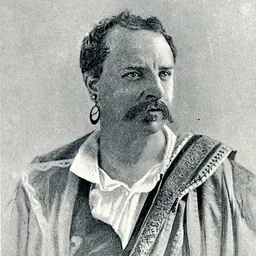
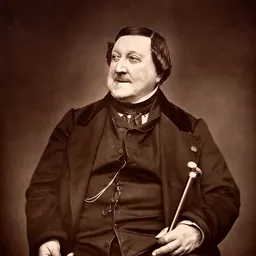
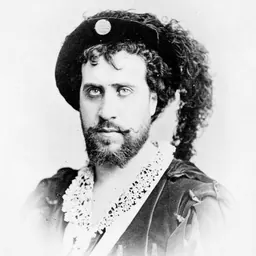
Related people
Same field, nearest in time
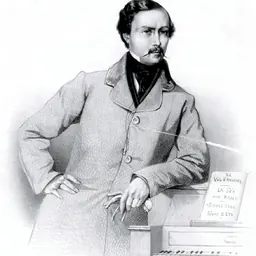
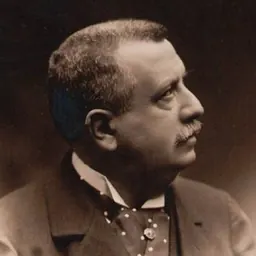



Contemporaries
People whose lives overlapped Antonio Cotogni's



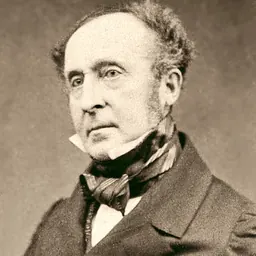
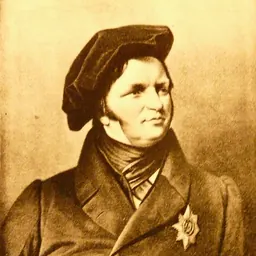
Frequently asked questions
Who was Antonio Cotogni?
Italian opera singer (1831–1918)
When was Antonio Cotogni born?
Antonio Cotogni was born on 1 August 1831 in Rome.
When did Antonio Cotogni die?
Antonio Cotogni died on 15 October 1918 in Rome.
What was Antonio Cotogni's occupation?
Antonio Cotogni was an opera singer, music educator, singer, musician and opera.
What nationality was Antonio Cotogni?
Antonio Cotogni was Italian.
Sources & further reading
Cite this page
APA: Biography.guide. (2026). Antonio Cotogni. https://biography.guide/antonio-cotogni/
MLA: "Antonio Cotogni." Biography.guide, https://biography.guide/antonio-cotogni/.
Chicago: "Antonio Cotogni." Biography.guide. https://biography.guide/antonio-cotogni/.
Data last updated: 2026-09-23 · Spot an error? Report a correction.
Portrait: Wikimedia Commons · author & licence
Page generated 2026-09-27 05:05 UTC