
About Antônio Carlos Magalhães
Lived 1927 – 2007 (aged 79). Antônio Carlos Magalhães was a Brazilian politician and physician.
Antônio Carlos Peixoto de Magalhães (4 September 1927 – 20 July 2007), commonly known as Antônio Carlos Magalhães or by his initials ACM, was a Brazilian physician, businessman, and politician, who served three times as both senator and governor of Bahia. He is best known for his influence as a national power broker, through his political machine that dominated his state's politics and national media.
Born in Salvador, Bahia to a political family, ACM studied medicine. While still a student, he worked as a reporter and began building ties to the media, alongside early roles in public administration. In the 1950s he joined the conservative National Democratic Union (UDN), won a seat as a state deputy, and later became a federal deputy in 1959.
ACM's rise accelerated under Brazil’s military regime. In 1967, after joining the pro-military National Renewal Alliance (ARENA), he was appointed mayor of Salvador, where his administration was associated with major urban works and an assertive approach to land occupations and redevelopment. ACM went on to serve two indirectly selected terms as governor of Bahia during the dictatorship era from 1971 to 1975 and 1979 to 1983, consolidating a dominant intra-government coalition in Bahia through governance marked by patronage, control of local alliances, and confrontation with segments of the independent press.
During the transition to democracy, ACM helped found the Liberal Front Party (PFL) and became a leading figure in the congressional bloc that supported President José Sarney. Serving as Minister of Communications from 1985 to 1990, he oversaw telecommunications and broadcast regulation during a period of rapid expansion in radio and television, and his tenure became closely associated with the discretionary distribution of broadcast concessions, praised as infrastructure expansion and criticized by as reinforcing clientelism and political-media entanglements. Returning to elective office in the 1990s, he again governed Bahia from 1991 to 1994 and then built national influence in the Senate, culminating in his election as President of the Federal Senate. In 2001 he resigned amid the electronic voting secrecy scandal, later returning to the Senate in 2003 until his death in 2007.
Early life and medical career Antônio Carlos Peixoto de Magalhães was born in Salvador, Bahia, on 4 September 1927 to Francisco Peixoto de Magalhães Neto and Helena Celestina de Magalhães. ACM had one brother Ângelo Mário Peixoto de Magalhães, a civil servant and public relations expert, who served as a state and federal deputy before dying in 2005.
ACM's father, a wealthy doctor born in Salvador, Bahia to Portuguese immigrants from Medelo, a village in Fafe, served as a Federal Deputy for three terms before the advent of the Estado Novo.
Family background and education ACM attended local primary and secondary schools before entering the Medical School of Bahia, later incorporated into the Federal University of Bahia, where he studied medicine. He began working as a reporter in the 1940s while still a student, an early association with the media that preceded his political career. He graduated in 1952.
Medical training and early professional work After graduation, ACM practiced in Bahia's public health service and maintained links to the medical school, where later institutional biographies list him as having taught. A science magazine published by FAPESP reports that his father was a physician and professor at the Medical School of Bahia and that Magalhães served as an assistant in hygiene at the school early in his career. These activities preceded his full-time entry into politics in the mid 1950s. Accounts of his early years in the Assembly describe a combative temperament and note incidents in which he allegedly intervened in floor discussions and clashed physically with deputy João Carlos Tourinho Dantas. Commentators state that he avoided disciplinary dismissal due to the protection of powerful patrons.
State deputy and federal deputy Magalhães joined the National Democratic Union (UDN) in the early 1950s and secured his first mandate as a state deputy in 1954 in a supplementary election for the district of Oliveira dos Brejinhos, a locality identified traditional coronelismo in the deep Bahian interior.
Contemporary and retrospective accounts remark that, prior to 1964, he struggled to consolidate a broad electoral base.
Military regime period (1964–1985)
Mayor of Salvador (1967–1970) Magalhães left the Chamber of Deputies to serve as appointed mayor of Salvador on 10 February 1967, during the early years of Brazil's military regime, and remained in office until 6 April 1970. Contemporary institutional records and later scholarship describe the position as part of the regime's practice of political appointments in state capitals, and note that the move consolidated his emergence as a dominant figure in Bahian politics. He was succeeded in the post by Clériston Andrade.
Administrative agenda and machine-building Studies of urban policy in Salvador identify his administration with high-visibility works and a rhetoric of "eradicating invasions," particularly along the seafront that was undergoing real-estate valorization. Academic analyses cite interventions against informal and irregular occupations in areas such as Bico de Ferro, Ondina and Boca do Rio, and link these actions to a broader remaking of the waterfront for middle-class leisure and circulation. The period also saw the layout of the Parque Jardim dos Namorados on the Pituba shoreline, conceived at the end of the 1960s and later redeveloped.
Evaluations are mixed: researchers note the expansion of public leisure spaces, while also documenting forcible removals and conflicts with residents affected by clearance policies.
ACM described his strategy stating that "here the future is built without destroying the past."
Relations with the press and opponents According to journalists and later academic work, Magalhães's years as mayor marked the beginning of a sustained confrontation with the independent Jornal da Bahia. Media historians report that, from 1968 onward, the newspaper and its editors faced legal and economic pressure, while supporters of the administration and security officials targeted the outlet amid the context of censorship after Institutional Act Number Five, which was the major legislation that backed up the broader national crackdown.
João Carlos Teixeira Gomes, the paper's editor and later biographer of Magalhães, characterized the mayor's conduct toward the press as coercive and documented a pattern of intimidation, a view echoed in subsequent studies of the Bahian media field.
These accounts have been contested by allies who emphasized the administration's public works and modernization agenda.
First governorship of Bahia (1971–1975) Magalhães assumed the governorship on 15 March 1971 during the presidency of Emílio Garrastazu Médici, after an indirect selection process steered by the federal executive in consultation with state-level majorities of the pro-government party, Aliança Renovadora Nacional (ARENA). Contemporary coverage in A Tarde reported that the new governors, including Magalhães, had been chosen directly by Médici, and academic analyses situate his first administration within the peak years of Brazil's authoritarian "economic miracle."
Administrative agenda and political machine-building Political scientists and historians identify this term as the period when Magalhães consolidated a dominant intra-ARENA faction in Bahia and began to articulate what later observers would call carlismo, combining control of formal institutions, the state administration, and interfaces with private enterprise. In industrial policy, his government promoted the petrochemical complex at Camaçari and associated logistics. Although the complex's conception pre-dated his term, the administration invested political capital in its local implantation and publicized it as a watershed for state industrialization; the Porto de Aratu project was reformulated and built to serve bulk flows required by the Camaçari complex and the Centro Industrial de Aratu.
Second governorship of Bahia (1979–1983) Magalhães returned to the Bahia governorship on 15 March 1979 after being chosen in 1978 by the state electoral college, which operated under the rules of the two-party system maintained by the military government. He served until 15 March 1983, with Luís Viana Neto as vice governor.
Administrative agenda and political machine-building Analysts describe the 1979–1983 term as a continuation of strategies developed in his first administration, with consolidation of a dominant intra-ARENA current and close coordination between the state executive, allied mayors, and sectors of private enterprise. The government emphasized large-scale works and industrial policy. Scholarly treatments of Bahia's political economy situate this period within the maturation of carlismo, a subnational machine that combined administrative capacity with patronage networks and media influence.
Relations with the federal regime and opponents During his second term, Magalhães remained aligned with the federal authorities as the Geisel–Figueiredo opening unfolded, benefiting from the appointment rules that still governed state capitals and from the state electoral college that had returned him to office. Commentators and media historians also connect this period to continuing disputes with the independent press in Bahia, which accused the administration of using economic pressure and legal actions to constrain coverage; allies disputed the charges and highlighted modernization goals.
Transition to democracy and party building
Role in the formation of the PFL During Brazil's gradual political opening in the early 1980s, Magalhães joined a cohort of leaders who broke with the pro-regime Democratic Social Party (PDS) and helped create the Liberal Front Party (Partido da Frente Liberal, PFL). The new party aligned with opposition forces to support an indirect presidential transition in 1985, positioning traditional state-based machines within a changing party system and giving their leaders national leverage during redemocratization.
Minister of Communications (1985–1990)
Policy program and modernization Sarney appointed Magalhães Minister of Communications in March 1985. The ministry oversaw postal services, telecommunications, and broadcast regulation during a period of rapid expansion in television and radio. Official and academic accounts credit the administration with accelerating network coverage, extending infrastructure to interior regions, and promoting modernization of state-owned telecoms, while critics argued that expansion proceeded without sufficient structural reform of media ownership and regulation.
Broadcast licensing and media relations Scholars have documented that, under the discretionary licensing rules then in force, the ministry distributed a significant number of radio and television concessions during the transition years, including to sitting politicians and their associates. Studies argue that these allocations bolstered legislative coalitions during the Constituent Assembly and reinforced the overlap between political power and regional media markets, particularly in the Northeast. Magalhães rejected allegations of favoritism and presented licensing as part of an effort to expand access and competition in broadcasting.
Criticisms and debates over concessions The licensing surge became a focus of criticism from journalists, civil-society organizations, and academic observers, who contended that executive discretion encouraged clientelism and limited pluralism. Analyses linked concession patterns to the consolidation of regional political machines and to the resilience of large private networks. Others noted that technical rationales and infrastructure goals were also invoked to justify allocations, and that post-1990 regulatory changes gradually tightened procedures. Assessments of Magalhães's role vary, but most place his tenure at the center of debates over the relationship between media structure and democratic consolidation in Brazil.
Administrative agenda and political machine-building Commentators describe the 1991–1994 term as a phase of administrative assertiveness centered on urban renewal, tourism, and heritage policy, with measures that linked cultural programming to economic development. One emblematic initiative was the restoration of the Pelourinho historic quarter in Salvador, whose first major stages began in 1992 and 1993. Studies credit the works with catalyzing tourism and commercial activity, while documenting significant displacement of low-income residents and the reconfiguration of Afro-Bahian cultural spaces.
Cultural policy during the term was reorganized to prioritize tourism-oriented initiatives. Scholarship notes that the state government restructured the cultural portfolio at the start of the administration and subordinated many activities to economic and promotional objectives, anticipating later institutional arrangements under successor governments.
Political scientists interpret the period as one of maturation for carlismo, with administrative capacity, patronage, and media leverage reinforcing a dominant coalition while the economy of Salvador shifted toward services and cultural consumption.
Magalhães resigned on 12 April 1994 to run for the Federal Senate. The president of the Bahia Court of Justice, Ruy Trindade, served briefly as acting governor, and later that year the president of the state assembly, Antônio Imbassahy, was selected to complete the term, preceding Paulo Souto's election as governor in the October 1994 contest. State institutional biographies and national media accounts document the interim arrangements and succession.
Election to the Senate (1994) ACM won a six-year term and took office on 1 February 1995, joining the leadership of the Liberal Front Party in the upper chamber. Contemporary institutional records list him on key committees and note his prominence within the pro-government bloc.
President of the Federal Senate (1997–2001)
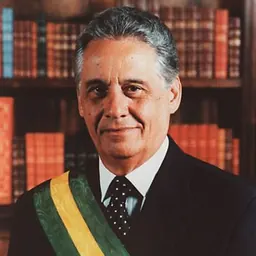
Coalition-building during the Cardoso governments Magalhães was elected President of the Federal Senate on 4 February 1997. In that capacity he helped manage the chamber's agenda during President Fernando Henrique Cardoso's second half of the first term and the beginning of the second, when the government pursued market-oriented reforms and fiscal stabilization. National and international coverage at the time portrayed him as a central power broker whose support was important for assembling majorities on key votes.
The Council of Ethics held hearings through April and May and on 23 May 2001 approved a report recommending impeachment for breach of parliamentary decorum. Facing near-certain conviction and loss of political rights, Arruda resigned on 24 May and ACM resigned on 30 May 2001. Contemporary coverage in Brazil and abroad described the case as a grave institutional crisis for the chamber.
Immediate political aftermath The resignations ended both senators’ terms but preserved their political rights, since Brazilian procedure allowed officeholders to step down before a final impeachment vote. ACM immediately began to rebuild his position in Bahia, where analysts observed that his regional network remained largely intact despite the national setback. The Senate elected new leadership and concluded the inquiry, while the Public Prosecutor pursued a criminal case at the Supreme Federal Tribunal. On 10 September 2003 the Court archived the charges against Magalhães, Arruda, and Borges on technical grounds. The justices held that the conduct did not meet the elements of then-applicable crimes related to suppression or destruction of a public document and that a newer provision that would have criminalized unauthorized modification of a computer system could not be applied retroactively. Commentators viewed the outcome as emblematic of the gap between technological change and criminal law, and as reinforcing public skepticism about accountability for high-ranking officials.
Comeback, later career, and death (2002–2007)
Re-election to the Senate
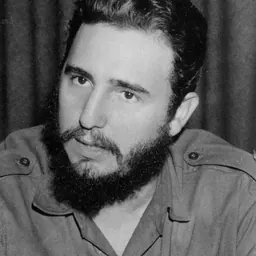
Magalhães returned to electoral politics in 2002 and won another Senate seat for Bahia. He took office on 1 February 2003 and served until his death in July 2007. He was re-elected in 2002 and when in 2003 Luiz Inácio Lula da Silva of the left wing Workers' Party was elected president, Magalhães claimed that he came from "the Workers' Party wing of the Liberal Front Party" and was successful in having supporters appointed in Lula da Silva's administration. In January 2003, then Senator-elect Magalhães (PFL-BA) shook hands with Fidel Castro as Castro was leaving a luncheon given in Brasília in Castro's honor.
Later, on Castro's way to and from state visits to Africa, Castro would stop in Salvador da Bahia and spend a couple of days sharing stories with Magalhães. Through this, right-winged Magalhães and communist Fidel Castro developed a friendship to the dismay of Castro's left-wing admirers in Brazil.
At the federal level, his tenure as Minister of Communications aligned modernization rhetoric with expansion of broadcast infrastructure and the discretionary distribution of radio and television concessions during the transition from military rule. Academic accounts argue that the policy mix expanded coverage and networks while entrenching oligopolistic structures and reciprocal ties between politicians and media owners; the ministry defended the allocations as part of sectoral development and democratization of access.
Accounts of Bahia in the 1970s–1990s emphasize the durability of this nexus, especially during moments of electoral realignment when media endorsements and editorial lines intersected with local machine politics.
Scholars analyzing the internal mechanics of this dominance employ the notion of “subnational authoritarian enclaves,” arguing that Bahia under Magalhães displayed insulating strategies that parochialized power within provincial institutions, extended influence to national arenas, and monopolized links to federal resources.
Another strand of scholarship frames carlismo as a project of conservative modernization. Rather than a simple survival of First Republic coronelismo, authors such as Paulo Fábio Dantas Neto contend that Magalhães’s machine fused a technocratic, developmentalist orientation with a hierarchical, anti-pluralist practice, subordinating older oligarchies to a state-led agenda of industrial promotion and urban transformation. In this reading, the machine relied on governismo by municipal elites, selective co-optation of rivals, and the cultivation of a regional identity that linked cultural symbols to administrative performance. The resulting coalition proved resilient through Brazil’s re-democratization, then weakened as national and state-level alignments shifted after 2002.
ACM maintained a long association with Salvador's civic institutions through patronage and cultural sponsorship linked to state programs, although accounts differ on the extent to which such activities were politically instrumental.
Electoral performance +YearElectionPositionPartyCoalitionPartnersPartyVotesPercentResultRef.1990State Elections of BahiaGovernorPFLLet's Save Bahia (PFL, PDS, PTB, PL, PDC, PST)Paulo SoutoPFL1,642,72650.71%1994SenatorWill of the People (PFL, PL, PPB, PTB, PSL, PTN, PST, PHS)ACM Jr.2,995,55930.59%Hélio Correia de Mello
Don’t just read it —
keep it.
Full-length biographies made to live with: read them, listen on the way to work, watch them tonight.
- E-book
- Audio
- Video
Instant download · yours to keep · every purchase keeps this site free
Important facts
People in Antônio Carlos Magalhães's life
Named in this biography and alive at the same time




Related people
Same field, nearest in time





Contemporaries
People whose lives overlapped Antônio Carlos Magalhães's

Frequently asked questions
Who was Antônio Carlos Magalhães?
Brazilian politician (1927-2007)
When was Antônio Carlos Magalhães born?
Antônio Carlos Magalhães was born on 4 September 1927 in Salvador.
When did Antônio Carlos Magalhães die?
Antônio Carlos Magalhães died on 20 July 2007 in São Paulo.
What was Antônio Carlos Magalhães's occupation?
Antônio Carlos Magalhães was a politician and physician.
What nationality was Antônio Carlos Magalhães?
Antônio Carlos Magalhães was Brazilian.
Sources & further reading
· Wikipedia: Antônio Carlos Magalhães
· DBpedia: Antônio Carlos Magalhães
Cite this page
APA: Biography.guide. (2026). Antônio Carlos Magalhães. https://biography.guide/antonio-carlos-magalhaes/
MLA: "Antônio Carlos Magalhães." Biography.guide, https://biography.guide/antonio-carlos-magalhaes/.
Chicago: "Antônio Carlos Magalhães." Biography.guide. https://biography.guide/antonio-carlos-magalhaes/.
Data last updated: 2026-09-20 · Spot an error? Report a correction.
Page generated 2026-09-27 05:19 UTC