
Antonio Cañizares Llovera
Spanish Catholic cardinal, Archbishop Emeritus of Valencia, Spain
About Antonio Cañizares Llovera
Born 1945. Antonio Cañizares Llovera is a Spanish theologian, university teacher, latin Catholic priest and catholic bishop.
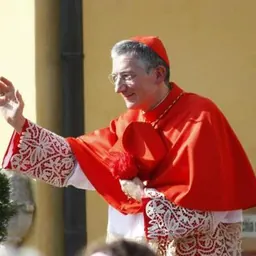
Antonio Cañizares Llovera (; born 15 October 1945) is a Spanish Catholic cardinal who served as Archbishop of Valencia from 2014 to 2022. He was prefect of the Congregation for Divine Worship and the Discipline of the Sacraments from 2008 to 2014, Archbishop of Toledo and Primate of Spain from 2002 to 2008, and Archbishop of Granada from 1996 to 2002. He was made a cardinal in 2006.
Early life Antonio Cañizares was born on 15 October 1945 in Utiel. His family moved to Sinarcas and he attended school there and in Requena. He earned a bachelor's degree in philosophy at the seminary in Valencia in 1964. At the Pontifical University of Salamanca, he obtained his licentiate in theology in 1968 and his doctorate in theology in 1971. He was ordained a priest on 21 June 1970 by Archbishop José García Lahiguera. He undertook his first parish work in October 1972 at Santa María in Alcoy and there also served as a university chaplain, founded and ran schools for catechists. He received his episcopal consecration on the following 25 April from Archbishop Mario Tagliaferri, with Cardinals Ángel Suquía Goicoechea and Marcelo González Martín serving as co-consecrators, in the Cathedral of Ávila. He took possession of the see on 1 February 1997. He took possession of the see on 15 December. Pope Benedict XVI made him a cardinal on 24 March 2006, assigning him the rank of cardinal priest with the title of San Pancrazio. On 8 April 2006, Benedict made him a member of the Pontifical Commission Ecclesia Dei, his first assignment related to the liturgy issues that became his focus in later years. He was awarded an honorary doctorate by the Universidad CEU Cardenal Herrera on 4 July 2007. Cañizares was sometimes called "Little Ratzinger" because his views mirrored those of Pope Benedict XVI, born Joseph Ratzinger, a nickname Pope Benedict found amusing.
Prefect of the Congregation for Divine Worship On 9 December 2008, Pope Benedict appointed him Prefect of the Congregation for Divine Worship and the Discipline of the Sacraments. Benedict made him a member of the Congregation for Bishops on 17 October 2009.
In 2009, after a report detailed extensive sexual abuse on the part of Irish priests and as the Spanish government proposed easing restrictions on abortion, he said child abuse on the part of Catholic priests "cannot be compared with the millions of lives that have been destroyed by abortion. It has legally destroyed 40 million human lives."
On 4 March 2010, he was appointed a member of the Pontifical Committee for International Eucharistic Congresses. On 13 November 2010 he was made a member of the Congregation for the Causes of Saints. On 5 March 2012 he was appointed a member of the Congregation for the Evangelization of Peoples.
In 2013, discussing the importance Vatican II gave to liturgy, he said its "renewal must be understood in continuity with the Tradition of the Church and not as a break or discontinuity", eschewing both innovations that do not respect tradition and a rigidity that allows no change to the liturgy that Pope Pius XII knew.
He was one of the cardinal electors who participated in the 2013 papal conclave that selected Pope Francis.
Archbishop of Valencia On 28 August 2014, Pope Francis appointed Cañizares Archbishop of Valencia. Cañizares reportedly asked Francis to name him to a Spanish see. He was installed there on 4 October. In this role he again adopted a combative tone, objecting to the secularism he said the government promoted and condemning the influence of "the gay empire". In 2015, he questioned the good faith of immigrants to Spain and said very few were fleeing persecution. Faced with a storm of protest and charges of racism, he reversed his position, modified his language, and developed initiatives to welcome refugees and was recognized by Pope Francis for his efforts.
He served as vice president of the CEE again from 2017 to 2020.
Health Cañizares was one of two eligible cardinal electors who did not attend the 2025 papal conclave to elect a successor to Pope Francis, for health reasons.
He was hospitalized on 7 August 2025, and the state of his health was described as "delicate".
Views
On receiving Holy Communion In an interview in December 2008 Cañizares Llovera discussed the best way to receive the Eucharist: "What does it mean to receive communion in the mouth? What does it mean to kneel before the Most Holy Sacrament? What does it mean to kneel during the consecration at Mass? It means adoration, it means recognizing the real presence of Jesus Christ in the Eucharist; it means respect and an attitude of faith of a man who prostrates before God because he knows that everything comes from Him, and we feel speechless, dumbfounded, before the wondrousness, his goodness, and his mercy. That is why it is not the same to place the hand, and to receive communion in any fashion, than doing it in a respectful way; it is not the same to receive communion kneeling or standing up, because all these signs indicate a profound meaning."
In August 2010, he said that, due to the impact of earlier cultural impact and formation in children who learn at an earlier age, who are faced with mature issues earlier, and who are enormously influenced by modern morality, ethical systems, and the mass communications media, it might be preferable to start preparations for receiving the Sacraments of Penance and the Eucharist at an earlier age, which could also lead to lowering the age of reception for those sacraments (which is now about 7 or 8, the age of reason, where young children begin to be held responsible for their actions and belief systems).
On Summorum Pontificum and Tridentine Mass In regard to the motu proprio Summorum Pontificum, Cañizares Llovera said that "[The] intention of the Pope has not only been to satisfy the followers of Monsignor Lefevbre, nor to confine himself to respond to the just wishes of the faithful who feel attached...to the liturgical heritage represented by the Roman Rite, but also, and in a special way, to open the liturgical richness of the Church to all the faithful, thus making possible the discovery of the treasures of the liturgical patrimony of the Church to those who still do not know it... even if there were not a single 'traditionalist' whom to satisfy, this 'discovery' would have been enough to justify the provisions of the Pope."
Don’t just read it —
keep it.
Full-length biographies made to live with: read them, listen on the way to work, watch them tonight.
- E-book
- Audio
- Video
Instant download · yours to keep · every purchase keeps this site free
Important facts
People in Antonio Cañizares Llovera's life
Named in this biography and alive at the same time
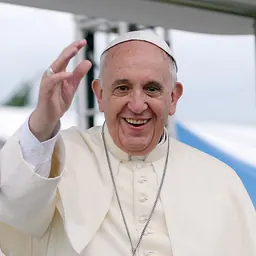

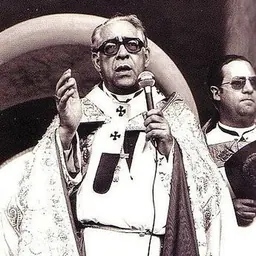



Related people
Same field, nearest in time
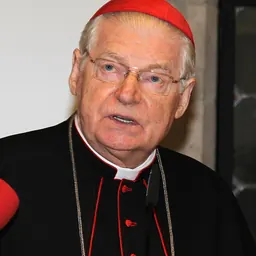

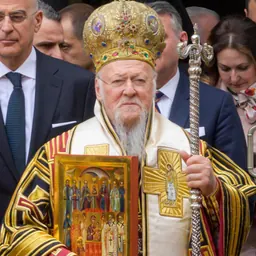

Contemporaries
People whose lives overlapped Antonio Cañizares Llovera's


Frequently asked questions
Who is Antonio Cañizares Llovera?
Spanish Catholic cardinal, Archbishop Emeritus of Valencia, Spain
When was Antonio Cañizares Llovera born?
Antonio Cañizares Llovera was born on 15 October 1945 in Utiel.
What is Antonio Cañizares Llovera's occupation?
Antonio Cañizares Llovera is a theologian, university teacher, latin Catholic priest and catholic bishop.
What nationality is Antonio Cañizares Llovera?
Antonio Cañizares Llovera is Spanish.
Sources & further reading
· Wikipedia: Antonio Cañizares Llovera
· DBpedia: Antonio Cañizares Llovera
Cite this page
APA: Biography.guide. (2026). Antonio Cañizares Llovera. https://biography.guide/antonio-canizares-llovera/
MLA: "Antonio Cañizares Llovera." Biography.guide, https://biography.guide/antonio-canizares-llovera/.
Chicago: "Antonio Cañizares Llovera." Biography.guide. https://biography.guide/antonio-canizares-llovera/.
Data last updated: 2026-09-25 · Spot an error? Report a correction.
Page generated 2026-09-27 05:11 UTC