
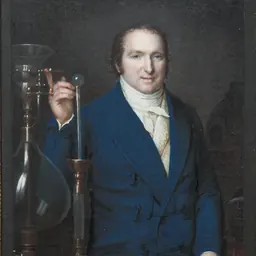
Antonio Alcalá Galiano
Spanish politician and writer
About Antonio Alcalá Galiano
Lived 1789 – 1865 (aged 75). Antonio Alcalá Galiano was a Spanish writer, politician, university teacher, romanist, military personnel and author.
Antonio Alcalá Galiano y Fernández de Villavicencio (22 July 1789, Cádiz – 11 April 1865, Madrid) was a Spanish politician and writer who served as Minister of the Navy and Minister of Public Works (1865). He was elected a Deputy for Cádiz in 1822 and served sporadically through ten successive legislatures, until his death.
Biography He was born to an influential military family. His father, the explorer Dionisio Alcalá Galiano, was killed at the Battle of Trafalgar and his uncle, Don , was Captain general of the Armada and a Regent of the Kingdom during the interregnum in the reign of Ferdinand VII.
After his secondary studies at the "" (now known as "IES Aguilar y Eslava"), he travelled through the Mediterranean with his father and spent some time in Naples. In 1806, he enrolled as a cadet in the "Guardias Marinas Españolas" and the following year was named Master at the port of Seville. He was married in 1808, but separated from his wife seven years later; because, it is believed, of her infidelity due to his ugliness. After that, he briefly gained a reputation as a libertine and drunkard.
He abandoned his military career in 1812 and became a "Doceañista" (a supporter of the Spanish Constitution of 1812). Two years later, together with , he came out against the German reactionary Romanticism advocated by Juan Nicolás Böhl de Faber but, after his stay in London, came to support the new aesthetic and wrote a prologue to El moro expósito (The Moor Exposed), by his friend Ángel de Saavedra; the manifesto of Spanish Romanticism.
He participated in the conspiracy that ended with the triumph of Rafael del Riego in 1820 and was considered to be a great orator; defending Liberalism during the Trienio Liberal. When Ferdinand VII was restored to power after the French invasion, he was forced into self-exile in London.
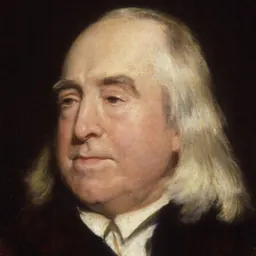
While there, he survived by teaching Spanish language and literature classes then, from 1828 to 1830, held the Chair of Spanish at the newly created University College. Until then, he had been a great admirer of Montesquieu, but soon absorbed English ways of thinking, befriended Jeremy Bentham, became attracted to the moderate liberalism of Edmund Burke and rejected abstract principles in favor of utilitarianism, then adopted the doctrinaire liberalism of Alexis de Tocqueville and Benjamin Constant. He returned to Spain in 1833, after Isabella II became Queen, and joined the Liberal cabinet of Juan Álvarez Mendizábal.
From that time, he held several ministerial positions and ambassadorships. In 1835, he was one of the co-founders of the Ateneo de Madrid. In 1863, he became a member of the Real Academia de la Historia, followed by a membership at the Real Academia de Ciencias Morales y Políticas.
He wrote a detailed autobiography, published posthumously in two versions: Recuerdos de un anciano (1878) and Memorias (1886). He was also a literary critic. His most notable work in that genre being Lecciones de literatura española, francesa, inglesa e italiana del siglo XVIII. He also composed some Lecciones de derecho político y constitucional (1843). The author, Juan Valera, was his nephew.
Selected writings Recuerdos de un anciano, 1878, reprinted by Grupo Planeta, 2009
Don’t just read it —
keep it.
Full-length biographies made to live with: read them, listen on the way to work, watch them tonight.
- E-book
- Audio
- Video
Instant download · yours to keep · every purchase keeps this site free
Important facts
People in Antonio Alcalá Galiano's life
Named in this biography and alive at the same time

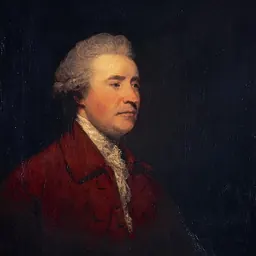
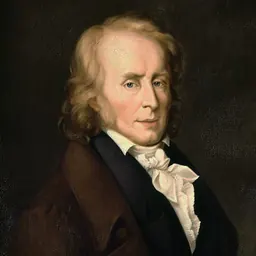
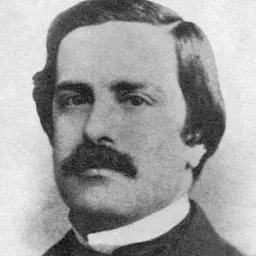

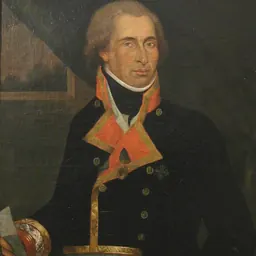

Related people
Same field, nearest in time




Contemporaries
People whose lives overlapped Antonio Alcalá Galiano's

Frequently asked questions
Who was Antonio Alcalá Galiano?
Spanish politician and writer (1789–1865)
When was Antonio Alcalá Galiano born?
Antonio Alcalá Galiano was born on 22 July 1789 in Cádiz.
When did Antonio Alcalá Galiano die?
Antonio Alcalá Galiano died on 11 April 1865 in Madrid.
What was Antonio Alcalá Galiano's occupation?
Antonio Alcalá Galiano was a writer, politician, university teacher, romanist, military personnel and author.
What nationality was Antonio Alcalá Galiano?
Antonio Alcalá Galiano was Spanish.
Sources & further reading
· Wikipedia: Antonio Alcalá Galiano
· DBpedia: Antonio Alcalá Galiano
Cite this page
APA: Biography.guide. (2026). Antonio Alcalá Galiano. https://biography.guide/antonio-alcala-galiano/
MLA: "Antonio Alcalá Galiano." Biography.guide, https://biography.guide/antonio-alcala-galiano/.
Chicago: "Antonio Alcalá Galiano." Biography.guide. https://biography.guide/antonio-alcala-galiano/.
Data last updated: 2026-09-26 · Spot an error? Report a correction.
Page generated 2026-09-27 05:16 UTC