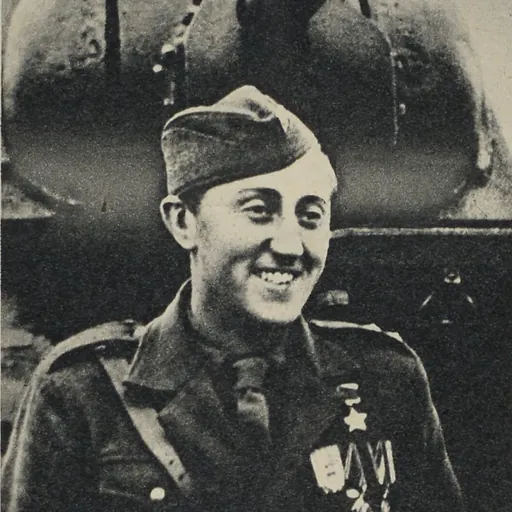
About Antonín Sochor
Lived 1914 – 1950 (aged 36). Antonín Sochor was a Russian army officer, legionary and soldier.
Major general Antonín Sochor (16 July 1914 – 16 August 1950) was a Czech general who fought for the 1st Czechoslovak Army Corps in the Soviet Union on the Eastern Front.
Biography Early life Antonín Sochor was born in the mining town of Lohberg, German Empire into the family of a Czech miner.
Sochor could not complete the business academy in Teplice and in 1933 he became a laborer. In October 1936 he began full-time military service in Trenčín. Two years later, he graduated from the non-commissioned officer school there.
He was mobilized to serve in Slovakia and remained in the army as a long-serving non-commissioned officer. After the Nazi invasion of Czechoslovakia and the creation of the Protectorate, he returned to Duchcov, but was arrested there after a conflict with the Sudeten German Party. In May 1939 he was interned in the Bitterfeld labor camp near Leipzig. In the factory where he worked, he managed to carry out several sabotages. In order to get out of the labor camp and thus beyond suspicion, he applied to enter the German Wehrmacht, and as a German native, also living in the Sudetenland, he was deported. He was given a short vacation to complete the formalities and went to Duchcov, from where he came, and, despite the Gestapo's supervision, managed to go into Poland for exile, before he managed to throw the Nazi mayor of Kutscher-Hasslinger into a pond. In the summer of 1939, he joined the Czechoslovak Military Group under the command of Ludvík Svoboda, commonly known as the Czechoslovak Legion.
World War II After the outbreak of World War II on 1 September 1939, the Czechoslovak Legion was interned in the Soviet Union and many of its members were sent to labor camps.
He was among the first who in February 1942 joined the 1st separate Czechoslovak battalion. In March 1943 he was the commander of a platoon of submachine gunners, lieutenant.
He particularly distinguished himself in the battles for the capital of Ukraine in the city of Kiev. On 5 November 1943, when the 1st separate Czechoslovak infantry brigade launched an attack on Kiev, Lieutenant Antonin Sochor commanded a company of submachine gunners, which, like a tank landing, acted in the vanguard of the brigade. Overcoming enemy resistance, Sochor's company contributed to the capture of the bridge prepared for the explosion on the Zhytomyr highway and access to the near outskirts of Kiev from the side of the Syrets farm.
By decree of the Presidium of the Supreme Soviet of the Soviet Union of 21 December 1943, for the skillful command of a company and the heroism and courage shown, the citizen of Czechoslovakia, Lieutenant Antonín Sochor, was awarded the title of Hero of the Soviet Union with the Order of Lenin.
In 1944 and 1945 he took part in the battles near Belaya Tserkov and Zhashkov. When the 1st Czechoslovak Army Corps was created in the spring of 1944, he took part in the Carpathian-Dukla operation of the troops of the 1st Ukrainian Front, and fought in Slovakia and Moravia until the complete liberation of Czechoslovakia from the Nazi invaders. In one of the attacks on the heavily fortified elevation, he was severely wounded on 14 September 1944. He managed to evacuate to the hospital in Odrzykon, where 218 shards were removed from his body. He then spent three months in convalescence. After further treatment, he worked in staff positions and ended the war with the rank of staff captain.
Post war and death
After the liberation of Czechoslovakia he continued his service in the army. From August to December 1948 he was commander of a brigade of Jewish volunteers in training for the Israeli Defense Forces in Central Moravia. In September 1949 he was appointed professor of the infantry school in Milovice near Prague and at the same time commander of the school of middle commanders. On 1 July 1950, he was promoted to lieutenant colonel. After cremation, his remains were buried at the Jan Žižka National Monument at Vítkov. In 1990, his ashes were moved to Olšany Cemetery, together with those of about 20 other communist leaders which had also originally been placed in the Jan Žižka National Monument.
Antonín Sochor's death is still fraught with some ambiguity. Many people have been and are convinced that it was not an accident, but a carefully planned assassination. He became uncomfortable with some of the powerful people of the new regime, especially Bedřich Reicin. When Sochor was returning from Israel in 1949, his plane was attacked by an unidentified fighter during a flight and had to make an emergency landing in Malta. This was later referred to as the first assassination attempt on Sochor. His son Ludvík also confirmed that they were striving for his life, stating in his memoirs that his father had talked to his mother that his car had been shot twice, that they wanted to kill him and that he would no longer take a step without a loaded submachine gun. It has been also said that doctors were informed deliberately about his injuries after the crash, however the then chief physician of the airborne battalion in Stráž pod Ralskem, Zdeněk Klouček, stated that Sochor's injuries were so serious that it would not be possible to save his life even by today's means. (Romania)
Medals
Honorary badge for war college graduates (Czechoslovakia)
Don’t just read it —
keep it.
Full-length biographies made to live with: read them, listen on the way to work, watch them tonight.
- E-book
- Audio
- Video
Instant download · yours to keep · every purchase keeps this site free
Important facts
People in Antonín Sochor's life
Named in this biography and alive at the same time
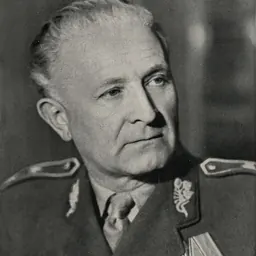
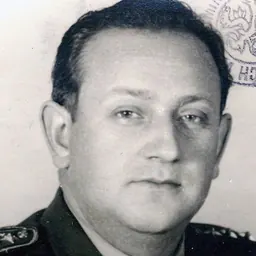
Related people
Same field, nearest in time
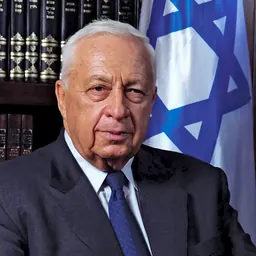

Contemporaries
People whose lives overlapped Antonín Sochor's




Frequently asked questions
Who was Antonín Sochor?
Czech Hero of the Soviet Union (1914-1950)
When was Antonín Sochor born?
Antonín Sochor was born on 16 July 1914 in Lohberg.
When did Antonín Sochor die?
Antonín Sochor died on 16 August 1950 in Jablonné v Podještědí.
What was Antonín Sochor's occupation?
Antonín Sochor was an army officer, legionary and soldier.
What nationality was Antonín Sochor?
Antonín Sochor was Russian.
Sources & further reading
Cite this page
APA: Biography.guide. (2026). Antonín Sochor. https://biography.guide/antonin-sochor/
MLA: "Antonín Sochor." Biography.guide, https://biography.guide/antonin-sochor/.
Chicago: "Antonín Sochor." Biography.guide. https://biography.guide/antonin-sochor/.
Data last updated: 2026-09-22 · Spot an error? Report a correction.
Portrait: Wikimedia Commons · author & licence
Page generated 2026-09-27 05:03 UTC