
About Antonia Pantoja
Lived 1922 – 2002 (aged 79). Antonia Pantoja was an American journalist, social worker and teacher.
Antonia Pantoja (September 13, 1922 – May 24, 2002), was a Puerto Rican educator, social worker, feminist, civil rights leader and the founder of ASPIRA, the Puerto Rican Forum, Boricua College and Producir. In 1996, she was the first Puerto Rican woman to receive the American Presidential Medal of Freedom.
Early life and education Pantoja was born in Puerta de Tierra, in San Juan, Puerto Rico on September 13, 1922 into a poor family of laundry and tobacco workers. She was raised by her mother, Alejandrina Pantoja Acosta, and her grandparents, Conrado Pantoja Santos and Luisa Acosta Rivera; her later activism was influenced by her grandfather, who was a labor organizer at a factory of the American Tobacco Company. At a young age, Pantoja developed asthma, which would affect her for the rest of her life; she also contracted tuberculosis during her first year of high school and spent three months recovering in a sanatorium. She received a teaching certificate in 1942 and taught for two years at rural schools in Cuchilla and Toa Alta, where she developed a passion for education and supporting disadvantaged students.
In 1944, Pantoja moved to New York City as a part of a major wave of Puerto Rican migration during World War II, and to relieve herself of the burden of providing for her mother and siblings. She found work as a wartime welder in a radio factory, then in factory making lamps, where she helped unionize the workers in her factory.
Pantoja attended Hunter College on a scholarship, and graduated with a bachelor's degree in sociology in 1952. She then attended the Columbia School of Social Work on scholarships from the Mary Antoinette Cannon Foundation and the John Hay Whitney Foundation, graduating with her master's degree in social work in 1954.
In 1973, she earned her Ph.D. from Union Graduate School (now Union Institute & University) in Cincinnati, Ohio.
Social work and early activism In the early 1950s, while living on the Lower East Side with her then-partner, Helen Lehew, Pantoja began a job as a youth worker at a community center on 110th Street, where she was able to engage with the local Puerto Rican community. The organization focused on community-oriented projects, such as refurbishing churches, helping register voters, and planning the first Puerto Rican Youth Conference. Community figures like Josephine Nieves, Yolanda Sánchez, Luis Nuñez, and Alice Cardona were early members of the group.
In 2015, she was named by Equality Forum as one of their 31 Icons of the 2015 LGBT History Month.
Later years After 1984, Pantoja moved to Puerto Rico for health reasons, where she established Producir, an organization which provides economic assistance to small businesses, and Provivienda, which works to develop housing for the needy. In 1998 she returned to New York, concluding that she was clearly now a Nuyorican, given her negative personal experiences in Puerto Rico.
Dr. Antonia Pantoja died of cancer in Manhattan, New York on May 24, 2002. She was survived by her longtime partner, Dr. Wilhelmina Perry. Filmmaker Lillian Jimenez of the Latino Educational Media Center in New York City worked on a documentary on the life of Pantoja.
Sometime around 2003-2004, a branch of the Buffalo Public Schools, PS 18, was renamed after Pantoja.
Written works "Memoir of a Visionary: Antonia Pantoja", Houston: Arte Publico Press, 2002 "Puerto Ricans in New York: A Historical and Community Development Perspective", Centro: Journal, Vol. 2, No. 5, Spring 1989, pp. 21–31 "A Guide for Action in Intergroup Relations", Social Group Work: Selected Papers from the National Conference on Social Welfare, 1961 "A Third World Perspective: A New Paradigm for Social Science Research", Research: A Third World Perspective, Western Interstate Commission for Higher Education, 1967, pp. 1–17 "Community Development and Restoration: A Perspective and Case Study", Community Organizing in a Diverse Society. Edited by John L. Erlich and Felix G. Rivera. Boston: Allyn and Bacon, 1998., pp. 220–242 "Cultural Pluralism, A Goal to be Realized", Voices from the Battlefront: Achieving Cultural Equity. Edited by Marta Moreno Vega and Cheryll Greene. New Jersey: Africa World Press Inc., 1993, pp. 135–48 "Social Work in a Culturally Pluralistic Society: An Alternative Paradigm", Cross-Cultural Perspectives in Social Work Practice. Houston: University of Houston, 1976, pp. 79–95 "The University: An Institution for Community Development", Coming Home: Community-based Education and the Development of Communities. Washington, D.C.: Clearing House for Community-based, Free-standing Educational Institutions, 1979, pp. 28–33 "Toward the Development of Theory: Cultural Pluralism Redefined", Journal of Sociology and Social Welfare IV, 1976, pp. 125–46
Notable ASPIRA alumni Among the ASPIRA of New York's prominent graduates (known as "Aspirantes") are:
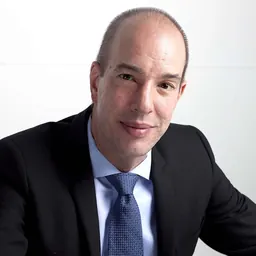
Fernando Ferrer, former Bronx president, who ran for NYC Mayor in 2001 and 2005 unsuccessfully; Angelo Falcón, prominent political scientist and President of the National Institute for Latino Policy (formerly the Institute for Puerto Rican Policy); Anthony Romero, executive director of the American Civil Liberties Union; Ninfa Segarra, former President of the Board of Education of New York, former Deputy Mayor under Mayor Rudolph Giuliani, and she is currently a lobbyist with Toñio Burgos & Associates and is President of the National Puerto Rican Coalition in Washington, D.C.; Aída Álvarez, former director of the Small Business Administration under President Bill Clinton; Nelson Diaz, first Puerto Rican Solicitor General in Philadelphia; Jimmy Smits, Puerto Rican actor. Luis Guzmán, character actor Dr. Isaura Santiago Santiago (Ph.D., Fordham University), first tenured Puerto Rican woman at Columbia University and first Puerto Rican woman president of Hostos Community College of the City University of New York Digna Sanchez, who led such organizations as the Puerto Rican Socialist Party (PSP), MADRE and Learning Leaders in New York City; she also worked at the Puerto Rican Legal Defense Fund, the United Way of New York City, and the Children's Television Workshop.
Don’t just read it —
keep it.
Full-length biographies made to live with: read them, listen on the way to work, watch them tonight.
- E-book
- Audio
- Video
Instant download · yours to keep · every purchase keeps this site free
Important facts
People in Antonia Pantoja's life
Named in this biography and alive at the same time





Related people
Same field, nearest in time

Contemporaries
People whose lives overlapped Antonia Pantoja's

Frequently asked questions
Who was Antonia Pantoja?
Puerto Rican educator (1922–2002)
When was Antonia Pantoja born?
Antonia Pantoja was born on 13 September 1922 in San Juan.
When did Antonia Pantoja die?
Antonia Pantoja died on 24 May 2002 in Manhattan.
What was Antonia Pantoja's occupation?
Antonia Pantoja was a journalist, social worker and teacher.
What nationality was Antonia Pantoja?
Antonia Pantoja was American.
Sources & further reading
Cite this page
APA: Biography.guide. (2026). Antonia Pantoja. https://biography.guide/antonia-pantoja/
MLA: "Antonia Pantoja." Biography.guide, https://biography.guide/antonia-pantoja/.
Chicago: "Antonia Pantoja." Biography.guide. https://biography.guide/antonia-pantoja/.
Data last updated: 2026-09-22 · Spot an error? Report a correction.
Page generated 2026-09-27 05:22 UTC