
Antoñete
Spanish torero
About Antoñete
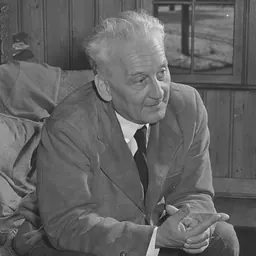
Lived 1932 – 2011 (aged 79). Antoñete was a Spanish bullfighter.
Early life Born in Madrid, right near Spain's foremost bullring, Las Ventas, Antoñete spent the Spanish Civil War in the country's east once the Spanish mint had transferred its operations to Valencia; his father was a mint employee. The family later moved to Castellón de la Plana, also on the Costa del Azahar and, once the fighting was over, to Alicante. They moved back to Madrid in 1940 when Antoñete was eight years old. He suffered as a result of having a "red" father, who was both left-wing and Republican. Hungry and out on the street – the consequent malnutrition resulted in chronic bone decalcification for the boy – they had no choice but to turn to Antoñete's brother-in-law, who was the overseer at Las Ventas, Paco Parejo (whose wife was Antoñete's elder sister Carmen). During his childhood and adolescence, he would spend his time at the horse yard, the stables, and the bullpens at Las Ventas helping train bullfighters (by standing in for the bull) such as Agustín Parra "Parrita", Paquito Muñoz, and Manolo Navarro.
First steps into bullfighting In 1946, Antoñete gained experience at capeas in smaller towns. thumb Confirmation of Antoñete's alternativa came in Madrid on 13 May of the same year. Standing as "godfather" this time was Rafael Ortega Domínguez, while Julio Aparicio Martínez bore witness. The bulls for the confirmation were laid on by the ranch Don Alipio Pérez-Tabernero Sanchón; the actual confirmation bull was Rabón. although at least one source says that he was only awarded three ears at this corrida, but that he was also borne out through the Great Gate on shoulders. He shared billing that day with Rafael Ortega and Jorge Aguilar "El Ranchero".
Antoñete also saw triumphs in neighbouring France, winning the Oreille d'or ("Golden Ear") at Bordeaux in 1953, 1955, and 1956. At Nîmes on 6 June 1954, he gave the fair one of its highlights with a memorable bullfight with a bull from the Juan Pedro Domecq ranch. On 8 August 1965, he was borne shoulder-high out through the Great Gate at Las Ventas after reaping both ears from the bull Florido, from the Don Félix Cameno ranch. He alternated that afternoon with Jesús Delgadillo "El Estudiante" and Pepe Osuna. Only nine days later, at the same bullring, Antoñete was once again borne shoulder-high out through the Great Gate after cutting one ear from each of two bulls furnished by the Brothers of Felipe Bartolomé ranch. He managed the same feat again at Las Ventas on 7 July that same year at the Press Association bullfight, after leaving two bulls from the Carlos Núñez ranch earless. He was alternating that afternoon with Antonio Bienvenida and Curro Romero.
Indeed, Antoñete's "first period" was not altogether unbroken: he did no bullfighting at all in the 1959 and 1962 seasons. It was in Caracas on 15 October 1978 that he reaped an ear from a bull from the Manuel Haro ranch.
On 21 September 1985, Antoñete did exceptionally well at a corrida held at the bullring in Consuegra, appearing after a month's absence due to a goring that he had sustained in late August. He cut one ear from the first bull, and got the full set of appendages – both ears and the tail – from the fourth.
Decline (1987–2000) In 1985, only nine days after his feats at Consuegra,
From 1998 onwards, Antoñete participated sporadically at bullfighting events at bullrings in both Spain and Latin America, at which he received recognition and awards despite his poor health, which was due to his tobacco addiction.
On 16 February 2001, Antoñete was awarded the Gold Medal of Merit in the Fine Arts.
Shortly before the burial, Esperanza Aguirre, the then president of the Community of Madrid, placed upon the cape that covered Antoñete's coffin the Great Cross of the Order of the Second of May, which had been granted Antoñete posthumously. Madrid city council, for its part, announced that a street would soon be dedicated to the late bullfighter in the city of his birth. The street turned out to be a roundabout in the city's Barajas neighbourhood (at ) called the Glorieta de Antonio Chenel "Antoñete".
Private life Born of Antoñete's first marriage, to Pilar López Quesada, were six children, and he had one more, born in 1999, with his second wife, the young Frenchwoman Karina Bocos, He also had an affair with actress Charo López. He lived with his second wife and their son on a farm called Las Laderas ("The Slopes") in Navalagamella, Madrid until he was hospitalized three days before his death.
Don’t just read it —
keep it.
Full-length biographies made to live with: read them, listen on the way to work, watch them tonight.
- E-book
- Audio
- Video
Instant download · yours to keep · every purchase keeps this site free
Important facts
People in Antoñete's life
Named in this biography and alive at the same time



Related people
Same field, nearest in time
Contemporaries
People whose lives overlapped Antoñete's



Frequently asked questions
Who was Antoñete?
Spanish torero (1932–2011)
When was Antoñete born?
Antoñete was born on 24 June 1932 in Madrid.
When did Antoñete die?
Antoñete died on 22 October 2011 in Madrid.
What was Antoñete's occupation?
Antoñete was a bullfighter.
What nationality was Antoñete?
Antoñete was Spanish.
Sources & further reading
Cite this page
APA: Biography.guide. (2026). Antoñete. https://biography.guide/antonete/
MLA: "Antoñete." Biography.guide, https://biography.guide/antonete/.
Chicago: "Antoñete." Biography.guide. https://biography.guide/antonete/.
Data last updated: 2026-09-25 · Spot an error? Report a correction.
Page generated 2026-09-27 05:11 UTC