
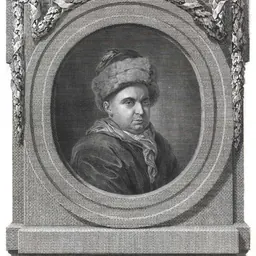
Anton I, Prince Esterházy
(1738-1794) Hungarian noble
About Anton I, Prince Esterházy
Lived 1738 – 1794 (aged 55). Anton I, Prince Esterházy was a Hungarian and Austrian military officer, composer, patron of the arts and arch nobility.
Anton (Antal), Prince Esterházy de Galántha (11 April 1738 – 22 January 1794) was a hungarian prince, a member of the wealthy Esterházy family. He is primarily known for his patronage on composer Joseph Haydn.
Life At the time of Anton's birth his father Nikolaus Esterházy bore the title Graf (Count) Esterházy de Galántha. Nikolaus was a successful general and lieutenant field marshal in Austrian service who would later achieve distinction at the Battle of Kolín (1757) in the Seven Years' War leading his cavalry in a battle-winning charge. When Nikolaus's brother died without heirs, Nikolaus acquired the family patrimony, becoming the fifth prince in the Esterházy line.
As such, he inherited considerable wealth, with which he built the magnificent palace of Esterháza in Hungary and patronized the arts. In particular he paid an entire orchestra, later a full-scale opera company, both directed by the composer Joseph Haydn. Anton's mother, Marie Elisabeth, was the daughter of Ferdinand Ungnadin, Reichsgraf (Imperial Count) von Weissenwolf.
Prince Paul's wife, Maria Theresia, Countess Erdödy de Monyorokerek et Monoszlo.
On 13 January 1763 Anton married Maria Theresia, Gräfin (Countess) Erdödy de Monyorokerek et Monoszlo (1745–1782) in Vienna. They had four children: Nikolaus (who succeeded him as prince), Anton (who died of wounds from the Austro-Turkish War (1787-1791)), Therese, and Leopoldine. Maria Theresa died in 1782. Anton married his second wife 9 July 1785 in Vienna: she was Maria Anna, Gräfin von Hohenfeld (1768–1848).
Anton was elevated to the status of prince (German: Fürst ) in 1783, and became the reigning prince on the death of his father in 1790. He reigned as prince for only four years, dying unexpectedly of a sudden illness in 1794.
Military career
During the Seven Years' War, Anton served in his father's regiment and was at one point taken prisoner by the enemy. He was promoted to Captain in 1763 and in 1780 to Fieldmarshal Lieutenant, eventually becoming head of the regiment.
He was Captain of the Hungarian Noble Life Guard from September 1791 until his death in 1794, and commanded an autonomous corps on the Upper Rhine at the beginning of the War of the First Coalition. His Corps participated in various actions between July and October 1792, after which he received the Commanders Cross of the Order of St. Stephen in 1792; he had already received the Grand Cross of the Order in 1777. His corps was later absorbed into other military formations.
He was Colonel and Proprietor (Inhaber) of the 31st Infantry Regiment, from November 1777 to October 1780, and then Colonel and Proprietor of the 34th Infantry Regiment from September 1780 until his death. He was initiated to the Order of the Golden Fleece in 1790, and became an imperial and royal Chamberlain.
Anton and Joseph Haydn
Anton is perhaps best remembered to history as the third in the succession of four Esterházy princes who employed the composer Joseph Haydn as the director of their court music. By a wide margin, he was the least enthusiastic of the four in this respect.
Anton had known Haydn long before becoming the reigning prince. Thus, for Anton's marriage in 1763 the Esterházy musical ensemble performed Haydn's opera Acide as part of a lavish three-day celebration.
Before Anton became reigning prince in 1790, his father had spent a great deal on music, particular the opera company. Anton was not particularly interested in music and wanted to cut back on expenditures. Thus when he became prince he dismissed most of the Esterházy musical establishment. and also allocated small salaries (400 florins) When in 1791 Anton wrote Haydn asking him to return to compose and direct an opera celebrating Anton's installation as Lord Lieutenant of Oedenberg, Haydn refused, as he had entered into contractual obligations. but Anton did not fire him.
Don’t just read it —
keep it.
Full-length biographies made to live with: read them, listen on the way to work, watch them tonight.
- E-book
- Audio
- Video
Instant download · yours to keep · every purchase keeps this site free
Important facts
People in Anton I, Prince Esterházy's life
Named in this biography and alive at the same time
Related people
Same field, nearest in time


Contemporaries
People whose lives overlapped Anton I, Prince Esterházy's





Frequently asked questions
Who was Anton I, Prince Esterházy?
(1738-1794) Hungarian noble
When was Anton I, Prince Esterházy born?
Anton I, Prince Esterházy was born on 11 April 1738 in Vienna.
When did Anton I, Prince Esterházy die?
Anton I, Prince Esterházy died on 22 January 1794 in Vienna.
What was Anton I, Prince Esterházy's occupation?
Anton I, Prince Esterházy was a military officer, composer, patron of the arts and arch nobility.
What nationality was Anton I, Prince Esterházy?
Anton I, Prince Esterházy was Hungarian and Austrian.
Sources & further reading
· Wikipedia: Anton I, Prince Esterházy
· DBpedia: Anton I, Prince Esterházy
Cite this page
APA: Biography.guide. (2026). Anton I, Prince Esterházy. https://biography.guide/anton-i-prince-esterhazy/
MLA: "Anton I, Prince Esterházy." Biography.guide, https://biography.guide/anton-i-prince-esterhazy/.
Chicago: "Anton I, Prince Esterházy." Biography.guide. https://biography.guide/anton-i-prince-esterhazy/.
Data last updated: 2026-09-20 · Spot an error? Report a correction.
Page generated 2026-09-27 05:27 UTC