
About Antoine Thomson d'Abbadie
Lived 1810 – 1897 (aged 87). Antoine Thomson d'Abbadie was a French explorer, numismatist, physicist, cartographer, archaeologist and politician.
Antoine Thomson d'Abbadie d'Arrast (3 January 1810 – 19 March 1897) during the early 19th century. He was the elder brother of Arnaud-Michel d'Abbadie, who accompanied him on his travels.
Biography Antoine Thomson d’Abbadie was born a British subject in Dublin, Ireland. His mother, Madame Thompson, was Irish, and his father, Michel d’Abbadie, was a native of Arrast-Larrebieu of partial noble descent. He descended from an ancient lineage of lay abbots based in Arrast, a commune in the canton of Mauléon. These lay abbots were originally instituted by Charlemagne to protect the borderlands against Saracen incursions. Residing in the abbeys of the Basque region, they lived with weapons in hand, ever prepared to defend their territories. They were granted the right to collect tithes and participated in the appointment of priests, selecting candidates in collaboration with the bishop. The name "d’Abbadie" originally referred not to a surname but to their ecclesiastical function ("abbatia," "abbadia").
In 1818, the family relocated to France, where Antoine and his brother received a rigorous scientific education.
On 21 February 1859, he married Virginie Vincent de Saint-Bonnet. and later served as president of the French Academy of Sciences. Upon his death in 1897, he bequeathed the Abbadia estate and castle in Hendaye, generating an annual revenue of 40,000 francs, to the Academy of Sciences. This legacy came with the stipulation that the academy compile a catalogue of 500,000 stars within fifty years.
Education Michel d’Abbadie returned to France with his family around 1820. Settling initially in Toulouse, he personally oversaw the education of his children, who were placed under the care of a governess. “I was raised,” Antoine later recounted, “in the English tradition alongside my sisters. We spent our days and nights in a dormitory, closely monitored by a servant. In the evenings, we had little opportunity to converse with our parents, save for an occasional story from Father before being sent to play quietly in a corner of the room. We always addressed our parents formally, as ‘Sir’ or ‘Madam.’”
Antoine remained at home for three or four years, “far removed from the strict discipline of a boarding school tutor.” At the age of 13, he entered middle school, where he demonstrated enthusiasm for his studies and curiosity about the unknown in his surroundings. He once asked his governess, “What lies at the end of the road?” She replied, “A river, my friend.” “And what lies beyond the river?” he inquired. “A mountain,” came the answer. “And beyond the mountain?” the boy persisted. “I cannot say, for I have never been there,” she admitted. “Then I shall journey forth and discover it myself,” declared the child. This insatiable thirst for knowledge became a defining characteristic of Antoine d’Abbadie's life. Gifted with extraordinary linguistic abilities, he would go on to master numerous languages, including English, Italian, German, Latin, Greek, Hebrew, Arabic, Berber, and several Ethiopian languages.
In August 1827, Antoine obtained his baccalaureate and returned to Toulouse to study law. Among his closest friends at the time were Pierre Étienne Simon Duchartre, Bernard-Adolphe Granier de Cassagnac and .The young men often discussed their ambitions for the future.
From an early age, d’Abbadie harboured the passions and aspirations of an adventurer. While initially vague, his ideas gradually crystallized into a more concrete vision. “After completing college in 1829,” he later recounted, “I undertook six years of study specifically aimed at preparing myself for the exploration of Africa’s interior, which I intended to enter through Tunisia and Morocco. Reading the travels of Bruce transported my imagination to East Africa—a region marked by extensive migrations and the origins of enduring traditions, yet veiled in mystery. I became convinced that the most noble pursuit a man could dedicate himself to was the study of his fellow human beings.”
During these six formative years, d’Abbadie rigorously prepared himself for the challenges of exploration. Gifted with exceptional physical agility, even by Basque standards, he spent years honing his body and mind through physical training. He became skilled in fencing, practised gymnastics, competed in endurance races under various weather conditions, and developed into an accomplished swimmer. During a vacation in Biarritz in 1827, he impressed the local population by swimming to the Boucalot rock, located nearly 500 meters offshore.
Science and explorations
In 1835, the French Academy commissioned Antoine d’Abbadie to undertake a scientific mission to Brazil. The findings of this expedition were later published in 1873 They travelled extensively throughout Ethiopia, reaching as far south as the Kingdom of Kaffa. Often journeying together but occasionally venturing separately, their explorations encompassed scientific research and political engagement. Antoine, in particular, immersed himself in local political dynamics, advocating for French interests and supporting Catholic missionary efforts.
At the beginning of the 19th century, Protestant missions began to be established in Ethiopia.
Father Sapeto, a Vincentian from the Syrian mission, joined Antoine and Arnaud d'Abbadie in Cairo in 1837. He wanted to become a missionary in Ethiopia and perhaps found a Catholic mission or die a martyr. He travelled from Massawa to Adwa with Arnaud d'Abbadie, and following Arnaud's advice, obtained permission from a religious tribunal to remain in Adwa to learn the language and customs of the country.
When Antoine d'Abbadie returned to Europe in July 1837, Father Sapeto gave him letters to Cardinal Fransoni, Prefect of the Congregation for the Evangelisation of Peoples, requesting the Vatican's help in establishing his mission. The Vincentians Justin de Jacobis and Montuoro joined Father Sapeto; the Vincentian mission was founded.
On March 9, 1845, Antoine d'Abbadie, in a letter addressed to Cardinal Fransoni, proposed the establishment of a mission to the Oromo population of the Horn of Africa. The proposal was approved by the Pope on March 1, 1846, and Guglielmo Massaia was appointed Apostolic Vicar of the Oromos.
Arnaud d’Abbadie held several distinguished roles in Ethiopia, including those of general, judge, and diplomat. He actively participated in battles and was granted the title of Ras, one of the most esteemed honours in the country. Antoine, by contrast, followed an academic path and became a dedicated scholar. Reflecting on his time in Ethiopia, he remarked, "When residing in a foreign country without any known antecedents, it is advisable to adopt a vocation in line with local customs, as failure to do so may result in being branded as a political spy, a hazardous accusation in any nation. As I was unable to engage in combat, agriculture, or merchandising, I identified as a "mamhir", or teacher and scholar, during my time in Christian Ethiopia and received an education from their public and non-compulsory schools."
During their extended stay, the two brothers fully assimilated into local customs. They exchanged their European attire for the turban and toga of the Ethiopians and traversed the region barefoot, as, at the time, only lepers and Jews wore sandals. This cultural integration earned them warm receptions wherever they travelled.
D'Abbadie launched the fêtes euskariennes (Basque festivals) in Urrugne. These celebrations, which he supported throughout his life as their principal patron, were held across the French and Spanish Basque Country to foster a revival of the Basque language and culture. His death in 1897 did not bring an end to this tradition — the festivals continued for about thirty more years. In recognition of his efforts, he was awarded an honorary makila in 1892, along with the title Euskaldunen Aïta — "Father of the Basque People."
Abbadia Castle
Abbadie gave his castle home the name Abbadia, which is the name still used in Basque. However, in French it is usually referred to as Chateau d'Abbadie or Domaine d'Abbadia, and locally it is not unusual for it to be called le Chateau d'Antoine d'Abbadie. Drawing of the castle in an American magazine (Popular Science Monthly, 1898).
The château was built between 1864 and 1879 on a cliff by the Atlantic Ocean, and was designed by Eugène Viollet-le-Duc in the Neo Gothic style. It is considered one of the most important examples of French Gothic Revival Architecture. It is divided in three parts: the observatory and library, the chapel, and the living quarters. Over the front entrance door of the château is engraved "Céd míle fáilte" Irish gaelic for one hundred thousand welcomes in honour of his Irish heritage.
The château still belongs to the Academy of Science to which it was bequeathed in 1895 on condition of its producing a catalogue of half-a-million stars within fifty years' time, and president of the French Academy of Sciences in 1892. Both brothers received the grand medal of the Paris Geographical Society in 1850.
Don’t just read it —
keep it.
Full-length biographies made to live with: read them, listen on the way to work, watch them tonight.
- E-book
- Audio
- Video
Instant download · yours to keep · every purchase keeps this site free
Important facts
People in Antoine Thomson d'Abbadie's life
Named in this biography and alive at the same time




Related people
Same field, nearest in time



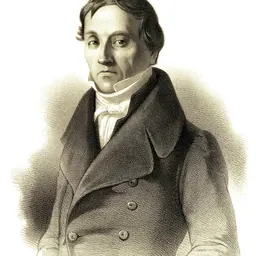
Contemporaries
People whose lives overlapped Antoine Thomson d'Abbadie's



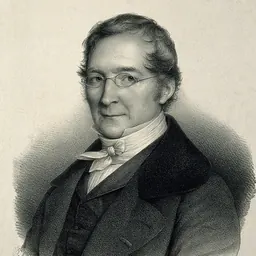
Frequently asked questions
Who was Antoine Thomson d'Abbadie?
Irish-born French explorer, geographer, ethnologist, linguist and astronomer (1810-1897)
When was Antoine Thomson d'Abbadie born?
Antoine Thomson d'Abbadie was born on 3 January 1810 in Dublin.
When did Antoine Thomson d'Abbadie die?
Antoine Thomson d'Abbadie died on 19 March 1897 in Paris.
What was Antoine Thomson d'Abbadie's occupation?
Antoine Thomson d'Abbadie was an explorer, numismatist, physicist, cartographer, archaeologist and politician.
What nationality was Antoine Thomson d'Abbadie?
Antoine Thomson d'Abbadie was French.
Sources & further reading
· Wikipedia: Antoine Thomson d'Abbadie
· DBpedia: Antoine Thomson d'Abbadie
Cite this page
APA: Biography.guide. (2026). Antoine Thomson d'Abbadie. https://biography.guide/antoine-thomson-d-abbadie/
MLA: "Antoine Thomson d'Abbadie." Biography.guide, https://biography.guide/antoine-thomson-d-abbadie/.
Chicago: "Antoine Thomson d'Abbadie." Biography.guide. https://biography.guide/antoine-thomson-d-abbadie/.
Data last updated: 2026-09-20 · Spot an error? Report a correction.
Page generated 2026-09-27 05:24 UTC