
About Antoine Claire Thibaudeau
Lived 1763 – 1854 (aged 90). Antoine Claire Thibaudeau was a French politician, lawyer, writer, regional historian, official and historian.
Antoine Claire, Comte Thibaudeau (23 March 17658 March 1854) was a French politician.
Early life
He was the son of Antoine de Thibaudeau (1739–1813), who was a lawyer of Poitiers and a deputy to the Estates-General of 1789. He was admitted to the bar in 1787, and in 1789 accompanied his father to the Estates-General at Versailles. When he returned to Poitiers in October he immediately set up a local revolutionary club, and in 1792 was returned as a deputy to the National Convention.
Career
Thibaudeau joined the party of the Mountain and voted unconditionally for the death of Louis XVI. Nevertheless, he incurred a certain amount of suspicion because he declined to join the Jacobin Club. In May 1793 he was on a special mission in the west and prevented his département from joining the Federalist movement. Thibaudeau occupied himself more particularly with educational business, notably in the organization of the museum of the Louvre. It was he who secured the inclusion of Tom Paine's name in the amnesty of Girondist deputies.
Secretary and then president of the convention for a short period, he served on the Committee of Public Safety and of General Security. After the royalist insurrection of 13 Vendémiaire (5 October 1795) he opposed those Thermidorians who wished to postpone the dissolution of the convention. At the elections for the Corps Législatif he was elected by no less than thirty-two départements. It was only by the intervention of Boulay de la Meurthe that he escaped transportation after the coup d'etat of 18 Fructidor (4 September 1797), and he then returned to the practice of his profession.
The establishment of the Consulate brought him back to public life. He was made prefect of the Gironde, and then a member of the council of state, in which capacity he worked on the civil code. He at this time had Napoleon's confidence, and gave him wholehearted support. He did not entirely conceal his disapproval of the foundation of the Legion of Honour, of the Concordat and of Napoleon's acceptance of the consulate for life, and his appointment as prefect of the Bouches-du-Rhône, with consequent banishment from Paris, was a semi-disgrace.
Exile
A peer of the Hundred Days, he fled at the second Restoration to Lausanne. During his exile he lived in Vienna, Prague, Augsburg and Brussels, occupying himself with his Mémoires sur la Convention et le Directoire (Paris, 2 vols., 1824); Mémoires sur le Consulat: par un ancien conseiller d'état (Paris, 1827); Histoire générale de Napoléon Bonaparte (6 vols., Paris and Stuttgart, 1827–28, vol. iii. not printed); Le Consulat et l'Empire, vol. i. of which is identical with vol. vi. of the Histoire de Napoléon (10 vols., 1834). The revolution of 1830 permitted his return to France, and he lived to become a member of the Imperial Senate under the Second Empire.
Death
He died in Paris on 8 March 1854 in his eighty-ninth year, being the last living member of the National Convention during the French Revolution to vote in the trial of Louis XVI.
Works
The special value of Thibaudeau's works arises from the fact that he wrote only of those events of which he had personal knowledge, and that he quotes with great accuracy Napoleon's actual words. His Mémoires sur le Consulat has been translated into English, with introduction and necessary notes, by G. K. Fortescue with the title of Bonaparte and the Consulate (1908). Among the papers left by Thibaudeau were documents entitled Ma Biographie and Mémoires avant ma nomination à la Convention. These were published in a small volume (Paris and Niort, 1875) which includes a list of his works and of the narrative of his life.
Don’t just read it —
keep it.
Full-length biographies made to live with: read them, listen on the way to work, watch them tonight.
- E-book
- Audio
- Video
Instant download · yours to keep · every purchase keeps this site free
Important facts
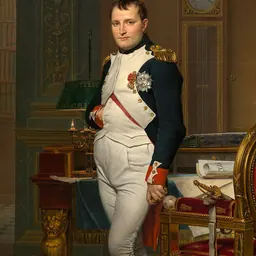
People in Antoine Claire Thibaudeau's life
Named in this biography and alive at the same time
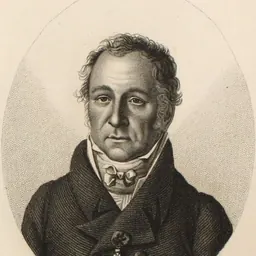
Related people
Same field, nearest in time


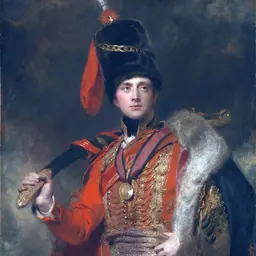

Contemporaries
People whose lives overlapped Antoine Claire Thibaudeau's





Frequently asked questions
Who was Antoine Claire Thibaudeau?
French local historian and politician (1765-1854)
When was Antoine Claire Thibaudeau born?
Antoine Claire Thibaudeau was born on 23 March 1763 in Poitiers.
When did Antoine Claire Thibaudeau die?
Antoine Claire Thibaudeau died on 1 March 1854 in Paris.
What was Antoine Claire Thibaudeau's occupation?
Antoine Claire Thibaudeau was a politician, lawyer, writer, regional historian, official and historian.
What nationality was Antoine Claire Thibaudeau?
Antoine Claire Thibaudeau was French.
Sources & further reading
· Wikipedia: Antoine Claire Thibaudeau
· DBpedia: Antoine Claire Thibaudeau
Cite this page
APA: Biography.guide. (2026). Antoine Claire Thibaudeau. https://biography.guide/antoine-claire-thibaudeau/
MLA: "Antoine Claire Thibaudeau." Biography.guide, https://biography.guide/antoine-claire-thibaudeau/.
Chicago: "Antoine Claire Thibaudeau." Biography.guide. https://biography.guide/antoine-claire-thibaudeau/.
Data last updated: 2026-09-20 · Spot an error? Report a correction.
Page generated 2026-09-27 05:31 UTC