
About Anthony Preston Smith
Lived 1812 – 1877 (aged 65). Anthony Preston Smith was a horticulturist.
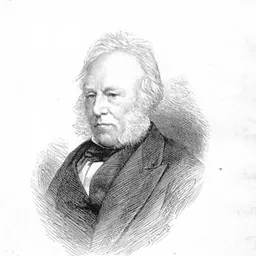
Anthony Preston Smith (1812–1877), known as A.P. Smith, was a prominent horticulturalist best known for establishing Smith's Pomological Gardens and Nursery (commonly Smith's Gardens) in Sacramento, California. The gardens were famous throughout California as a botanical wonder, introduced many new plant species to the state, and demonstrated the potential for horticulture, agriculture, and viticulture in the West.
The gardens were destroyed by floods in the 1860s and 1870s. Looking back in 1881, the Sacramento Bee remarked that the gardens had been "to Sacramento what Golden Gate Park of recent years has been to San Francisco." Thomas M. Logan painting of a prize-winning fruit display exhibited by A.P Smith in 1855
Biography Early life Smith was born on January 6, 1812, in Rome, New York, the fifth of eight children of Anthony Smith (1778–1853), a farmer, and Paulina Preston (1781–1845). In 1816, the family moved to Whiting, Vermont. the California gold rush was beginning.
In 1849, Smith partnered with 29 other men to purchase a barque, the William Ivy, and mining supplies. After trading and gambling during the 157-day voyage, Smith and five others had by then acquired full ownership of the ship and cargo. By then, the property was known as "Smith's Garden," though Smith marketed the project with the more scientific-sounding "Smith's Pomological Gardens and Nursery"---and it was truly a project of experimentation and scientific method.
The State Agricultural Society, created in 1852, sponsored the first State Fairs beginning in 1854. Smith was a regular at the annual fairs, frequently exhibiting new products and earning top prizes, even toward the end of his life. Smith was later elected an officer in the State Agricultural Society.
In 1856, Smith began publishing an annual catalog of his commercial offerings: Descriptive Catalogue of Fruit and Ornamental Trees and Shrubs, Roses, Greenhouse Plans, and Garden Seeds; Cultivated and for Sale at the Pomological Garden and Nursery, Sacramento. The catalog contained an introduction providing detailed best practices for customers and listed hundreds of different products from a stock of thousands of plants. These offerings were the most extensive available on the West Coast.
In 1860, Smith presciently predicted, "wine is soon to become the first great staple of California, and ... our valley, together with the foot hills, [is] peculiarly adapted to the culture and rapid growth of the grape."
I must not leave Sacramento without speaking of the garden and nursery of Mr. A.P. Smith ... Our visit there was the crowning and culminating point of a glorious ride over the plain around the city...
An avenue, lined with locusts and arbor vitae, conducted us finally to a neat wooden cottage, the verandas of which were overrun with scarlet-fruited passionflowers. A clean gravel road enclosed a circle of turf, in the center of which grew willow, locust, and pomegranate trees, beyond which extended a wilderness of splendid bloom. Behind the house rose the fringe of massive timber that lines the American Fork. A series of stairs and balcony-terraces connected one cottage with another, forming an easy ascent to the very rooftops. A wild grapevine, which had so covered an evergreen oak that it resembled a colossal fountain pouring forth volumes of Bacchic leaves, stretched its arms from the topmost boughs, grasped the balconies, and ran riot up and down the roof, waving its tendrils above the chimneys.
Behind this Titanic bower were thickets of bay and willow, with a glimpse of the orange-colored river framed on the opposite side by a grand and savage setting. From the rooftop, the eye overlooked the whole glorious garden, the spires of the city, the yellow plain vanishing into purple haze, and the range of violet mountains in the east.
I was curious to see what had been done to introduce the trees and plants of other parts of the world into a climate so favorable to all, from Egypt to Norway. I found even more than I had anticipated. There, side by side, in the open air, grew natives of Mexico, Australia, the Cape of Good Hope, the Himalayas, Syria, Italy, and Spain. The plants were mostly very young, as sufficient time had not elapsed since the seeds were procured for them to reach full development, but their growth was all that could be desired. To my great delight, I found not only the Indian deodar and the funeral cypress of China but the cedar of Lebanon and the columnar cypress of Italy and the Orient. The exquisite Cape ericas and azaleas flourished as in their native air; the threadlike tamarisk of Africa, the Indian-rubber tree, the Australian eucalyptus, and the Japanese camellia were as lush and luxuriant as if rejoicing in their new home. In the conservatories, no artificial heat was required except for orchids and other tender tropical plants. What a spectacle of botanical splendor California will present fifty years from now! I would almost be content to live that long just to behold it.
Not less remarkable was the superior luxuriance shown by plants from the Atlantic States when transferred to the Pacific. The locust, especially, doubles the size of its leaves, and its pinnated tufts rival those of the sago palm. The paulownia spreads a tremendous shield, and even the evergreens, especially the thuya, manifest a new vitality. Roses grow so large that they suggest peonies yet lose none of their fragrance or beauty. I never beheld a more exquisite bouquet of half-blown roses than the one Mr. Smith’s gardener cut for my companion. Great beds of wistaria, heliotrope, and mignonette ran wild like weeds, while lemon verbena grew into bushes taller than our heads. The breezes, heavy with excess of perfume, flowed languidly through the garden, creating an atmosphere that could only be compared to the nutmeg orchards of Ceylon.
The property rapidly increased in value. In 1855, Smith declined an offer of $75,000.
Floods and Bankruptcy Early Sacramento was repeatedly flooded in the late 1800s. Rain and snowmelt in 1861 and 1862 overwhelmed the levee on the American River and flooded most of Sacramento for weeks. Smith’s gardens were devastated. His residence and many work sheds were swept away. About 500 feet of land along the riverbank of the gardens was undercut and washed away. One to six feet of sand and mud covered the gardens. Nearly all fruit trees were killed. Beginning in 1862, his creditors began foreclosing on his salvageable property. Smith was forced to declare bankruptcy in 1863. He remained on the property, but for several years his production continued to be sold by his creditors.
A dispute between his creditors led to a landmark California Supreme Court decision: Robinson v. Russell (1864) 24 Cal. 467. The court held that, while trees are normally considered part of real estate and an interest of a mortgagee of the land, Smith's trees were grown as an agricultural product with the intention of being extracted and sold. Therefore, the sheriff was able to dig up and sell Smith’s trees through execution to satisfy the claims of priority creditors of Smith’s business.
Smith worked to restore the gardens in the 1860s and nearly succeeded. After 1862, when levee reconstruction plans were being adopted, Smith made strenuous efforts for the levee to protect his property, but he failed.
Later life
Smith continued to innovate throughout his life. Even after the 1861–62 floods, he continued to exhibit new varieties of fruits, vegetables, and flowers and showed pigs at the state fairs; experimented with silk farming; negotiated a contract to export fruit to China; and even patented an innovation in ladders.
In the 1860s, Smith led an effort to create the American River School District.
After being sick for several months, Smith died on August 17, 1877.
Legacy When Smith died, his once-glorious gardens had diminished to a small, run-down fruit farm. Smith is now mostly forgotten. His gardens are gone without any historical marker, and he has no eponyms remembering him. In 1958, the Sacramento County Historical Society observed, "even the memory of this local bit of arcadia soon faded into oblivion for all but a few local antiquarians."
Don’t just read it —
keep it.
Full-length biographies made to live with: read them, listen on the way to work, watch them tonight.
- E-book
- Audio
- Video
Instant download · yours to keep · every purchase keeps this site free
Important facts
People in Anthony Preston Smith's life
Named in this biography and alive at the same time

Related people
Same field, nearest in time

Contemporaries
People whose lives overlapped Anthony Preston Smith's






Frequently asked questions
Who was Anthony Preston Smith?
American horticulturalist and California pioneer
When was Anthony Preston Smith born?
Anthony Preston Smith was born on 6 January 1812.
When did Anthony Preston Smith die?
Anthony Preston Smith died on 17 August 1877.
What was Anthony Preston Smith's occupation?
Anthony Preston Smith was a horticulturist.
Sources & further reading
· Wikipedia: Anthony Preston Smith
· DBpedia: Anthony Preston Smith
Cite this page
APA: Biography.guide. (2026). Anthony Preston Smith. https://biography.guide/anthony-preston-smith/
MLA: "Anthony Preston Smith." Biography.guide, https://biography.guide/anthony-preston-smith/.
Chicago: "Anthony Preston Smith." Biography.guide. https://biography.guide/anthony-preston-smith/.
Data last updated: 2026-09-20 · Spot an error? Report a correction.
Page generated 2026-09-27 05:30 UTC