
About Antanas Mackevičius
Lived 1828 – 1863 (aged 35). Antanas Mackevičius was a catholic priest, politician, catholic theologian and roman Catholic priest.
Antanas Mackevičius (; 26 June 1828 – 28 December 1863) was a Lithuanian Roman Catholic priest who was one of the leaders and initiators of the January Uprising in Lithuania.
Mackevičius was born to a family of petty nobles. He studied in Kyiv and Varniai. He became involved in the uprising conspiracy. After the outbreak of the January Uprising in Warsaw on January 22, he announced the manifesto of the National Government on March 8 and formed a unit in Paberžė, which consisted mainly of the local Lithuanian peasants that enthusiastically joined his units. Mackevičius, dressed in the priest's Cassock coat himself, being bi-lingual, commanded his troops in the Lithuanian and Polish language. He joined Zygmunt Sierakowski's unit, after whose defeat he continued to fight on his own. He was one of the longest-fighting commanders of a partisan unit in Lithuania. On 17 December 1863, he was captured by the Russians and executed a few days later in Kaunas. He became a legend during his lifetime and is still considered a national hero in Lithuania and Poland.
Early life and education Mackevičius was born on 26 June 1828 in Morkiai village, near Tytuvėnai in Raseiniai County. At the time, this was in Lioliai parish. His parents were the petty nobles Tadas Mackevičius (Tadeusz Mackiewicz) and Marijona Mackevičienė. In 1840, at the age of 12, Mackevičius walked by foot to Vilnius in order to pursue education. He spent six years learning in the Vilnius Gymnasium. This gymnasium was located in the former Vilnius University, which was closed after the failed 1831 Uprising. It's not clear whether Mackevičius finished his secondary education. After that Mackevičius studied at the then-renowned Saint Vladimir University in Kyiv from 1846 to 1849. However, he did not finish studies, because he firmly resolved to becoming a priest. He did so because he thought that this would bring him closer to the common Lithuanian people. Thereafter, from 1850 to 1853, he was in the Varniai Priest Seminary.
Catholic Ministry He was ordained, and between 1853 and 1855 he served as the vicar in Krekenava. Then, between 1855 and 1863, served as a priest in the Paberžė church, which was a part of Surviliškis parish. Mackevičius had close relations with the local peasants and was liked by them. During his ministry in this parish he organised patriotic demonstrations. In 1861, he delivered an anti-government sermon in Lithuanian on the anniversary of the Union of Lublin. These had to end after the introduction of martial law in Lithuania in 1861. At that time Mackevičius became involved in secret circles and joined the Reds' party. He himself founded two in Surviliškis and Paberžė. The priest Vincentas Šliogeris conducted similar activities in the neighbouring Vilkija and Šventybrastis. The circles were subordinated to the movement's committee in Kaunas, and later in Vilnius. Everything was supervised by Zygmunt Sierakowski from Saint Petersburg. Bolesław Dłuski was closely collaborating with Mackevičius. In the summer of 1862, Father Mackevičius attended the wedding of Zygmunt Sierakowski and Apolonia Dalewska. Most of the later leaders of the Lithuanian conspiracy gathered at the ceremony. Couple of days before he was nominated a representative of the (Komitet Prowincjonalny Litewski) of the Reds for Samogitia. This was the start of feverish preparations for the uprising. Father Mackevičius was gathering weapons, supported by Józef Mickiewicz, Bolesław Dłuski and peasant Adomas Bitė.
1863―1864 Uprising
Prelude When the uprising finally started in Warsaw on 22 and 23 January, the preparation in Lithuania accelerated even more. Because of the lack of arms and money Lithuanian Provincial Committee decided to postpone the start of the uprising for a couple of weeks and to limit it to only Vilnius, Kaunas and Grodno governorates. The committee was soon transformed into the Administrative Department of the Provinces of Lithuania , where the authorities were held by the Whites, headed by . The new insurrectionary government ordered to refrain from overt demonstrations until the end of April. Neither Antanas Mackevičius nor Bolesław Dłuski heeded the call to not join the uprising.
Spring
Mackevičius ordered the priests of Liauda and Samogitia to read the National Government's manifesto and its decrees. He himself did it on 8 March 1863, when he read the manifesto during a sermon at the church in Paberžė and Surviliškis. He called upon the people to rise up and restore independence, and promised to reorganize society by granting greater rights and land to peasants. Mackevičius succeeded in organizing some 250 men, armed with hunting rifles and straightened scythes, into the Paberžė Regiment, and soon the unit grew to 500 men. The unit was mainly made up of local peasants, but there were also representatives of the gentry, mainly the poor, urban youth and students. Germans, Prussian Lithuanians and volunteers from Mazovia also joined the unit. The officers were mainly fugitives from the Russian army, as well as cadets from the Polish military school in Cuneo. Unit was soon joined by Bolesław Kołyszko as a military instructor. His unit used a banner sewn from two parts: the top navy blue and the bottom crimson. It depicted on the main side the White Eagle wearing a crown and the inscription in Polish: PUŁK PODBRZEŹSKI (the Paberžė Regiment), and motto in Polish: BOŻE ZBAW POLSKĘ (God, Save Poland). The insurgents wore gray knee-length sukmanas girdled with a leather belt, and the officers wore czamaras. On their heads, they wore rogatywka-style hats trimmed with sheep fur (so called krakuska).
Source of another type is a manuscript found in 2007 by a Lithuanian researcher Ieva Šenavičienė entitled: Ksiądz Mackiewicz jako postać dziejowa. Rys biograficzny . It is an account of a member of Mackevičius' unit written down by Antoni Medeksza, the author of monographs on insurgent units fighting in Samogitia published in 1863-65 in the émigré periodical "Ojczyzna". The actual author of relation was identified by Šenavičienė as an officer named Rutkowski, a native of Kupiškis, who fought in Mackiewicz's unit and commanded infantry. He was one of the commander's most trusted officers. The text is divided into two parts, the first describing the time before the uprising was created between 1900 and 1904, and the second describing the actual fighting between 1864 and 1865. Šenavičienė claims that the account faithfully reflects the thoughts of Mackevičius himself, more than his testimonies written after his imprisonment, facing the death penalty. In the manuscript Mackevičius' main goal is the rebirth of the Polish-Lithuanian Commonwealth, which is explicitly referred to as "Poland" and its inhabitants, without distinction of ethnic origins, as "Poles". The author of the account criticises the nobility and the existing social relations, and sees the peasantry as the essence of the society. It calls for profound social reform, but this is to be possible only after independence and built in the spirit of the Christian Gospel.
We can also learn about Mackevičius view from the testimony of his contemporaries. Jakób Gieysztor claimed that Mackevičius had democratic views already during his studies in Kyiv. Already then, he advocated the abolition of serfdom.
Commemoration During his lifetime, Mackevičius became a legendary symbol of a steadfast partisan commander. The Lithuanian people did not believe in his death. In the spring of 1864, there was a rumour that Mackevičius had reappeared in the Kaunas area with his troop, in the regions where he had previously been active, the situation was still unstable. For Polish and Lithuanian historiographers he became a national hero. In Kėdainiai there is a commemorative exposition honouring Antanas Mackevičius' legacy at the town's museum. It contains many of Antanas Mackevičius' personal artifacts - his furniture, private letters, documents, and other items. In Paberžė, from where Mackevičius set out for the uprising, in the former Szylling manor house, there is a museum dedicated to the January Uprising.
Don’t just read it —
keep it.
Full-length biographies made to live with: read them, listen on the way to work, watch them tonight.
- E-book
- Audio
- Video
Instant download · yours to keep · every purchase keeps this site free
Important facts
People in Antanas Mackevičius's life
Named in this biography and alive at the same time



Related people
Same field, nearest in time
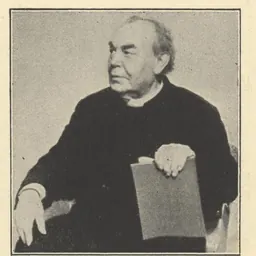
Contemporaries
People whose lives overlapped Antanas Mackevičius's




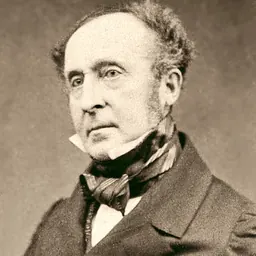
Frequently asked questions
Who was Antanas Mackevičius?
Lithuanian priest (1828–1863)
When was Antanas Mackevičius born?
Antanas Mackevičius was born on 2 June 1828 in Tytuvėnai.
When did Antanas Mackevičius die?
Antanas Mackevičius died on 16 December 1863 in Kaunas.
What was Antanas Mackevičius's occupation?
Antanas Mackevičius was a catholic priest, politician, catholic theologian and roman Catholic priest.
Sources & further reading
· Wikipedia: Antanas Mackevičius
· DBpedia: Antanas Mackevičius
Cite this page
APA: Biography.guide. (2026). Antanas Mackevičius. https://biography.guide/antanas-mackevicius/
MLA: "Antanas Mackevičius." Biography.guide, https://biography.guide/antanas-mackevicius/.
Chicago: "Antanas Mackevičius." Biography.guide. https://biography.guide/antanas-mackevicius/.
Data last updated: 2026-09-22 · Spot an error? Report a correction.
Page generated 2026-09-27 05:27 UTC