
Antanas Kraujelis
Lithuanian partisan
About Antanas Kraujelis
Lived 1928 – 1965 (aged 36). Antanas Kraujelis was a Lithuanian.
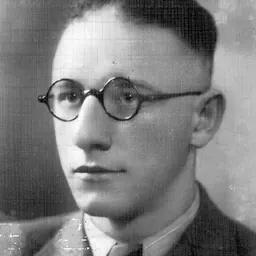
Antanas Kraujelis, also known by his codename Siaubūnas (25 October 1928 – 17 March 1965) was the last active anti-Soviet Lithuanian partisan and the last partisan of the region of Aukštaitija.
Biography Early life Antanas Kraujelis was born in the village of Kaniūkai in the Utena District of Lithuania to Steponas Kraujelis and Anelė Pagalytė. The family consisted of seven sisters and three brothers. Kraujelis went to the Kaniūkai primary school, and in 1945 he graduated in the Alanta gymnasium. During the Soviet re-occupation of Lithuania, Kraujelis was the head of a reading club in Kaniūkai, which was established under the directive of the Soviet government. There he frequently met both Soviet destruction battalions and partisans themselves, who gave Kraujelis missions like delivering ammunition and weapons. By 1947 or 1949 the village was home to bunkers established by the partisans. For some time they were headquarters to Jonas Kimštas-Žalgiris, partisan leader of the Vytautas military district. The family worked closely to protect and provide for the partisans that stayed there, although later due to increasing repression against the partisans and the family itself, the partisans had to leave the Kraujelis village. Antanas, along with his sisters Ona and Vitalija gradually became communicators of the partisan Vytautas military district. Communicators were a respected role amongst the resistance (another notable "communicator" being poet-partisan Bronius Krivickas).
As a partisan The partisans often tried to persuade Kraujelis to work as a spy for the movement. Kraujelis himself said he'd be more useful to the movement if he was "free". Kraujelis and his role was revealed by some captured partisans and in 1948 he ended up joining a partisan squad in the Vytautas military district, as well as choosing the codename Pabaisa (monster), later turning into Siaubūnas. In 1949-1950 he met with the partisan leadership of the Dzūkija region as a representative of the east Aukštaitija partisans. In 1950 Kraujelis switched to another partisan squad, headquartered in Žėručiai. The squad mainly operated in the Molėtai, Anykščiai and Utena districts. Kraujelis later was appointed as the head of Žėručiai's intelligence/reconnaissance department. In 1951 he switched squads again, this time being appointed as the chief of staff of the Žėručiai district. In the same year the head of the district Henrikas Ruškulis-Liūtas was arrested. Kraujelis was often welcomed by the village people he visited, who described him as soft-spoken and brave. Kraujelis was also described as someone of keen ingenuity and fast orientation. He often spoke of Lithuanian future independence. demanding to not hurt the local populace. To avoid being caught, Kraujelis sometimes even dressed up in women's clothing and long hair, other times as a Soviet artillery officer. Kraujelis's reputation began gaining popularity and he was commonly referred to in newspapers as a bandit (as were the partisans themselves). and subsequently hidden. His body was uncovered in 2019 in a cemetery in Vilnius. After the body was confirmed by DNA evidence, Kraujelis was given a subsequent state funeral in Antakalnis.
Controversy and 2009 court case From 1964 Kraujelis was often accused of robberies and murders of innocent people in KGB criminal cases (it was standard for partisans to be called bandits and accused of violence). These accusations are considered by Lithuanian historians to be fraudulent and disinformative. The accusations came to light in Lithuanian media after a case in 2009 where Marijonas Misiukonis, then the minister of internal affairs, was brought to court under the charge of murder.
Awards In 1998 Kraujelis was awarded the Order of the Cross of Vytis 3rd class by the president's decree. The Lithuanian National Ministry of Defence awarded Kraujelis the rank of senior lieutenant in the same year. Kraujelis' uniform as well as weaponry is exhibited in the Lithuanian National Museum. A monument dedicated to Kraujelis exists at the village in which he died, near which Kraujelis's father and Vytautas Landsbergis jointly planted an oak tree which is now gone.
Don’t just read it —
keep it.
Full-length biographies made to live with: read them, listen on the way to work, watch them tonight.
- E-book
- Audio
- Video
Instant download · yours to keep · every purchase keeps this site free
Important facts
People in Antanas Kraujelis's life
Named in this biography and alive at the same time

Contemporaries
People whose lives overlapped Antanas Kraujelis's





Frequently asked questions
Who was Antanas Kraujelis?
Lithuanian partisan
When was Antanas Kraujelis born?
Antanas Kraujelis was born on 25 October 1928 in Kaniūkai.
When did Antanas Kraujelis die?
Antanas Kraujelis died on 17 March 1965 in Papiškiai.
What nationality was Antanas Kraujelis?
Antanas Kraujelis was Lithuanian.
Sources & further reading
· Wikipedia: Antanas Kraujelis
Cite this page
APA: Biography.guide. (2026). Antanas Kraujelis. https://biography.guide/antanas-kraujelis/
MLA: "Antanas Kraujelis." Biography.guide, https://biography.guide/antanas-kraujelis/.
Chicago: "Antanas Kraujelis." Biography.guide. https://biography.guide/antanas-kraujelis/.
Data last updated: 2026-09-20 · Spot an error? Report a correction.
Page generated 2026-09-27 05:26 UTC