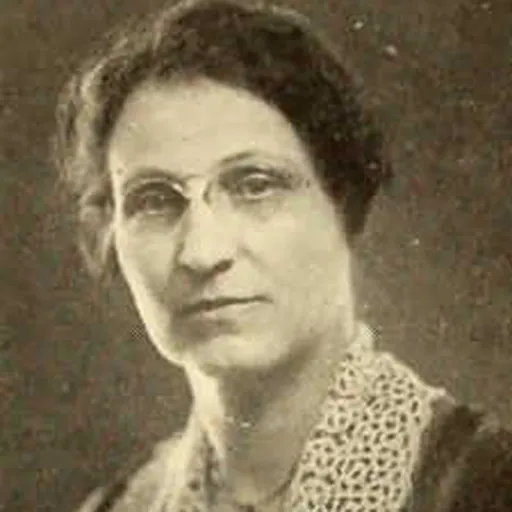
About Annie Heloise Abel
Lived 1873 – 1947 (aged 74). Annie Heloise Abel was a British and American historian and writer.
Annie Heloise Abel (February 18, 1873 – March 14, 1947) was an American historian who was among the earliest professional historians to study Native Americans. Abel was an expert on the history of British and American Indian policies. According to historian James Anderson, she was "the first academically trained historian in the United States to consider the development of Indian-white relations."
Early life and education Abel was born at Fernhurst, Sussex, England to George Abel and Amelia Anne Hogben. She emigrated to the U.S. in 1885, following her parents who were settling in Salina, Kansas, for the second time. Her father worked as a gardener and her mother ran a small family farm. Abel attended Salina High School, graduating in 1893. She immediately began teaching in the Kansas public schools. After two years of high school teaching, she attended the University of Kansas for her M.A. in History. Under the direction of Kansas historian Frank Haywood Hodder, Abel wrote an M.A. thesis entitled: "Indian Reservations in Kansas and the Extinguishment of Their Title." Based on that work, her Kansas advisor there recommended her for PhD coursework at Cornell University in Ithaca, New York and Abel began her studies there in 1900. After her potential advisor, Moses Coit Tyler, died, she decided to leave Cornell, and return to Kansas. To pay for graduate tuition, she returned to teaching high school from 1901 to 1903.
In 1903, with the encouragement of Kansas faculty, Abel applied for a Bulkley Scholarship in American History to fund her PhD degree at Yale University. When her sister, Rosa Abel, begin PhD work in English Literature at Yale, Abel moved to New Haven to take up her studies at Yale University. She intended to focus on Native Americans and U.S. Indian policy, a topic no professional historians had researched in detail.
At Yale, Abel studied with Edward Gaylord Bourne. She was the first person to use and analyze Indian Office records to understand federal policy and the idea of Indian Removal. Her dissertation, entitled “The History of Events Resulting in Indian Consolidation West of the Mississippi,” was published in the Annual Report (1907) of the American Historical Association. It became the standard work on federal policies resulting in Indian Removal. Her thorough research of Indian Office and congressional records became a model for the first generation of scholars and Native activists to criticize those policies.
Early career: research and academic achievements The American Historical Association awarded her the Justin Winsor Prize in 1906 for her early work. That prize, created by the American Historical Association to recognize the best manuscript in the history of the Western Hemisphere, made Annie Abel an authority on national Indian policy. Because only teaching colleges or women's colleges would hire women, it took her some years to find full-time academic work. Abel served briefly as the Historian for the U.S. Indian office and taught part-time at Goucher College, a women's college outside of Washington, D.C. She was hired as a faculty member at Smith College in Northampton Massachusetts in 1908 and spent 12 years teaching there, moving up the academic ladder.
Later career and publication record In 1928 Abel-Henderson was appointed professor of history at the University of Kansas. This account of a French expedition along the Missouri and Mississippi Rivers in 1803–1805 overlapped with the U.S. Lewis and Clark expedition and left a vital map that remained unknown until Abel and her sister brought it to life. That edition of the Loisel expedition, was titled Tabeau’s Narrative of Loisel’s Expedition to the Upper Missouri, and published in 1939. In 1946 the British government decorated her for her work. Annie Abel died of cancer in 1947 and was buried with her parents and sisters in Montesano Washington. When Abel died, she had two books in progress, one a comparative history of British, U.S. and Australian Native policies and the other a comparative history of suffrage.
Don’t just read it —
keep it.
Full-length biographies made to live with: read them, listen on the way to work, watch them tonight.
- E-book
- Audio
- Video
Instant download · yours to keep · every purchase keeps this site free
Important facts
People in Annie Heloise Abel's life
Named in this biography and alive at the same time



Related people
Same field, nearest in time

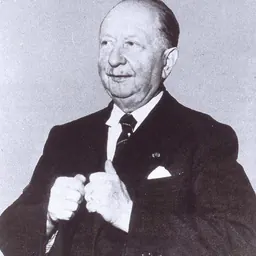
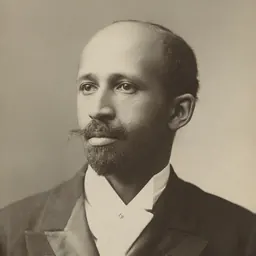
Contemporaries
People whose lives overlapped Annie Heloise Abel's

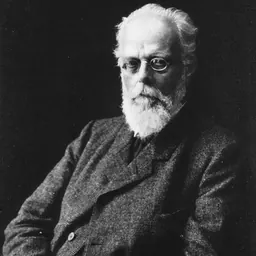
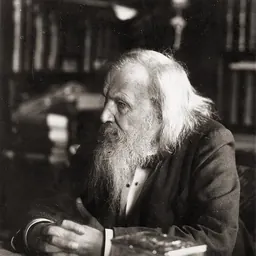

Frequently asked questions
Who was Annie Heloise Abel?
American historian born in England
When was Annie Heloise Abel born?
Annie Heloise Abel was born on 18 February 1873 in Fernhurst.
When did Annie Heloise Abel die?
Annie Heloise Abel died on 14 March 1947.
What was Annie Heloise Abel's occupation?
Annie Heloise Abel was a historian and writer.
What nationality was Annie Heloise Abel?
Annie Heloise Abel was British and American.
Sources & further reading
· Wikipedia: Annie Heloise Abel
Cite this page
APA: Biography.guide. (2026). Annie Heloise Abel. https://biography.guide/annie-heloise-abel/
MLA: "Annie Heloise Abel." Biography.guide, https://biography.guide/annie-heloise-abel/.
Chicago: "Annie Heloise Abel." Biography.guide. https://biography.guide/annie-heloise-abel/.
Data last updated: 2026-09-23 · Spot an error? Report a correction.
Portrait: Wikimedia Commons · author & licence
Page generated 2026-09-27 05:07 UTC