
About Anne Seymour Damer
Lived 1748 – 1828 (aged 79). Anne Seymour Damer was a British sculptor and artist.
Anne Seymour Damer (; 26 October 1748 – 28 May 1828) was an English sculptor. Described as a "female genius" by Horace Walpole, she was trained in sculpture by Giuseppe Ceracchi and John Bacon. Influenced by the Enlightenment, Damer was an author, traveller, theatrical producer and actress, as well as a sculptor. Walpole's son, Horace Walpole, was her godfather, and Anne spent much of her childhood in his home in Strawberry Hill. Damer was described as a poor businessman, who had a taste for expensive clothing. The marriage was not a successful one. The couple had no children and separated after seven years.
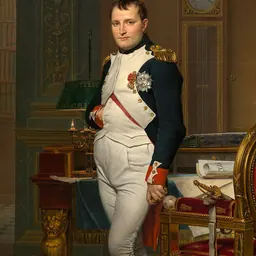
In 1775, Anne was included in a painting titled The Three Witches from Macbeth by Daniel Gardner ( 1750 – 1805), which can be found in the National Portrait Gallery, London. The work shows her next to other ladies of high society: Elizabeth Lamb, Viscountess Melbourne and Georgiana, Duchess of Devonshire. In 1802, while the Treaty of Amiens was in effect, she visited Paris with the author Mary Berry and was granted an audience with Napoleon.
A fluent French speaker, Damer became friends with Josephine Buonaparte. They corresponded about gardening and plants, mostly in connection to Josephine's garden at Malmaison. Anne had also discussed this with Sir Joseph Banks, one of the founders of the Royal Horticultural Society. A sculptural bust she made of Banks can be found in the British Museum. In 1815, she travelled to Elba, the island where Napoleon had been exiled. She travelled there despite the ongoing war between France and Britain. The Emperor gifted her a snuff box featuring his portrait, which is housed in the British Museum. She was buried in the church at Sundridge, Kent.
According to Richard Webb, she directed in her will that her correspondence be destroyed and that she be buried with the bones of her dog and her sculpting tools. The original models are in the Henley Gallery of the River and Rowing Museum nearby. Another major architectural work was her 10-foot statue of Apollo, now destroyed, for the frontage of Drury Lane theatre. She also created two bas-reliefs for the Boydell Shakespeare Gallery of scenes from Coriolanus and Antony and Cleopatra.
Gallery
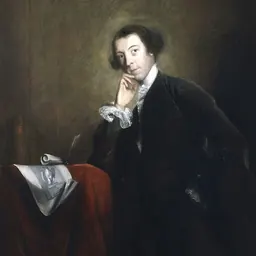
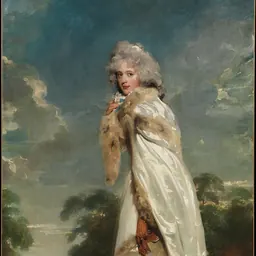
Personal life Damer's friends included a number of influential Whigs and aristocrats. Her guardian and friend Horace Walpole was a significant figure, who helped foster her career and on his death left her his London villa, Strawberry Hill. She also moved in literary and theatrical circles, where her friends included the poet and dramatist Joanna Baillie, the author Mary Berry, and the actors Sarah Siddons and Elizabeth Farren. She frequently took part in masques at the Pantheon and amateur theatricals at the London residence of the Duke of Richmond, who was married to her half-sister, Lady Mary Bruce
A number of sources have named Damer as being involved in lesbian relationships, particularly relating to her close friendship with Mary Berry, to whom she had been introduced by Walpole in 1789, and with whom she lived together in her later years. Even during her marriage, her likings for male clothing and demonstrative friendships with other women were publicly noted and satirised by hostile commentators such as Hester Thrale and in the anonymous pamphlet A Sapphick Epistle from Jack Cavendish to the Honourable and most Beautiful, Mrs D— (c. 1770).
A romance between Damer and Elizabeth Farren, who was mentioned by Thrale, is the central storyline in the 2004 novel Life Mask by Emma Donoghue.
Don’t just read it —
keep it.
Full-length biographies made to live with: read them, listen on the way to work, watch them tonight.
- E-book
- Audio
- Video
Instant download · yours to keep · every purchase keeps this site free
Important facts
more
Anne Seymour-Conway, Anne (Seymour) DamerPeople in Anne Seymour Damer's life
Named in this biography and alive at the same time




Related people
Same field, nearest in time





Contemporaries
People whose lives overlapped Anne Seymour Damer's





Frequently asked questions
Who was Anne Seymour Damer?
British artist (1748–1828)
When was Anne Seymour Damer born?
Anne Seymour Damer was born on 8 November 1748 in Sevenoaks.
When did Anne Seymour Damer die?
Anne Seymour Damer died on 28 May 1828 in London.
What was Anne Seymour Damer's occupation?
Anne Seymour Damer was a sculptor and artist.
What nationality was Anne Seymour Damer?
Anne Seymour Damer was British.
Sources & further reading
· Wikipedia: Anne Seymour Damer
Cite this page
APA: Biography.guide. (2026). Anne Seymour Damer. https://biography.guide/anne-seymour-damer/
MLA: "Anne Seymour Damer." Biography.guide, https://biography.guide/anne-seymour-damer/.
Chicago: "Anne Seymour Damer." Biography.guide. https://biography.guide/anne-seymour-damer/.
Data last updated: 2026-09-20 · Spot an error? Report a correction.
Page generated 2026-09-27 05:33 UTC