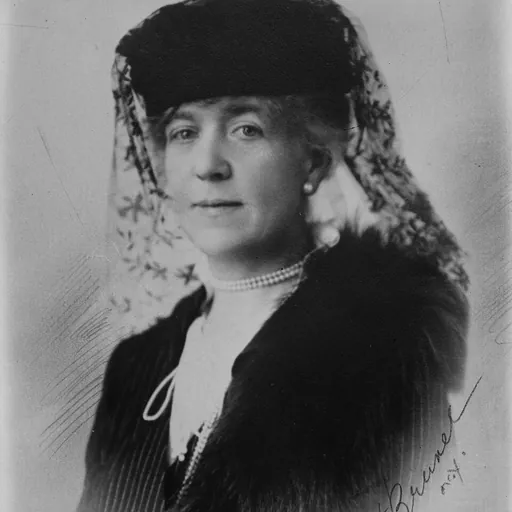
About Anne Harriman Vanderbilt
Lived 1861 – 1940 (aged 79). Anne Harriman Vanderbilt was an American socialite and philanthropist.
Anne Harriman Sands Rutherfurd Vanderbilt (February 17, 1861 – April 20, 1940) was an American heiress of the wealthy Harriman family. She was known for her marriages to prominent men Her siblings included Oliver Harriman Jr. (1862–1940), J. Borden Harriman (1864–1914), and Herbert M. Harriman (1873–1933). Her first cousin, E. H. Harriman, was the father of Governor W. Averell Harriman. They engaged Stanford White, then New York's most famous architect, to design the interiors of the club.
Anne was also known for her philanthropy and for devoting "herself to those less fortunate".
In 1916, she hosted a fundraiser for the war sufferers of Venice.
In 1919, she was made a Knight of the Légion d'honneur by the French government and in 1932, she received the rank of Officer of the Légion d'honneur.
In 1921, Anne then purchased the former home of Effingham B. Sutton, at 1 Sutton Place, for $50,000 in the then-new neighborhood of Sutton Place, also in Manhattan. Before her move, along with Elizabeth Marbury, Anne Morgan, her sister, Emeline Harriman Olin, second wife of Stephen Henry Olin, the neighborhood was known as a squalid place. an American architect best known for his buildings in the American Georgian Classical style, to build, or in Vanderbilt's case, renovate homes in the neighborhood. The society pages of The New York Times scoffed at their relocation and referred to the areas as an "Amazon Enclave." The cost of the home renovation was approximately $75,000 in 1921. Vanderbilt had Elsie de Wolfe design the interiors. By January 1929, The New York Times changed their tune and wrote:
Five years ago, when Mrs. William K. Vanderbilt established her residence in Sutton Place overlooking the East River, it was little dreamed that within so short a time such a marked migration from mid-Manhattan to the East River district would occur as is now in full swing. In the unbroken line of new apartments, lining Fifty-seventh Street almost solidly from Second Avenue to Sutton Place, those who doubted the wisdom of Mrs. Vanderbilt's move have found a convincing answer to their conjectures as to the ultimate success of the Sutton Place movement. a son of Samuel Stevens Sands (1827–1892), the head of S.S. Sands Co. Before his death from a fall during a hunt at Meadow Brook Golf Club, she had two sons by Sands:
Samuel Stevens Sands III (1884–1913), who married Gertrude Sheldon, daughter of Mary Seney Sheldon and George R. Sheldon, in 1910. George Winthrop Sands (1885–1908), who was married to Tayo Newton, daughter of Dr. B. Newton of New York, in 1905.
Her second marriage was on June 16, 1890, to Lewis Morris Rutherfurd Jr. (1859–1901), son of the astronomer Lewis Morris Rutherfurd and brother to Winthrop Rutherfurd. Before his death, she had two daughters by Rutherford:
Barbara Cairncross Rutherfurd (1895–1939), who married Cyril Hatch, son of Charles Henry Hatch, in 1916. They had one child, Rutherfurd L. Hatch (d. 1947), before divorcing in 1920. In 1924, she married Winfield Jesse Nicholls, a fellow follower of Oom the Omnipotent. After having two children, Guy Winfield Nicholls and Margaret Mary Nicholls, Margaret Stuyvesant Rutherfurd (1891–1976), who first married Ogden Livingston Mills (1884–1937), Secretary of the Treasury. They divorced in 1919. In 1922, she married Sir Paul Henry Dukes (1889–1967). They divorced in 1929 and, later that same year, she married Prince Charles Michel Joachim Napoléon (1892–1973), son of Joachim, 5th Prince Murat. They also divorced and in 1939, she married Frederick Leybourne Sprague.
On April 29, 1903, she married her third husband, William Kissam Vanderbilt (1849–1920), in London. Vanderbilt was a son of William Henry Vanderbilt of the Vanderbilt family and Maria Louisa Kissam. They remained married until his death. She had no children with Vanderbilt.
Death and burial Anne died on April 20, 1940. She was buried inside the Vanderbilt mausoleum at the Moravian Cemetery, designed by Richard Morris Hunt and constructed in 1885–1886, part of the family's private section within the cemetery. Their mausoleum is a replica of a Romanesque church in Arles, France. The landscaped grounds around the Vanderbilt mausoleum were designed by Frederick Law Olmsted. The Vanderbilt section is not open to the public.
Don’t just read it —
keep it.
Full-length biographies made to live with: read them, listen on the way to work, watch them tonight.
- E-book
- Audio
- Video
Instant download · yours to keep · every purchase keeps this site free
Important facts
Family & relationships
People in Anne Harriman Vanderbilt's life
Named in this biography and alive at the same time





Related people
Same field, nearest in time
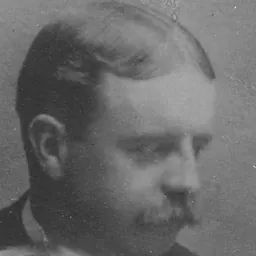
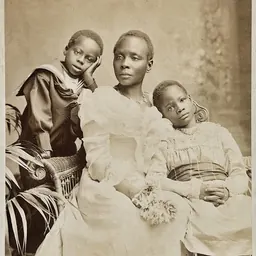

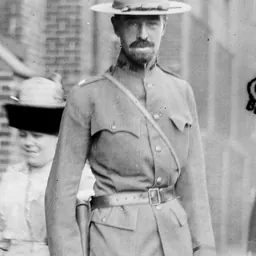
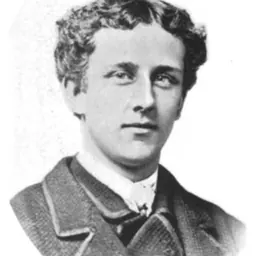
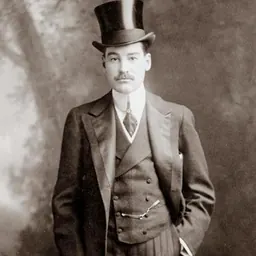
Contemporaries
People whose lives overlapped Anne Harriman Vanderbilt's
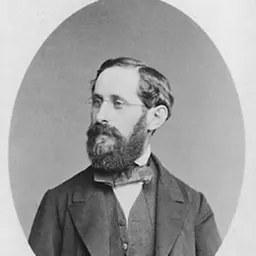

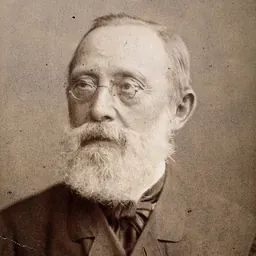
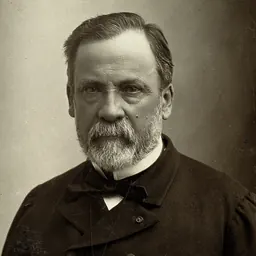
Frequently asked questions
Who was Anne Harriman Vanderbilt?
American heiress and socialite (1861–1940)
When was Anne Harriman Vanderbilt born?
Anne Harriman Vanderbilt was born on 17 February 1861 in New York City.
When did Anne Harriman Vanderbilt die?
Anne Harriman Vanderbilt died on 20 April 1940 in New York City.
What was Anne Harriman Vanderbilt's occupation?
Anne Harriman Vanderbilt was a socialite and philanthropist.
What nationality was Anne Harriman Vanderbilt?
Anne Harriman Vanderbilt was American.
Sources & further reading
· Wikipedia: Anne Harriman Vanderbilt
· DBpedia: Anne Harriman Vanderbilt
Cite this page
APA: Biography.guide. (2026). Anne Harriman Vanderbilt. https://biography.guide/anne-harriman-vanderbilt/
MLA: "Anne Harriman Vanderbilt." Biography.guide, https://biography.guide/anne-harriman-vanderbilt/.
Chicago: "Anne Harriman Vanderbilt." Biography.guide. https://biography.guide/anne-harriman-vanderbilt/.
Data last updated: 2026-09-24 · Spot an error? Report a correction.
Portrait: Wikimedia Commons · author & licence
Page generated 2026-09-27 05:08 UTC