
About Annada Munsi
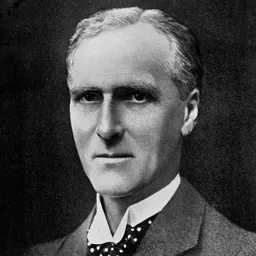
Lived 1905 – 1985 (aged 79). Annada Munsi was an Indian painter, designer, calligrapher and musician.
Annada Munshi (transliterated as Annada Munsi; 27 November 1905 – 14 January 1985) was an Indian painter, designer, calligrapher, draughtsman, musicologist, writer and a noted figure of modern advertising in India. He is credited with demolishing British monopoly in the field of modern Indian advertising establishing Swadeshi culture instead. He was widely recognised as the finest layout artist in the country during his era. A pioneer of commercial design in India, he is considered as the undisputable Father of Commercial Art in India.
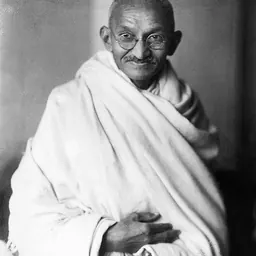
Birth and education Munshi was born in Shibnagar, Pabna of Bengal Presidency (present day in Bangladesh) to renowned artist Anukul Munshi and Pranmohini Devi in the Munshi family on 27 November 1905. His grandfather Babu Banwari Charan Munshi was the zamindar of Chougachi. He was educated at Nakail Raicharan Institute and Pathartala Aryan Academy of Pabna. While in Pabna, Munshi became involved in the Indian independence movement, influenced by Mahatma Gandhi’s principles of Nonviolent resistance. Known for his singing ability, he used to perform Vande Mataram and Allāhu ʾAkbar in villages under the leadership of Indian National Congress leaders Prabhash Lahiri and Naresh Lahiri. He received training in mother-of-pearl art from his father, Anukul Munshi, at the Chougachi Mother-of-Pearl Factory, which his father had established. He accompanied his father annually to sell mother-of-pearl artefacts at the Harihar Chhatrer Mela and at the Maidan in Calcutta. Later, he relocated to Calcutta to attend the Government Art School (now Government College of Art and Craft). Here, he became especially well-known for his notable works in tea board (for example, Tea is 100% Swadeshi and Tea Fights Fatigue), and railway advertisings (for example, Lord Gouranga Travels). In 1948, again he was appointed as the Art Director of a Mumbai-based Advertising agency called Sisters' Limited and relocated in Mumbai. He retired as the Art Director of Publicity Forum in Kolkata where he mentored noted commercial artists like Ranen Ayan Dutt and Ahibhusan Malik.
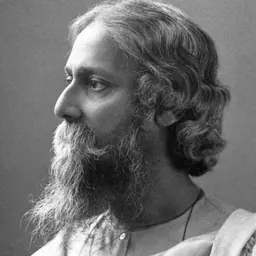
Contributions in Indian advertising Appointed as the Art Director of D. J. Keymer, Munshi introduced Bangaliana (Bengali culture) into advertising. He excelled in the advertisements of Indian Tea Market Expansion Board and Railways. He first conceived the idea that train travel could make it much easier to reach places once visited on foot by great spiritual leaders through long and difficult journeys. He incorporated depictions of prominent religious figures such as Shri Chaitanya, Swami Vivekananda and Lord Buddha into railway advertisements based on this idea. In campaigns for the Tea Board, he employed indigenous narrative and folk-style illustrations, including designs inspired by the traditional pattachitra paintings of Bengal. His work also incorporated rhymes and ritual narratives associated with festivals and vows, an approach not previously used in advertising. He adapted excerpts from the poetry of Rabindranath Tagore for tea advertisements. He was the first Indian artist to use a photograph of his wife Jayati Devi, rather than that of a professional model, in a commercial context, which was an unconventional and pioneering practice for that period.
Tea Fights Fatigue (1948) Lord Gouranga Travels
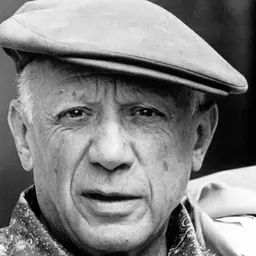
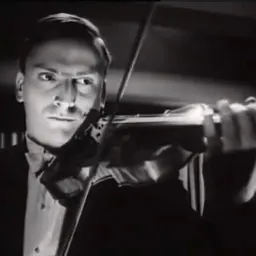
Style of painting Munshi also invented the technique of using rubber solution in his paintings along with various colour combinations. The principal characteristics of his paintings were simplicity and brightness which even grabbed the attention of Pablo Picasso, renowned Spanish painter and sculptor. Some of his paintings acquired place within personal collections of Pandit Ravi Shankar and Yehudi Menuhin.
Literary works In 1978, the book named Crucified India (in Bengali accent: Krushbiddha Bharat) authored by Munshi, which was dedicated to his junior and colleague Satyajit Ray, was published.
Death Munshi died at the age of 79 on 14 January 1985 at Paikpara, Kolkata, India.
Don’t just read it —
keep it.
Full-length biographies made to live with: read them, listen on the way to work, watch them tonight.
- E-book
- Audio
- Video
Instant download · yours to keep · every purchase keeps this site free
Important facts
People in Annada Munsi's life
Named in this biography and alive at the same time



Related people
Same field, nearest in time



Contemporaries
People whose lives overlapped Annada Munsi's




Frequently asked questions
Who was Annada Munsi?
Indian painter and musician
When was Annada Munsi born?
Annada Munsi was born on 27 November 1905.
When did Annada Munsi die?
Annada Munsi died on 13 January 1985.
What was Annada Munsi's occupation?
Annada Munsi was a painter, designer, calligrapher and musician.
What nationality was Annada Munsi?
Annada Munsi was Indian.
Sources & further reading
Cite this page
APA: Biography.guide. (2026). Annada Munsi. https://biography.guide/annada-munsi/
MLA: "Annada Munsi." Biography.guide, https://biography.guide/annada-munsi/.
Chicago: "Annada Munsi." Biography.guide. https://biography.guide/annada-munsi/.
Data last updated: 2026-09-20 · Spot an error? Report a correction.
Page generated 2026-09-27 05:11 UTC