
Anna Mae Aquash
First Nations activist focused on education, resistance, and police brutality against urban Indigenous peoples and Mi'kmaq tribal member from Nova Scotia, Canada
About Anna Mae Aquash
Lived 1945 – 1975 (aged 30). Anna Mae Aquash was a Canadian activist, politician and human rights defender.
Marriage and family In 1962, Pictou was 17 years old when she moved with James Maloney from the reserve to Boston. They had two daughters together, Denise, born in June 1964, and Debbie, born in September 1965.
Pictou later married Nogeeshik Aquash, an Ojibwa activist, in a Native ceremony on April 12, 1973.
Activism In Boston, Pictou began to meet urban American Indians and other First Nations people from Canada. About 1968–1969, she met members of the American Indian Movement (AIM), founded in Minneapolis in 1968. They were organizing among urban Indians, initially to combat police discrimination and brutality against their people. Pictou became involved in the Teaching and Research in Bicultural Education School Project (TRIBES), a program in Bar Harbor, Maine to teach young American Indians about their history.
On Thanksgiving Day 1970, AIM activists in Boston held a major protest against the Mayflower II celebration at the harbor by boarding and seizing the ship.
In 1973, Nogeeshik and Anna Mae traveled together to the Pine Ridge Indian Reservation in South Dakota to join AIM activists and Oglala Lakota in resistance to internal issues. Federal law enforcement became involved in what developed as the activists' 71-day occupation of Wounded Knee, which ended on May 8, 1973.
Using the surname Aquash, in 1974 Annie Mae was based mostly in Minneapolis. She worked on the Red Schoolhouse project, for a culturally based school for the numerous American Indian students who lived in the city.
That year she also participated in the armed occupation at Anicinabe Park in Kenora, Ontario by Ojibwe activists and AIM supporters. They were protesting treatment of the Ojibwe in Kenora and northwestern Ontario in relation to health, police harassment, education and other issues, and failures by the national government's Office of Indian Affairs to improve conditions. Aquash also continued to work for the Elders and Lakota People of the Pine Ridge Indian Reservation. The Catholic abbey had been closed and abandoned, and the Menominee wanted the property returned to the tribe, as the land had originally been appropriated by the Alexian Brothers for their mission. Leaders were nervous since they had discovered on March 12, 1975, that Douglas Durham, a prominent member who by then had been appointed as head of security for AIM, was an FBI informant. The officials expelled him from AIM in March 1975 at a public press conference.
When Banks went into hiding, Aquash and Darlene (Ka-Mook) Nichols joined him at various times in late 1975 as he, along with Peltier and others, moved throughout the West for several months in an R.V. lent by actor Marlon Brando, an AIM sympathizer. According to Ka-Mook Nichols, while camping in Washington in October 1975, Peltier bragged to her, Annie Mae and others about shooting the two FBI agents on June 26, 1975.
On November 14, 1975, while they were heading south through Oregon, a state trooper pulled over the R.V., full of guns and explosives, and ordered everybody out. Peltier and Banks escaped, but Kenny Loud Hawk, Russ Redner, Aquash, and others were taken to jail.
After having spent ten days in jail, Annie Mae Aquash was released on bail in Pierre, South Dakota on November 24. An autopsy was conducted by medical practitioner W. O. Brown, on behalf of the Bureau of Indian Affairs, which had jurisdiction in the case. He wrote: "it appears she had been dead for about 10 days," and she had "died from frost." Failing to notice a bullet wound at the base of her skull, Brown concluded that "she had died of exposure." Since Aquash was not officially identified at the time, her body was buried in South Dakota as a "Jane Doe".
On March 10, 1976, eight days after the burial, Aquash's remains were exhumed due to requests made by the American Indian Movement and her family. AIM arranged for a second autopsy to be conducted by Dr. Garry Peterson, a pathologist from Minneapolis. He found that she had been shot by a .32 caliber bullet on the left side at the back of her head, under the hairline, in a shot that traveled upwards, missing the brain and lodging in her left eye socket. It was described as execution-style murder.
She was reinterred in Oglala Lakota land. Rumors persisted that she had been killed by AIM as an informant; the federal prosecution of activist Leonard Peltier was underway for the 1975 shooting deaths of two FBI agents at Pine Ridge. Peter Matthiessen's history, In the Spirit of Crazy Horse, details the planting of disinformation about Aquash by a CIA informant years before her murder.
Paul DeMain (Ojibwe/Oneida), publisher and editor of News from Indian Country, said that day...Anna Mae had a legacy of doing things differently, in 1975 she was alcohol- and drug-free, which made her stand out within the movement boldly because many people were still using and partying and there were many things going on in that area. On May 25, 2004, after Arlo Looking Cloud was convicted by the jury, Peltier withdrew the suit; he and DeMain reached a settlement.
Indictments and a co-conspirator In January 2003, a fourth federal grand jury was called in Rapid City to hear testimony about the murder of Aquash. She was known to have been given a ride from the home of Troy Lynn Yellow Wood of Denver on December 10, 1975, by AIM members Arlo Looking Cloud, John Graham and Theda Nelson Clarke, who transported her to Rapid City, South Dakota. invoked his Fifth Amendment rights against self-incrimination and refused to testify at the grand jury hearings on charges against Looking Cloud or at his trial in 2004. During the trial, the federal prosecutor referred to Ellison as a co-conspirator in the Aquash case.
Looking Cloud convicted On February 8, 2004, the trial of Arlo Looking Cloud began before a U.S. federal jury; five days later, they found him guilty of murder. On April 23, 2004, he was given a mandatory sentence of life in prison. Although no physical evidence linking Looking Cloud to the crime was presented, a videotape was shown in which he admitted to having been at the scene of the murder, but said he was not aware that Aquash was going to be killed. In that video, Looking Cloud was interviewed by Detective Abe Alonzo of the Denver Police Department and Robert Ecoffey, the Director of the Bureau of Indian Affairs Office of Law Enforcement Services. On March 27, 2003, Looking Cloud said that John Graham was the gunman.
Looking Cloud said that he was making his statement while high and under the influence of "a little bit of alcohol." The United States Court of Appeals for the Eighth Circuit denied Looking Cloud's appeal. On August 19, 2005, the U.S. Court of Appeals for the Eighth Circuit affirmed the judgment of conviction. Richard Two Elk, adopted brother of Looking Cloud; Troy Lynn Yellow Wood, former AIM chairman John Trudell, and Aquash's daughters Denise and Debbie Maloney were other witnesses who testified at the trial that Looking Cloud had separately confessed his involvement to them before any indictments or arrests.
Extradition of Graham On June 22, 2006, Canada's Minister of Justice, Vic Toews, ordered the extradition of John Graham to the United States to face charges on his alleged involvement in the murder of Aquash. Graham appealed the order and was held under house arrest with conditions. In July 2007, a Canadian court denied his appeal, and upheld the extradition order. On December 6, 2007, the Supreme Court of Canada denied Graham's second appeal of his extradition.
In an interview, recorded in the studios of Pacifica Radio KPFK, Los Angeles on March 30, 2004, when being asked by Antoinette Nora Claypoole about the last time he saw Annie Mae Aquash, Graham replied: "Last time when we drove from Denver to Pine Ridge, and you know that ride there going to Pine Ridge, and talking with her, gearing up. And then gettin to a safe house."
Richard Marshall In August 2008, a federal grand jury indicted Vine Richard "Dick" Marshall with aiding and abetting the murder. Marshall was a bodyguard for Russell Means at the time of Aquash's murder. It was alleged that Graham, Looking Cloud, and Theda Nelson Clarke had taken Aquash to Marshall's house, where they held her, then took her to be executed in a far corner of the reservation. Marshall's wife, Cleo Gates, testified to this at Looking Cloud's trial. Marshall is alleged to have provided the murder weapon to Graham and Looking Cloud. Marshall was imprisoned in 1976 after being convicted in the 1975 shooting death of a man. He was paroled from prison in 2000. He was acquitted of the charge of conspiracy to murder Aquash.
State trial for Graham and Rios In September 2009, Graham and Thelma Rios, a Lakota advocate in Rapid City, were charged by the State Court of South Dakota with the kidnapping, rape and murder of Aquash. The case against the defendants continued through much of 2010.
Thelma Rios Thelma Conroy-Rios, a longtime Lakota advocate in Rapid City, South Dakota was charged by the state of South Dakota in September 2009, along with John Graham, for the kidnapping, rape and murder of Aquash. Already in poor health, she avoided a trial on murder charges by agreeing to a plea bargain "that acknowledged her role in the events leading up to Aquash's death." In November 2010, she pleaded guilty to the charge of being an accessory to kidnapping and received a five-year sentence, most of which was suspended due to her poor health. Rios died of lung cancer February 9, 2011. Although names were redacted in her plea agreement at court, she had said she heard two people ordering Aquash to be brought from Denver to Rapid City and that there was a discussion about "offing her".
Graham convicted of felony murder On December 10, 2010, after two days of deliberation in the state court, jurors found John Graham guilty of felony murder, After an appeal by Graham, the South Dakota Supreme Court upheld the lower court conviction in May 2012.
Theories Observers and historians speculate about who ordered the murder of Annie Mae Aquash. Before her death, Aquash allegedly said FBI Special Agent David Price threatened that she would die within the year if she refused to inform on Leonard Peltier.
John Trudell testified in both the 1976 Butler and Robideau trial and the 2004 Looking Cloud trial that Dennis Banks had told him that the body of Annie Mae Aquash had been found before it was officially identified. Banks wrote in his autobiography, Ojibwa Warrior, that Trudell told him that the body found was that of Aquash. Banks wrote that he did not know until then that Aquash had been killed, although she had been missing.
In Looking Cloud's trial, the prosecution argued that AIM's suspicion of Aquash stemmed from her having heard Peltier admit to the murders of the FBI agents. Darlene "Kamook" Nichols, former wife of the AIM leader Dennis Banks, testified that in late 1975, Peltier told of shooting the FBI agents. He was talking to a small group of AIM activists who were fugitives from law enforcement. They included Nichols, her sister Bernie Nichols (later Lafferty), Nichols' husband Dennis Banks, and Aquash, among several others. Nichols testified that Peltier said, "he motherfucker was begging for his life, but I shot him anyway." Bernie Nichols-Lafferty gave the same account of Peltier's statement.
Other witnesses have testified that once Aquash came under suspicion as an informant, Peltier interrogated her while holding a gun to her head. Peltier and David Hill later had Aquash participate in bomb-making so that her fingerprints would be on the bombs. The trio planted the bombs at two power plants on the Pine Ridge reservation. Extensive testimony suggests that AIM leaders ordered the murder of Aquash; because of her prominent position in the organization, lower-ranking members would not have taken action against her without permission from above.
Denise and Debbie Maloney Together with federal and state investigators, Aquash's daughters Denise and Debbie believe that high-ranking AIM leaders ordered the death of their mother due to fears of her being an informant; they support the continued investigation. In March 2018, Denise Maloney spoke at the Missing and Murdered Indigenous Women inquiry in Montreal about her mother's murder.
Re-interment at Indian Brook Reserve After the conviction of Looking Cloud in 2004, Aquash's family had her remains exhumed. They were transported to her homeland of Nova Scotia for reinterment on June 21 at Indian Brook Reserve in Shubenacadie. They held appropriate Mi'kmaq ceremonies and celebrated the work and life of the activist. Family and supporters have held annual anniversary ceremonies in Aquash's honor since then.
Representations in culture and media Film The Spirit of Anna Mae (2002) – a 72-minute film directed by Catherine Anne Martin, a tribute by women who knew Aquash. Produced by the National Film Board of Canada (NFB). Maggie Eagle Bear – a leading character in the film drama Thunderheart (1992), who is loosely based on Aquash.
Television Vow of Silence: The Assassination of Annie Mae (2024) – a 4-episode television series directed and produced by Yvonne Russo. Annie Mae: A Brave Hearted Woman, 1980
Literature Lakota Woman - Mary Brave Bird's 1990 memoir (published under the name Mary Crow Dog). Having been a close friend of Aquash, Brave Bird dedicates the chapter "Two Cut-off Hands" to her friendship with Aquash and the events leading to her death. Aquash is the subject of June Jordan's "Poem for Nana," from Passion, her 1980 collection of poems. Aquash is presumably the inspiration for Gina Bad Horse in Jason Aaron’s “Scalped” Crime/Western graphic novel series; this is the activist mother of undercover FBI agent Dashiell “Dash” Bad Horse.
Music "Slaying the Sun Woman", "Bury My Heart at Wounded Knee" on the Coincidence and Likely Stories album, and "The Uranium War" on Power in the Blood, by American singer-songwriter, musician and activist, Buffy Sainte-Marie. "Anna Mae" – song by British Socialist folk singer Roy Bailey, set to the tune of "The Wind and Rain" "Today's Empires, Tomorrow's Ashes" – wherein punk band Propagandhi sing, "No justice shines upon the cemetery plots marked Hampton, Weaver or Anna-Mae". "Anna Mae" – song by American folk singer-songwriter and social activist Jim Page "Anna Mae" – song by Larry Long "Stolen Land" – song by Canadian singer Bruce Cockburn, wherein he mentions "The spirit of Almighty Voice, the ghost of Anna Mae Call like thunder from the mountain, you can hear them say "it's a stolen land" "Anna Mae Aquash" – song by Canadian folk/jazz singer-songwriter and Canadian social activist Faith Nolan "For Anna Mae Pictou Aquash" – poem by Joy Harjo, recorded as a song by Harjo and the band Poetic Justice "¿Do the Digs Dug?" – song by alternative political hip hop trio The Goats containing the line "Whatcha afraid of? Annie Mae Aquash? Found her lying in the ditch with no place for a watch."
Theatre Annie Mae's Movement (1999, reprinted 2006), a play by Yvette Nolan about Aquash and her participation in AIM
Don’t just read it —
keep it.
Full-length biographies made to live with: read them, listen on the way to work, watch them tonight.
- E-book
- Audio
- Video
Instant download · yours to keep · every purchase keeps this site free
Important facts
People in Anna Mae Aquash's life
Named in this biography and alive at the same time

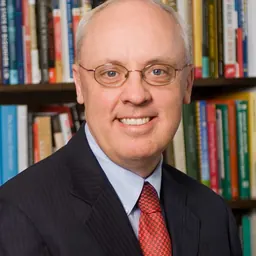






Related people
Same field, nearest in time
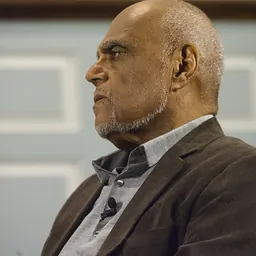
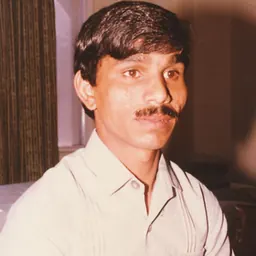


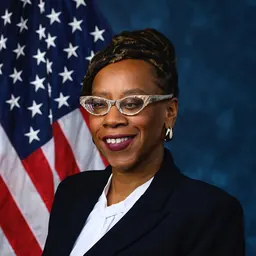
Contemporaries
People whose lives overlapped Anna Mae Aquash's


Frequently asked questions
Who was Anna Mae Aquash?
First Nations activist focused on education, resistance, and police brutality against urban Indigenous peoples and Mi'kmaq tribal member from Nova Scotia, Canada (1945-1975)
When was Anna Mae Aquash born?
Anna Mae Aquash was born on 27 March 1945 in Shubenacadie.
When did Anna Mae Aquash die?
Anna Mae Aquash died on 1 December 1975 in South Dakota Highway 73.
What was Anna Mae Aquash's occupation?
Anna Mae Aquash was an activist, politician and human rights defender.
What nationality was Anna Mae Aquash?
Anna Mae Aquash was Canadian.
Sources & further reading
Cite this page
APA: Biography.guide. (2026). Anna Mae Aquash. https://biography.guide/anna-mae-aquash/
MLA: "Anna Mae Aquash." Biography.guide, https://biography.guide/anna-mae-aquash/.
Chicago: "Anna Mae Aquash." Biography.guide. https://biography.guide/anna-mae-aquash/.
Data last updated: 2026-09-20 · Spot an error? Report a correction.
Page generated 2026-09-27 05:33 UTC