
About Anna Held
Lived 1872 – 1918 (aged 46). Anna Held was a Russian, French and American actor, singer, stage actor and film actor.
Helene Anna Held (19 March 1872 – 12 August 1918) was a Polish-born French stage performer of Jewish origin on Broadway. While appearing in London, she was spotted by impresario Florenz Ziegfeld, who brought her to America as his common-law wife. From 1896 through 1910, she was one of Broadway's most celebrated leading ladies, presented in a succession of musicals as a charming, coquettish Parisian singer and comedienne, with an hourglass figure and an off-stage reputation for exotic behavior, such as bathing in 40 gallons of milk a day to maintain her complexion. Detractors implied that her fame owed more to Ziegfeld's promotional flair than to any intrinsic talent, but her audience allure was undeniable for over a decade, with several of her shows setting house attendance records for their time. Her uninhibited style also inspired the long-running series of popular revues, the Ziegfeld Follies.
Early life Anna Held at the Scala (Paris), poster by Alfred Choubrac (1890). Born in Warsaw, Held was named Helene Anna Held, daughter of a German Jewish glove maker, Shimmle (aka Maurice) Held, and his French-Jewish wife, Yvonne Pierre.
Sources list a variety of birth years, ranging from 1865 to 1873, but 1872 has been accepted in general. In 1881, anti-Semitic pogroms forced the family to flee to Paris. When her father's glove manufacturing business failed, he found work as a janitor, while her mother operated a kosher restaurant. Held began working in the garment industry, then found work as a singer in Jewish theatres in Paris and, later, after her father's death, London, where her roles included the title role in a production by Jacob Adler of Abraham Goldfaden's Shulamith; she was also in Goldfaden's ill-fated Paris troupe, whose cashier stole their money before they ever played publicly.
As a young woman in France, Held converted to Roman Catholicism.
Career
Early years
Her vivacious and animated personality proved popular and her career as a stage performer gained momentum as she became known for her risqué songs, flirtatious nature and willingness to show her legs on stage. In 1894, she married the much-older Uruguayan playboy Maximo Carrera, with whom she had a daughter, Lianne (1895–1988), who was also an actress and producer, sometimes billed as Anna Held Jr.
Touring through Europe, Held was appearing in London in 1896, when she met Florenz Ziegfeld, who asked her to return to New York City with him. He set about creating a wave of public interest in her, feeding stories to the American press, such as her having had ribs surgically removed. By the time Held and Ziegfeld arrived in New York, she was already the subject of intense public speculation. Photo of Anna Held as seen in the Black and White Budget, 15 December 1900.
Broadway success
David Monod of Wilfrid Laurier University has suggested that Held succeeded more on image than talent, the illusion she presented to post-Victorian era audiences who were beginning to explore new social freedoms. From 1896, Held enjoyed several successes on Broadway, including The Little Duchess (1901) and A Parisian Model (1906–1907). These, apart from bolstering Ziegfeld's fortune, made her a millionaire in her own right. Ziegfeld's talent for creating publicity stunts ensured that Held's name remained well known. The claim was repeated in an autobiography by Held entitled Anna Held and Flo Ziegfeld, however, Richard and Paulette Ziegfeld, (authors of The Ziegfeld Touch) concluded that Held never wrote her memoirs, and Lianne was the real author of the autobiography. Eve Golden, Held's biographer, wrote that Lianne's abortion claim was likely a lie designed to demonize Ziegfeld, whom Lianne loathed.
Film New York entertainment entrepreneur Oliver Morosco cast Held in the lead for Madame la Presidente in 1916. According to an interview she gave to Hector Ames for Motion Picture Classic, she was paid $25,000 for her performance.
Later years and death After Miss Innocence, Held left Broadway. She spent the years of World War I working in vaudeville and touring France, performing for French soldiers and raising money for the war effort. She was considered a war heroine for her contributions, and was highly regarded for the courage she displayed in traveling to the front lines, to be where she could do the most good.
The year 1917 was one of constant touring for Held; she toured the United States in a production of Follow Me until ill health caused her to close the show in January 1918. She then checked into the Hotel Savoy in New York City where her health continued to decline.
According to the Washington Times, Held had been in and out of consciousness for about a week. On 12 August 1918, her doctor pronounced her dead, and the media was alerted. Approximately two hours later, Held revived, and the media notified she was still alive, only to have Held finally die shortly thereafter.
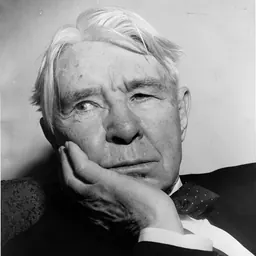
Held's funeral was held at St. Patrick's Cathedral in Manhattan on 14 August. Florenz Ziegfeld did not attend; he had a phobia about death and never attended funerals. Held is interred at the Gate of Heaven Cemetery in Hawthorne, New York. In 1978, Columbia Pictures released a made-for-television film on NBC, Ziegfeld: The Man and His Women. Held was portrayed by Barbara Parkins. The American poet Carl Sandburg wrote a memorial poem for Anna Held, An Electric Sign goes Dark, in the collection Smoke and Steel. In 1976, Held's daughter Lianne Carrera opened a museum of her mother's personal and stage items in San Jacinto, California.
Stage + Broadway credits of Anna HeldYearTitleRoleTheatre Produced by 1896A Parlor Match —Herald Square TheatreFlorenz Ziegfeld Jr. 1897The French MaidSuzette Herald Square TheatreFlorenz Ziegfeld Jr. and Charles E. Evans 1897La poupéeAlesia Olympia TheatreOscar Hammerstein I 1899–1900Papa's WifeAnnaManhattan TheatreFlorenz Ziegfeld Jr. 1901–02The Little DuchessThe Little Duchess Casino Theatre Grand Opera HouseFlorenz Ziegfeld Jr. 1903–04Mam'selle NapoleonMademoiselle Mars Knickerbocker TheatreFlorenz Ziegfeld Jr. 1904–05Higgledy-PiggledyMimi de Chartreuse Weber's Music HallFlorenz Ziegfeld Jr. and Joseph M. Weber 1907–08A Parisian ModelAnnaBroadway TheatreFlorenz Ziegfeld Jr. and Frank McKee 1908–09Miss InnocenceAnna, Miss InnocenceNew York TheatreFlorenz Ziegfeld Jr. 1913–14Anna Held's All Star Variete JubileeSelfCasino TheatreJohn Cort 1916–17Follow MeClaire LaTour Casino TheatreLee Shubert and Jacob J. Shubert
Filmography Year Title Role Notes 1901 Anna Held Herself Close-up versionShort subject 1901 Anna Held Herself Full-length versionShort subject 1910 The Comet Short subject 1913 Elevating an Elephant Herself Short subject 1913 Popular Players Off the Stage Herself Short subject 1916 Madame la Presidente Mademoiselle Gobette
Don’t just read it —
keep it.
Full-length biographies made to live with: read them, listen on the way to work, watch them tonight.
- E-book
- Audio
- Video
Instant download · yours to keep · every purchase keeps this site free
Important facts
Family & relationships
People in Anna Held's life
Named in this biography and alive at the same time
Related people
Same field, nearest in time


Contemporaries
People whose lives overlapped Anna Held's



Frequently asked questions
Who was Anna Held?
French-American stage performer (1872–1918)
When was Anna Held born?
Anna Held was born on 19 March 1872 in Warsaw.
When did Anna Held die?
Anna Held died on 12 August 1918 in New York City.
What was Anna Held's occupation?
Anna Held was an actor, singer, stage actor and film actor.
What nationality was Anna Held?
Anna Held was Russian, French and American.
Sources & further reading
Cite this page
APA: Biography.guide. (2026). Anna Held. https://biography.guide/anna-held/
MLA: "Anna Held." Biography.guide, https://biography.guide/anna-held/.
Chicago: "Anna Held." Biography.guide. https://biography.guide/anna-held/.
Data last updated: 2026-09-22 · Spot an error? Report a correction.
Page generated 2026-09-27 05:31 UTC