
About Angus McMillan
Lived 1810 – 1865 (aged 54). Angus McMillan was an Australian and British explorer, politician and pastoralism.
Angus McMillan (14 August 1810 – 18 May 1865) was a Scottish-born explorer, pioneer pastoralist, and perpetrator of several of the Gippsland massacres of Gunai people.
Arriving first in New South Wales in 1838, The massacre had no impact on McMillan's relations with other colonists and he went on to become a successful Gippsland pastoralist himself, with more than of property. However a series of poor financial decisions brought him to near-bankruptcy in the 1860s. Forced to return to exploration and surveying, he was badly injured in an accident near Dargo, Victoria, and died on 18 May 1865.
McMillan is commemorated in public art and place names in Gippsland, including, until 2018, the Division of McMillan in Australia's Federal Parliament. In 2018, the Australian Electoral Commission announced the Division would be renamed, following a community campaign against honouring a man involved in massacring Gunai people.
Early life Angus McMillan was born in Glen Brittle, Isle of Skye, Scotland, the fourth son of Ewan McMillan, a sheep farmer. After an early life of hardship and deprivation, both in Glen Brittle and subsequently at Kilbride Farm, South Uist, he migrated to Australia in 1838.
Exploration
By the late 1830s, wealthy landholders in New South Wales had become interested in the Gippsland region of Victoria and funded exploration of the region. Macalister knew the early settlers in the high country of Gippsland around Benambra and Omeo as they too were from the Monaro. He put forward McMillan as a candidate to further explore the plains of Gippsland proper nearer to the coast. A second interest sent Polish scientist-explorer Count Paul Strzelecki to also explore Gippsland.
Expedition to Omeo On 28 May 1839 McMillan travelled south on his first exploration of the Gippsland plains, accompanied by Jimmy Gabber, an elder of the Monaro people. The expedition was unsuccessful; in a letter to colonial administrator Charles La Trobe, McMillan reported that six days after leaving Currawong, Gabber declined to go further for fear of encountering the Gunai people, Gippsland's indigenous inhabitants. McMillan refused to turn back, whereupon Gabber waited for a quiet moment and attempted to kill McMillan with a club. Gabber retreated when McMillan raised his pistol, but still refused to go on.
McMillan therefore continued alone, heading west towards Buchan and Omeo. No significant agricultural lands or watercourses were discovered along McMillan's path, and neither did he encounter the region's indigenous inhabitants, the Gunai people.
Expedition to Sale Despite the apparent failure of this first expedition, Macalister remained optimistic about pastoral opportunities in Gippsland. At Macalister's urging McMillan commenced a second expedition in December 1839, moving southwest by west across the plains towards the existing settlement of Sale. On his return to Currawang in early 1840, he reported to Macalister that he crossed several watercourses draining toward the east, each surrounded by fine potential grazing land. McMillan had named them as the Nicholson, the Mitchell, the Avon and Macalister rivers. Violence between the Indigenous population and European settlers continued until the 1860s.
McMillan was the leader of the "Highland Brigade", a group of Gaelic-speaking men who undertook reprisal raids on the Gunaikurnai. which facilitated settler reprisals against the Gunaikurnai people.
Later life "Bushy Park," McMillan's home along the Avon River. Relocated to Old Gippstown in 1969 His explorations at an end, McMillan established himself as an independent squatter on land along the Avon River which he named "Bushy Park." Development was slow, with an 1845 census of the region showing only six acres under cultivation and livestock comprising 600 head of cattle and six horses. McMillan persisted, and, by the 1856 census, he was recorded as the owner of 150,000 acres, upon which he ran the region's second-largest holding of sheep and third-largest of cattle. In the same year, "Bushy Park" itself was recorded as an eight-room home attached to a four-room cottage, adjacent to a stable, wool store, barn, a worker's hut and a six-acre orchard.
In 1857, McMillan married a local woman, Christina MacDougald. They had two sons. less than a decade after Victoria was first declared a separate colony. His properties had generated substantial wealth, but by 1861 a series of poor financial decisions coupled with devastating bushfires, had left him in debt.
McMillan's earlier reputation as a pioneering explorer has been tarnished since his role in the murders of Aboriginal people became more widely known. In the late 1970s, historian Peter Gardner highlighted McMillan's key role in the frontier conflicts, in particular the Warrigal Creek massacre. In the 1980s, historian Don Watson highlighted his role as leader of the Highland Brigade.
His great-great-niece, Cal Flyn, added to these accounts in her book Thicker than Water (2016),
In 1948, the Federal Division of McMillan was proclaimed in his honour, covering western Gippsland. The first elections in the new electorate were held in 1949. Submissions were made to the Australian Electoral Commission redistributions of Victoria in 2002 and 2010 to have the name changed. In March 2016, Russell Broadbent, the sitting Member for McMillan, agreed with Greens and Labor candidates for McMillan that the electorate should be renamed at the next electoral redistribution, due to McMillan's well-documented massacres of local Aboriginal people. In 2018, the Australian Electoral Commission renamed the federal seat Division of Monash.
Amateur historian Rob Christie challenged Peter Gardner's conclusions about McMillan in his book A Convenient Scapegoat: Angus McMillan and the Gippsland Massacres, arguing that McMillan, while involved, was not the instigator or prime mover of the atrocities. In turn, Gardner criticised Christie's interpretations as relying on cherry picking and straw man arguments.
Don’t just read it —
keep it.
Full-length biographies made to live with: read them, listen on the way to work, watch them tonight.
- E-book
- Audio
- Video
Instant download · yours to keep · every purchase keeps this site free
Important facts
People in Angus McMillan's life
Named in this biography and alive at the same time

Related people
Same field, nearest in time



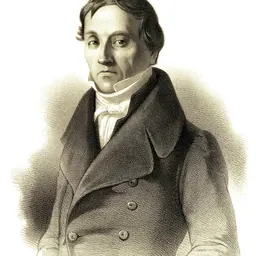
Contemporaries
People whose lives overlapped Angus McMillan's


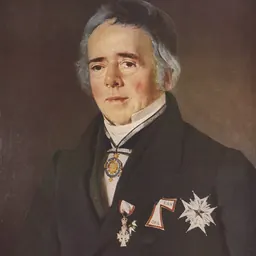
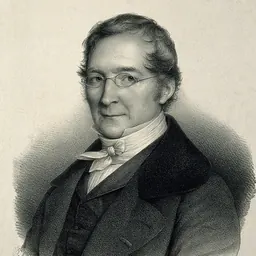

Frequently asked questions
Who was Angus McMillan?
Australian explorer and politician (1810-1865)
When was Angus McMillan born?
Angus McMillan was born on 14 August 1810 in Glen Brittle.
When did Angus McMillan die?
Angus McMillan died on 18 May 1865 in Bairnsdale, Victoria (Australia).
What was Angus McMillan's occupation?
Angus McMillan was an explorer, politician and pastoralism.
What nationality was Angus McMillan?
Angus McMillan was Australian and British.
Sources & further reading
Cite this page
APA: Biography.guide. (2026). Angus McMillan. https://biography.guide/angus-mcmillan/
MLA: "Angus McMillan." Biography.guide, https://biography.guide/angus-mcmillan/.
Chicago: "Angus McMillan." Biography.guide. https://biography.guide/angus-mcmillan/.
Data last updated: 2026-09-20 · Spot an error? Report a correction.
Page generated 2026-09-27 05:27 UTC