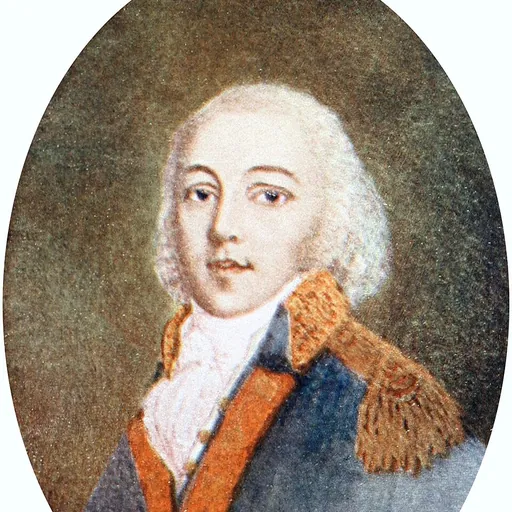
Angus McDonald
Scottish American Military officer, frontiersman, sheriff, landowner
About Angus McDonald
Lived 1727 – 1778 (aged 50–51). Angus McDonald was an American military officer, frontier, officer (armed forces) and sheriffs in the United States.
Angus McDonald (1727 – August 19, 1778) was a Scottish American military officer, frontiersman, sheriff and landowner in Virginia.
During the Jacobite rising of 1745, McDonald fought as a lieutenant under the command of Charles Edward Stuart in the Battle of Culloden, after which he was "attainted of treason". He fled Scotland, departing from Inverness for the Colony of Virginia in 1746 at the age of 18. Following his arrival in Virginia, McDonald worked as a merchant in Falmouth for two or three years.
McDonald moved west into Virginia's interior and entered the military service of the colonial government under Lieutenant Governor Robert Dinwiddie, receiving the rank of captain. McDonald served in the French and Indian War under General John Forbes, in which he was in command of a company of Scottish Highlanders. Following the war, McDonald retired with the rank of captain in 1763.
In 1765, McDonald returned to military service when he was commissioned by Thomas Fairfax, 6th Lord Fairfax of Cameron as a major in command of the Frederick County militia. Lord Fairfax also appointed McDonald as an attorney and land agent for his Northern Neck Proprietary.
Governor John Murray, 4th Earl of Dunmore commissioned McDonald in 1774 as a ranking military officer of an expedition (known as "McDonald's Expedition") to promptly organize and recruit settlers west of the Allegheny Mountains to defend settlements from Native American attacks. McDonald completed the expedition, which met its goal of temporarily relieving western Virginia frontier settlements from attack.
McDonald received a personal letter from General George Washington in 1777 appointing him a lieutenant colonel in a battalion of Thruston's Additional Continental Regiment under the command of Colonel Charles Mynn Thruston. Despite his loyalty to the American Revolutionary cause, McDonald refused Washington's appointment. McDonald was later appointed by Washington to serve as a lieutenant colonel in command of Virginia revolutionary militia forces during the American Revolutionary War. He also served on various revolutionary committees throughout the war.
Early life Angus McDonald was born in 1727 in the Scottish Highlands. He was an immediate family member of a chief of the Clan MacDonell of Glengarry, whose clan seat was Invergarry Castle. He was probably the son of Angus McDonald, who was a younger son of Alastair Dubh MacDonell, the commander of the Glengarry clan in the Battle of Killiecrankie in 1689 during the early Jacobite risings. He fled Scotland, departing from Inverness for the Colony of Virginia in 1746 at the age of 18. Among the belongings he brought with him were the short sword, sash and gorget bearing the Glengarry coat of arms that he had worn at the Battle of Culloden. McDonald moved west into Virginia's interior and entered the military service of the colonial government under Lieutenant Governor Robert Dinwiddie, receiving the rank of captain. While in Winchester, McDonald served as a member of the Committee of Safety. McDonald and his company marched against Fort Duquesne in the autumn of 1758.
In early 1774, McDonald participated in an expedition surveying the "military bounty lands" lying along the Ohio and Kanawha rivers to be granted by the colonial government of Virginia to soldiers and officers in exchange for their military service in the French and Indian War. The expedition was cut short due to hostilities with Native Americans, and McDonald provided an account of these hostilities and reports he received of attacks against settlers to Lord Dunmore. McDonald's accounts along with those of other settlers resulted in Lord Dunmore's decision to wage a war against the Native Americans to pacify the frontier lands of western Virginia for continued settlement. McDonald was an immediate family member of a chief of the Clan MacDonell of Glengarry, whose clan seat was Invergarry Castle (pictured) overlooking Loch Oich.
McDonald's Expedition and Dunmore's War In early June 1774, Lord Dunmore further commissioned McDonald as a ranking military officer of an expedition (known as "McDonald's Expedition") to promptly organize and recruit settlers west of the Allegheny Mountains along the Youghiogheny and Monongahela rivers in order to defend European American settlements from Native American attacks. Lord Dunmore commissioned Michael Cresap as a captain under McDonald's command and placed him in charge of the enlistment of a force from Hampshire County. Following the erection of the stockade, McDonald ordered each of his soldiers to pack seven days' worth of provisions. McDonald and his forces arrived at the "chief Wakatomika town" only to discover that it had been evacuated by its Shawnee inhabitants, who were found nearby preparing to ambush McDonald's forces. In a letter dated January 8, 1775, following his return to Winchester from Williamsburg, McDonald recounted of the war, "all the Country is well pleased with the Governours Expeditions." Following Dunmore's War in December 1774, McDonald was further promoted to the rank of lieutenant colonel.
On August 6, 1776, McDonald was appointed and took the oath of the sheriff and justice of Frederick County by the county court under an ordinance of the Virginia Convention of 1776. While serving as sheriff, he was placed in command of the militias of both Augusta and Frederick counties.
Legacy An article published in the Winchester Star in 1967 said of McDonald, "fearsome or not, he founded in the Shenandoah Valley a dynasty of military men as distinguished as their forebears had been in the Scottish Highlands." In its documentation of Dunmore's War, the Wisconsin Historical Society stated, "McDonald was a man of commanding figure and strong personality and a rigid disciplinarian with his troops." The Eltinge family was of Dutch descent. McDonald and his wife had seven children, four sons and three daughters: Mary McDonald Langham (May 9, 1767 – ?), married Elias Langham John McDonald (August 19, 1768 – about 1837) Angus McDonald (December 30, 1769 – October 14, 1814), married Mary McGuire on January 11, 1798 Eleanor McDonald Tidball (September 5, 1771 – ?), married James Tidball Anna McDonald Holliday (June 25, 1773 – ?), married Richard Holliday Thompson McDonald (March 29, 1776 – July 31, 1822) Charles McDonald (April 28, 1778 – died in infancy)
Don’t just read it —
keep it.
Full-length biographies made to live with: read them, listen on the way to work, watch them tonight.
- E-book
- Audio
- Video
Instant download · yours to keep · every purchase keeps this site free
Important facts
People in Angus McDonald's life
Named in this biography and alive at the same time
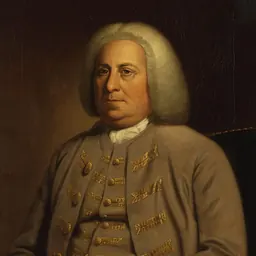
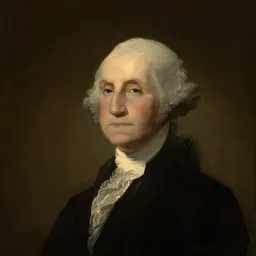
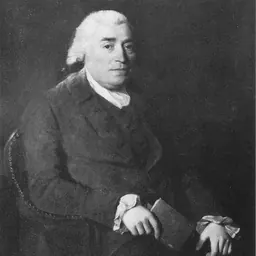
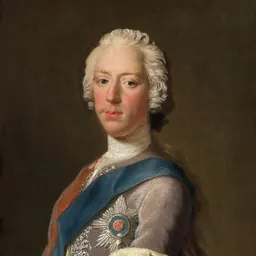
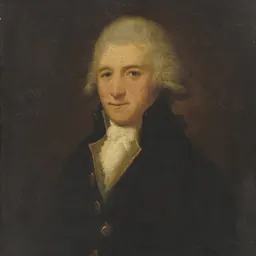
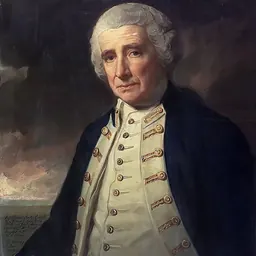


Related people
Same field, nearest in time
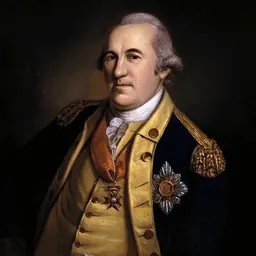
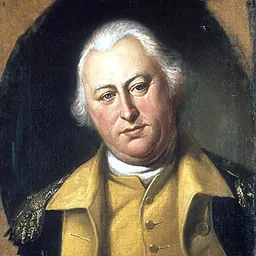
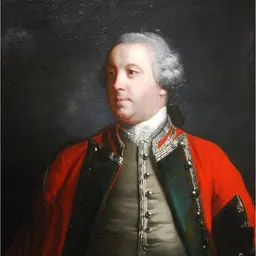
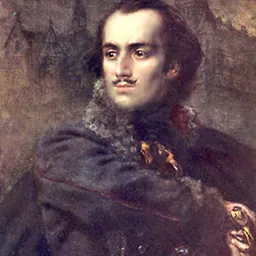
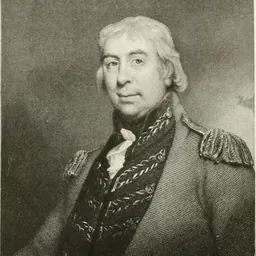
Contemporaries
People whose lives overlapped Angus McDonald's


Frequently asked questions
Who was Angus McDonald?
Scottish American Military officer, frontiersman, sheriff, landowner
When was Angus McDonald born?
Angus McDonald was born in 1727 in Scottish Highlands.
When did Angus McDonald die?
Angus McDonald died on 19 August 1778 in Winchester.
What was Angus McDonald's occupation?
Angus McDonald was a military officer, frontier, officer (armed forces) and sheriffs in the United States.
What nationality was Angus McDonald?
Angus McDonald was American.
Sources & further reading
· DBpedia: Angus McDonald (Virginia militiaman)
Cite this page
APA: Biography.guide. (2026). Angus McDonald. https://biography.guide/angus-mcdonald-military-officer/
MLA: "Angus McDonald." Biography.guide, https://biography.guide/angus-mcdonald-military-officer/.
Chicago: "Angus McDonald." Biography.guide. https://biography.guide/angus-mcdonald-military-officer/.
Data last updated: 2026-09-26 · Spot an error? Report a correction.
Portrait: Wikimedia Commons · author & licence
Page generated 2026-10-04 11:26 UTC