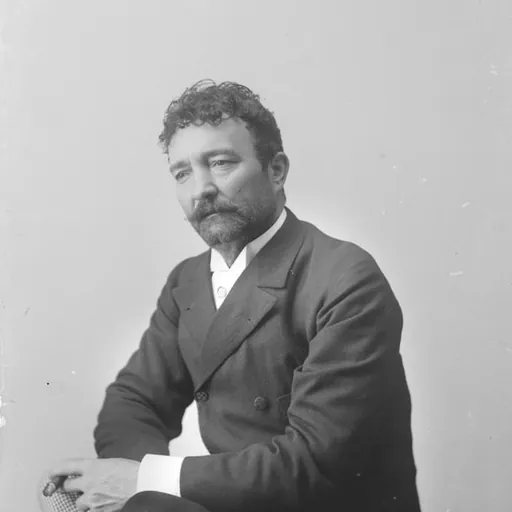
About Angelo Masini
Lived 1844 – 1926 (aged 81). Angelo Masini was an Italian opera singer.
Angelo Masini (November 27, 1844 – September 28, 1926) was an Italian tenor. Throughout his career, he sang at the principal theatres of Italy, Spain, and Russia, where he sang for over 20 years (particularly at the Mariinski in Saint Petersburg and the Bolshoi in Moscow). Composer Giuseppe Verdi once stated "his voice is the most Divine I've ever heard. It sounds as if it is made of pure velvet", and hailed him as "the tenor from Paradise".
He played 48 roles in total, which encompassed roles from the leggero fach, such as Arturo in Bellini's I puritani and Don Ramiro in Rossini's La Cenerentola, all the way to heavier roles such as Pery in Gomes' Il Guarany and the title role in Wagner's Lohengrin.
Early life and education The son of Stefano and Maria Zoli, Masini was born in Forlì on November 27, 1844. Some sources, such as Grove Music Online, state he was born a day later in Terra del Sole. He was hired for the entire 1874 season. On that same year, he also auditioned at the La Scala opera house in Milan. He was not hired, but editor Giulio Ricordi, who was present at the audition, was impressed by Masini's voice and recommended him to composer Giuseppe Verdi, who was looking for a tenor for an international tour of his Requiem. Verdi accepted Masini in early 1875, and personally trained him for his part. The tour included performances in Paris, London, Vienna, Venice and Florence. Masini and Verdi later returned to Paris and appeared together in Verdi's Aida (with Verdi as a conductor) at the Théâtre des Italiens, where the theatre's box office realized the highest numbers in its history.
From 1878 to 1881, he primarily sang at Saint Petersburg, but he also appeared at Warsaw, Paris, Vienna and Monte Carlo. He was also scheduled to sing the title-role of Gounod's Faust in London, but cancelled after a dispute with impresario James Mapleson.
In 1881, he sang at the Teatro del Liceu in Barcelona for the first time. The Teatro Real in Madrid offered him a seven-year contract with a large fee, so he withdrew temporarily from Russia and stayed in Spain until 1887.
Starting in 1888, Masini again focused his career mostly in Russia. In total, he sang there for a total of 43 seasons from 1876 to 1905. He also toured South America in 1887 and 1889.
In the mid 1890s, he was also sought after by Verdi to create the role of Fenton in his last opera, Falstaff. Unfortunately, Masini had become difficult to work with at this stage of his career (mostly bouts of divismo behavior) , and Verdi opted for Edoardo Garbin instead, even though he was not entirely satisfied with his performance.
By 1895, his voice had begun to decline. Nonetheless, he continued to perform for another 10 years until his final stage appearance in Paris as Almaviva in Rossini's The Barber of Seville, opposite a young Titta Ruffo as Figaro.
He was also known for instances of generosity, such as when he donated 100,000 lyre to the construction of a monument dedicated to Aurelio Saffi, and when he contributed half a million lyre to help found the Casa di Riposo per Musicisti in Milan. He also donated the same amount of money to several charities.
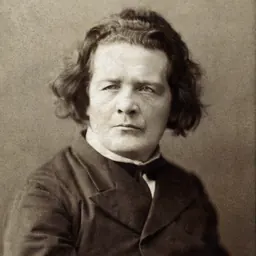
Recordings Despite erroneous claims that Masini never recorded, he was confirmed to have recorded his voice on wax cylinders in Russia at the insistence of his friend, composer and pianist Anton Rubinstein. These recordings were broadcast on Russian radio on the first decades of the 20th century, but have since disappeared after World War II. At present, it is not known what became of them.
Masini is also known to have visited the Milan studios of the Gramophone Company, as confirmed by a letter written by Alfred Michaëlis, the Milan agent of the Gramophone Company, to the company's founder, W.B Owen: "This morning at 11 o-clock, Masini will come here". Masini arrived at the studio on the morning of April 6, 1903 to explore the possibility of a recording contract, but his fee of £0.20 per disc was considered absurd and the deal did not proceed. There is a prevailing theory that Masini recorded a test pressing before negotiations got sour. That test pressing, a recording of the aria "Niun mi tema" from Verdi's Otello, had been previously attributed to Spanish tenor Antonio Aramburo, but that attribution was disproven when Aramburo's real recordings were eventually found. Italian conductor Carlo Sabajno confirmed that Masini did in fact record at least one test pressing in his life, but prohibited its release.
Don’t just read it —
keep it.
Full-length biographies made to live with: read them, listen on the way to work, watch them tonight.
- E-book
- Audio
- Video
Instant download · yours to keep · every purchase keeps this site free
Important facts
People in Angelo Masini's life
Named in this biography and alive at the same time






Related people
Same field, nearest in time

Contemporaries
People whose lives overlapped Angelo Masini's

Frequently asked questions
Who was Angelo Masini?
Italian opera singer (1844-1926)
When was Angelo Masini born?
Angelo Masini was born on 28 November 1844 in Castrocaro Terme e Terra del Sole, Terra del Sole.
When did Angelo Masini die?
Angelo Masini died on 29 September 1926 in Forlì.
What was Angelo Masini's occupation?
Angelo Masini was an opera singer.
What nationality was Angelo Masini?
Angelo Masini was Italian.
Sources & further reading
Cite this page
APA: Biography.guide. (2026). Angelo Masini. https://biography.guide/angelo-masini/
MLA: "Angelo Masini." Biography.guide, https://biography.guide/angelo-masini/.
Chicago: "Angelo Masini." Biography.guide. https://biography.guide/angelo-masini/.
Data last updated: 2026-09-21 · Spot an error? Report a correction.
Portrait: Wikimedia Commons · author & licence
Page generated 2026-09-27 05:01 UTC